
The faithful return of the 2026 National Restaurant Association (NRA) Show to Chicago’s McCormick Place shows operators, suppliers, and industry experts meeting to discuss the current and future state of US foodservice. One might expect the event to be a post-mortem of a difficult 2025, but the trends and numbers for the year speak to a soft success.
US foodservice outlets and value sales increased for both chained and independent operators in 2025, with total outlets, transactions, and value sales all expected to increase over the next five years.
Source: Euromonitor International
Any exuberance on the show floor belies a harrowing market climate: inflationary pressures are amplifying for the American consumer, supply chains show no signs of stabilisation, and uncertainty remains around the net benefit of AI adoption for restaurant owners and operators.
A cautious eye towards automation
Mechanisation has always been out in full force at NRA shows, with the newest robot or machine promising greater efficiency, consistency, and scalability for food preparation. As years have passed, the financial barrier to entry has steadily decreased, driven by a competitive import marketplace. This has allowed smaller players to make capital investments more easily and iteratively without needing significant cashflow. This trend is unfortunately at an impasse as protectionist policies have increased the cost of import and domestic products alike, with the latter segment owing price increases to machine components unable to be fashioned onshore. Even with this harsh economic backdrop, domestic and international equipment suppliers were still equally represented and pulling in captive audiences.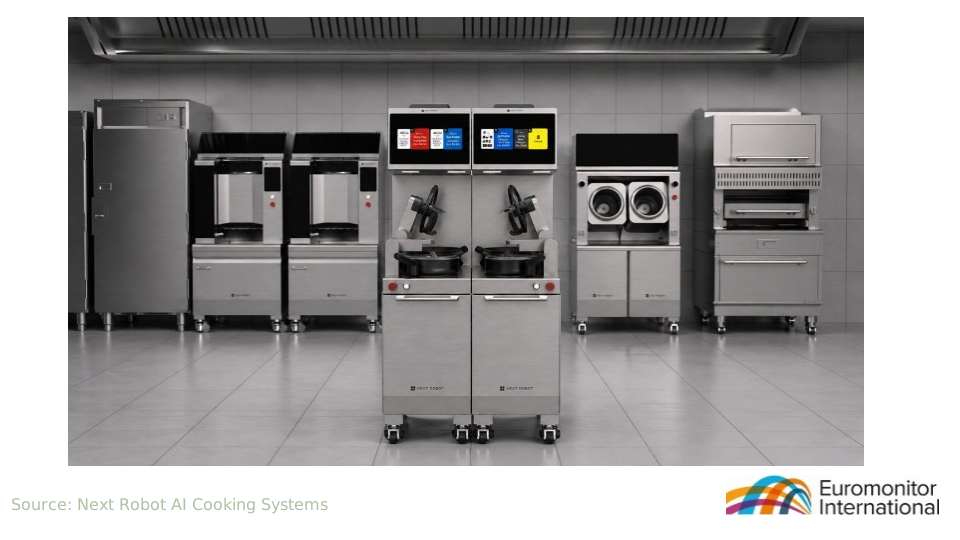
The less clear-cut vision of progress surrounds the use of AI in foodservice outlet and supplier operations. The growing body of less-than-stellar anecdotes from futurist forerunners and customer sentiment have stymied an industry embrace of the agentic. The use cases for AI utilisation, previously expansive across both front-of-house and back-of-house, are tightening away from outright automation towards more advisory roles. NCR Voyix, a long-standing POS software and terminal technology company, views a critical role of specialised AI agents as trusted advisers in operations management. Proactive guidance on sell-through, limited-time offering recipe suggestions, and analytically driven promotional activity to prevent product loss aren’t outright delegations of duty but a strategic voice of reason. For the often-harried restaurant manager leading a skeleton crew to stay afloat, that voice of reason is a step-up from reactive business operations.
CPG continues to fight for away-from-home
With North American retail packaged food and beverage volumes plateauing against a host of headwinds, branded FMCG manufacturers are building a more robust omnichannel approach to capture share of mouth, both at-home and away-from-home. While Coca-Cola, Kraft Heinz, and Ajinomoto have been consistent presences on the conference floor since my first attendance, large exhibitor footprint from growing breakout brands like Celsius, Vita Coco, and Liquid Death show that the competitive landscape is rich with activity.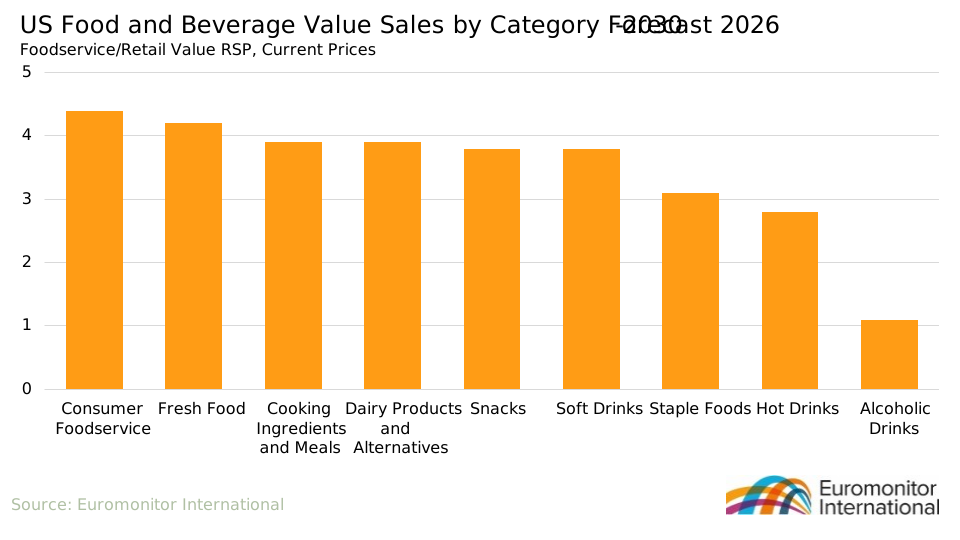
For further insights, download our new white paper, Top Five Trends in Consumer Foodservice 2026, for in-depth trend descriptions, case studies and strategic recommendations.