
World Perfumery Congress 2026 took place in Monterey, California during 22-25 June, bringing together perfumers, fragrance houses, ingredient suppliers and brands across fine and functional fragrance. Key themes included AI's role in product development, premiumisation in personal care, consumer demand for fragrance communities, and packaging innovation.
AI is an accelerator and enabler, not a perfumer
AI was among the most debated topics at the event, yet the prevailing view was measured, rather than alarmist. During a live demonstration, attendees experienced an AI-generated interpretation of a "salted caramel espresso martini", followed by the perfumer’s final version. While the AI-version was adequate, the perfumer's version was markedly more evocative, carrying the kind of emotional and sensory resonance that algorithms are not yet equipped to replicate.
Industry voices across sessions shared a consistent view. AI's greatest value in fragrance lies in managing the administrative and technical dimensions of development – regulatory compliance, ingredient synthesis, supply chain logistics – while the perfumer remains the creative lead. This aligns with Euromonitor's Voice of the Industry Survey 2026, in which 46% of beauty and personal care industry leaders identified integrating automated solutions, including GenAI, as the most important development over the next 12 months.
Mathieu Chevara, Art Director and Business Development lead at Nez, The Olfactory Cultural Movement, framed it plainly: "In the same way Zara and H&M enabled fast fashion, AI will enable fast perfumery." AI will lower barriers to entry and accelerate production timelines, but the creative judgment that defines great perfumery will remain a distinctly human skill.
Premiumisation pushes fine fragrance ingredients into personal care
The migration of fine fragrance ingredients into personal care was a consistent theme. Sandalwood – a fine fragrance staple – is now high-demand in deodorants, driven by consumer appetite for elevated sensorials in everyday personal care. Oud, a cornerstone of Arabian fine fragrance, is featured in body mists – as seen in fragrances and flavours supplier Sacheerome’s masculine-scented body mists – but is also appearing in some premium detergents and fabric softeners, an early indicator of where premiumisation may appear next.
Down Under Enterprises highlighted rising demand for Manuka oil, Rosalina and Buddha Wood – ingredients combining olfactory richness with functional benefits including antimicrobial and anti-inflammatory properties, aligning with consumer expectations that personal care products deliver on performance and experience. Fragrance brand Pura's expansion into personal care through its retail partnerships further signals that category lines continue to blur.
The fragrance consumer is getting younger, savvier and more connected
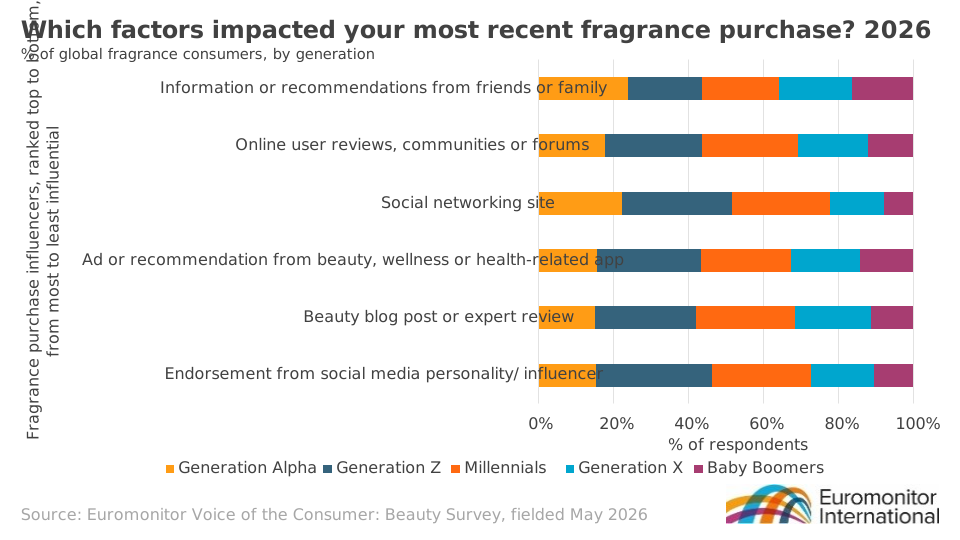
The fragrance consumer in 2026 is increasingly knowledgeable, curious and community-orientated. This is especially true among younger generations that mainly consume beauty through online communities.
Almost one fifth of Generation Z shoppers (17%) were influenced by social media when purchasing fragrances – a stark contrast to only 5% of baby boomers and 8% of Generation X.
Source: Source: Euromonitor Voice of the Consumer: Beauty Survey, fielded May 2026
Micro-indulgence and collectability drive fragrance packaging innovation
Packaging at World Perfumery Congress 2026 made a clear statement: fragrance is as much about the object as what is inside it. Miniaturisation was pervasive – 0.33 fl oz formats designed for on-the-go use, fragrance keychains, and discovery kits were widely on display, consistent with the micro-indulgence trend gaining traction across beauty categories.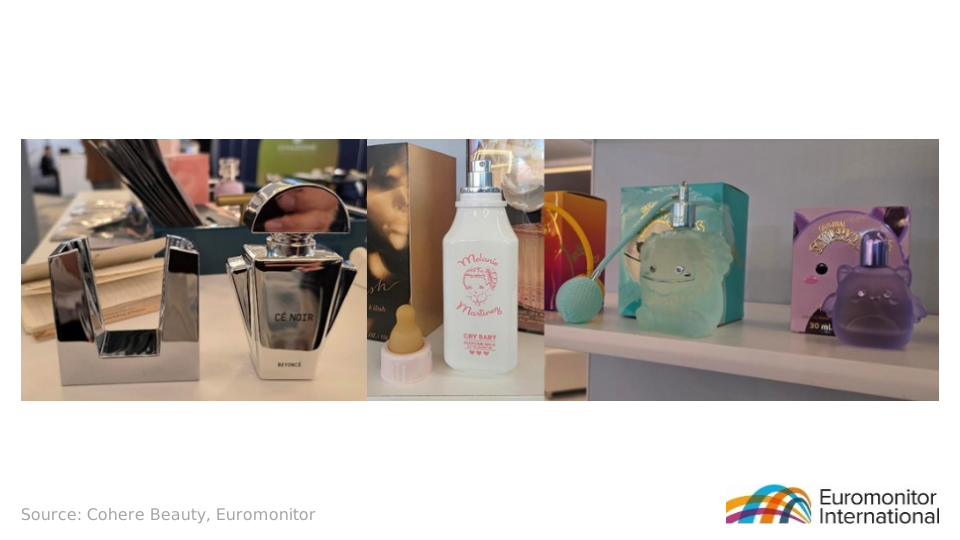
Differentiated packaging reinforced the idea that fragrances are increasingly expected to function as collectibles as much as a vessel housing actual product. Cohere Beauty showcased the packaging for Beyoncé's Ce Noir fragrance – a sculptural design that disassembles like an award figurine and requires white-glove handling to preserve its finish. Melanie Martinez's Cry Baby Perfume Milk took a different approach, reinterpreting the conventional bottle, with the nipple cap concealing a standard actuator spray, while Squishmallow-shaped fragrance bottles with squeeze bulbs added colour and vintage style.
Looking ahead to 2027
World Perfumery Congress 2026 confirmed fragrance's broadening scope – across categories, demographics and formats. AI, premiumisation and community are reshaping the category, and consumer appetite shows no sign of slowing.
Kayla spoke at World Perfumery Congress 2026, where she shared insight on the rise of Arabian fragrances. You can download her presentation here.