
Over 2020-2023, income inequality deteriorated in nearly two thirds of the countries Euromonitor researches. The widening income gap is impeding post-pandemic recovery, worsening the cost-of-living challenges for lower-income households, and contributing to issues like poverty, social unrest, and instability. Nonetheless, there are growth opportunities for companies ready to tackle income inequality head-on. Adopting multifaceted long-term strategies with regard to consumers at the bottom of the pyramid and the middle class can be a straightforward pathway to success.
Rising inequality has a direct impact on businesses
Many companies do not fully appreciate how rising income inequality fundamentally changes their industries and consumer markets. It polarises the market into a high-income consumer segment at the top and a low-income segment at the bottom, while the middle class gets increasingly squeezed.
The middle class matters significantly to companies and economies because they contribute to economic development through spending (especially on discretionary categories) and future human capital (as they often spend on education). As a result, ignoring changing middle-class needs means abandoning the priorities of a big chunk of the clientele and ultimately harming the bottom line.
The bottom of the pyramid gains in importance
Rising inequality increases the urgency to address the overlooked lower-income consumer segment at the bottom of the pyramid. Amidst socioeconomic and environmental uncertainties, the bottom of the pyramid (social class E) across the global markets is projected to expand by 20% between 2023 and 2040. From 2023 to 2040, Ireland is set to witness 36% growth in its lowest-earning consumers, while Australia and Canada will experience a 19% increase. The US and the UK are projected to see a 12% expansion in this demographic.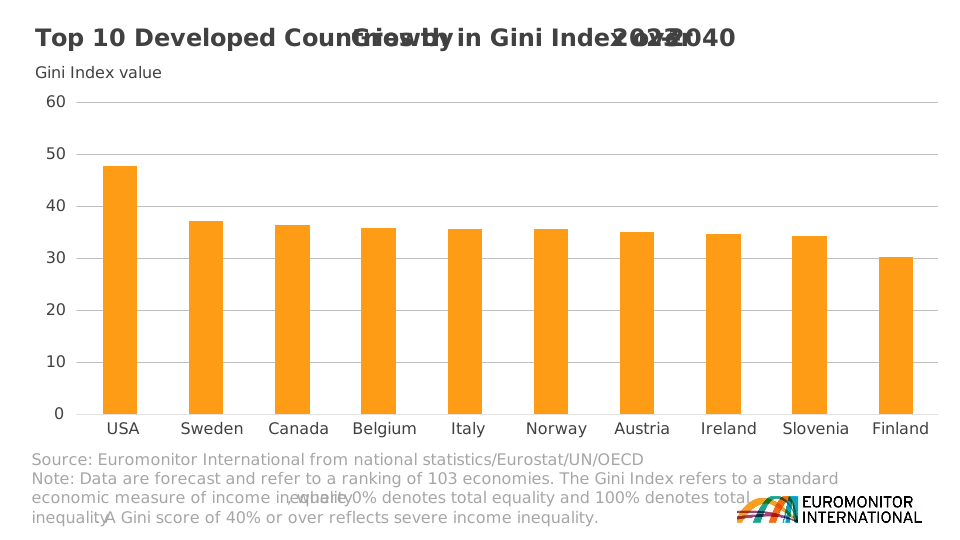
Independent of the country's development level, companies that seek to target the bottom of the pyramid should have several points in mind. With the bottom of the pyramid, understanding the daily price/quality trade-offs is crucial. Hence, businesses must comprehend lower-income consumer lifestyles, spending priorities, habits and motivations to align with local needs and tastes.
Apart from product portfolio intricacies, the distribution difficulties and the challenges around building brand or even category awareness must be well thought through and addressed. Presenting consumers with payment alternatives and raising trust and awareness through education and collaboration with smaller distributors and social partners might be a way to go.
But it's not a race to the bottom
As high-income earners tend to invest their money and low-income earners prioritise basic needs, businesses will still need to rely on the purchasing power of the middle class. Countries with some of the biggest increases in income inequality are boasting the largest numbers of middle-class consumers. For example, the US, where income inequality is high and rising, is home to 29.6 million middle-class households in 2023. Even though this number has shrunk from 29.8 million in the previous year, the US middle class remains sizeable and is not to be overlooked.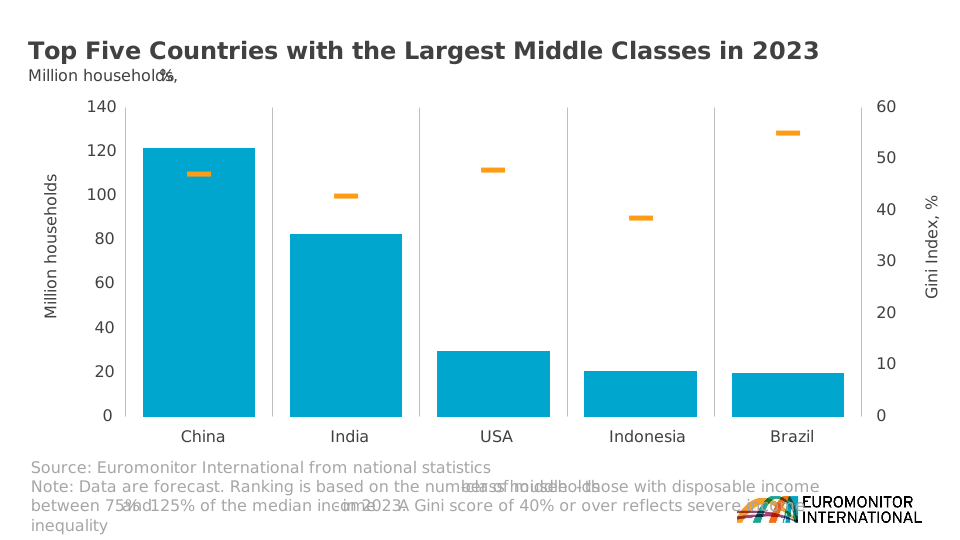
Nevertheless, companies in consumer markets must contend that even though they remain an important consumer base, the middle class will not be enjoying robust income gains any time soon. Yet, it would be a mistake to consider low prices as the key strategy to win squeezed middle-class consumers. Even as they become more price-sensitive, middle-class consumers continue to be discerning, demanding more than just value for money. Traits such as convenience and solutions to save time, appreciation of experiences and minimalistic lifestyles, and many more strategies cater to the middle-class consumer.
A matter of responsibility and reputation
It is in the interest of businesses to reduce income inequality because it has severe consequences for social stability and economic growth, constraining the consumer base and spending. Companies that actively engage in efforts to reduce income inequality are contributing to a more stable operating environment, which is essential for their long-term success and growth.
31% of consumers buy from brands that support social and political issues that are aligned with consumer values
Source: Euromonitor International Voice of the Consumer: Lifestyles Survey 2023
Some specific actions for businesses to tackle income inequality effectively and responsibly include adopting fair and inclusive business practices within the workplace, marketplace, and supply chain and developing a comprehensive CSR strategy that aligns with the company's core values.
Learn more about rising inequality and consumer market flashpoints in our reports, Consumer Market Flashpoints: Rising Inequality and Consumer Market Flashpoints: Between Uncertainty and Opportunity, to explore the strategies and growth opportunities.