
Euromonitor’s loyalty stickiness ratio shifts loyalty from intention to behaviour, capturing how often monthly users return on a daily basis. But its real value is comparative – it distinguishes true habit formation from engagement that is primarily a function of category dynamics.
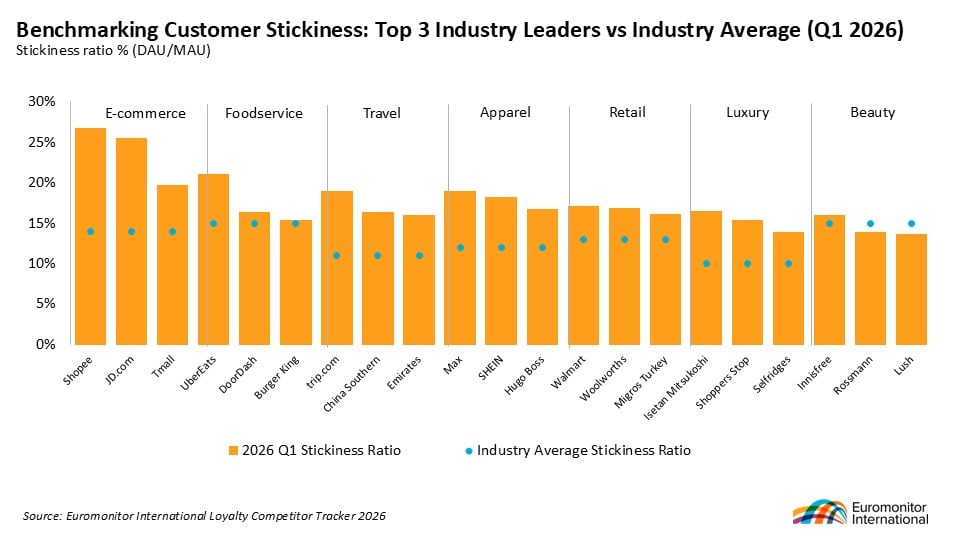
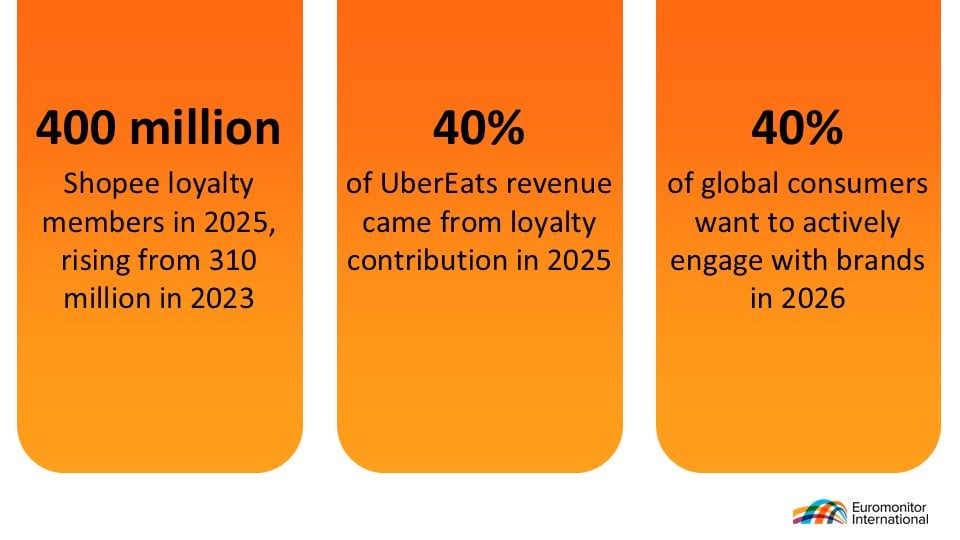
In e-commerce, players like Shopee and JD.com nearly double the industry average, embedding themselves into high-frequency routines. Travel platforms such as Trip.com also stand out, outperforming category norms despite structurally lower engagement levels.
By contrast, sectors like beauty and foodservice cluster closer to their respective averages, reflecting the inherent constraints of lower purchase frequency, higher switching elasticity and limited repeat-trigger density within these categories.
Loyalty leadership is not about uniform frequency, but about becoming a preferred habit within a category's dynamics. Sustaining that edge demands personalisation and exclusivity – understanding individual behaviour beyond what category benchmarks reveal.
To learn how brands are reshaping loyalty into a strategic growth lever, read our report, Top Five Trends in Loyalty 2026.