
The FIFA World Cup has long been one of the biggest stages for brands. It brings together mass audiences, national pride and shared cultural attention in a way few global events can.
But the nature of that attention and the commercial infrastructure beneath it is fundamentally changing.
The World Cup is becoming a longer digital engagement cycle
The 2026 FIFA World Cup will be one of the most expansive editions of the tournament, with more teams and matches and three host countries. The scale and commercial reach create opportunities for brands to have long, repeatable commerce cycles across match days, markets and categories.
The World Cup is no longer just a media event. It has become a digital commerce journey that begins before the game, intensifies during live play and continues after the final whistle.
Each phase generates distinct behavioural signals, referral patterns and commercial opportunities.
The fan journey is non-linear, and product discovery is adjacent
One of the most important shifts in the 2026 World Cup commerce landscape is that the fan journey is no longer linear. A fan preparing for a match does not move sequentially from awareness to consideration to purchase.
Pre-tournament shopping behaviour reveals that snack shopping in the US is largely retailer-led.
In April 2026, Walmart received 22% of product traffic for snacks – almost half were self-referential and a third direct. A large share of traffic is happening inside retailer environments, rather than starting from external discovery channels.
Source: Euromonitor International
Once the games begin, this pattern is more dynamic. The World Cup creates more occasions for consumers to begin engagement outside the retailer environment.
In the space of two minutes, a single fan session moves across Instagram, a sponsored snack ad, Chatgpt.com, a retailer site and a product page – culminating in a conversion on game-day snacks. A second concurrent session moves from team content through Google search for an official jersey to a retailer product page.
These moments pull more external traffic into the funnel, creating adjacency.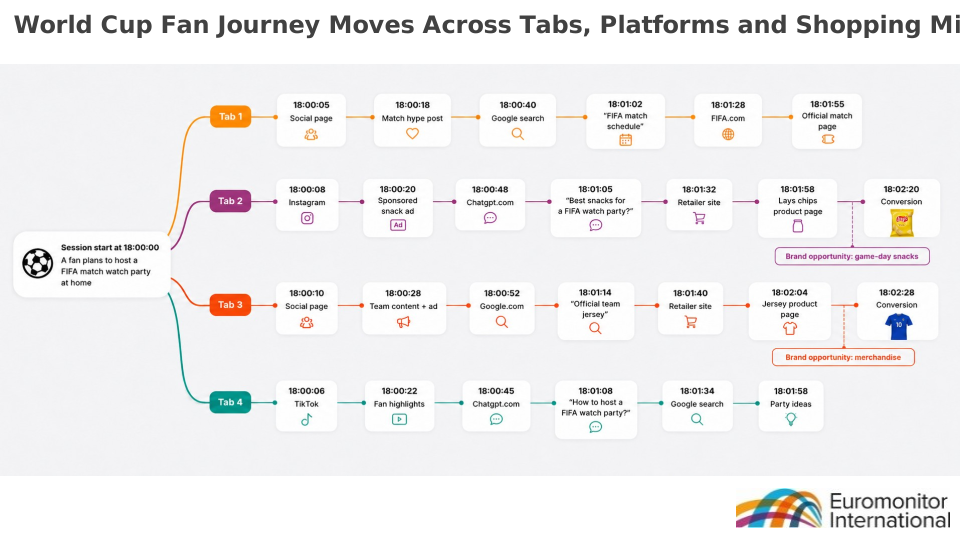
E-commerce readiness as a strategic lever
Winning discovery is half the battle; the bigger test is whether brands can convert event attention into e-commerce sales. A brand may win awareness, but if its products are underrepresented on key platforms, the final conversion can shift to a competitor.
As we review key snack brands in the US for their readiness to capture the commercial opportunity from the World Cup, we find that Lay’s outplays Doritos to convert World Cup demand into online sales.
Its stronger e-commerce share ahead of the tournament gives a sturdier base to scale event-led activation. During the tournament, this matters. A brand with stronger existing digital shelf presence can more easily support match-night bundles, media campaigns, multi-pack offers and cross-category promotions such as Lay’s with Pepsi.
The retailer mix reinforces this advantage. Walmart, Amazon and Instacart are the leading e-commerce retailers for snacks in the US. Lay’s generates over 70% of e-commerce sales through these platforms, securing strong exposure to capture World Cup-related snack missions.
Doritos, by contrast, has a weaker concentration across these platforms, including underrepresentation on Amazon. This leaves it less able to capture demand from the event, such as searches for “game day snacks”, but also lower likelihood of winning sales on retailer sites when shoppers add snacks to a broader grocery basket.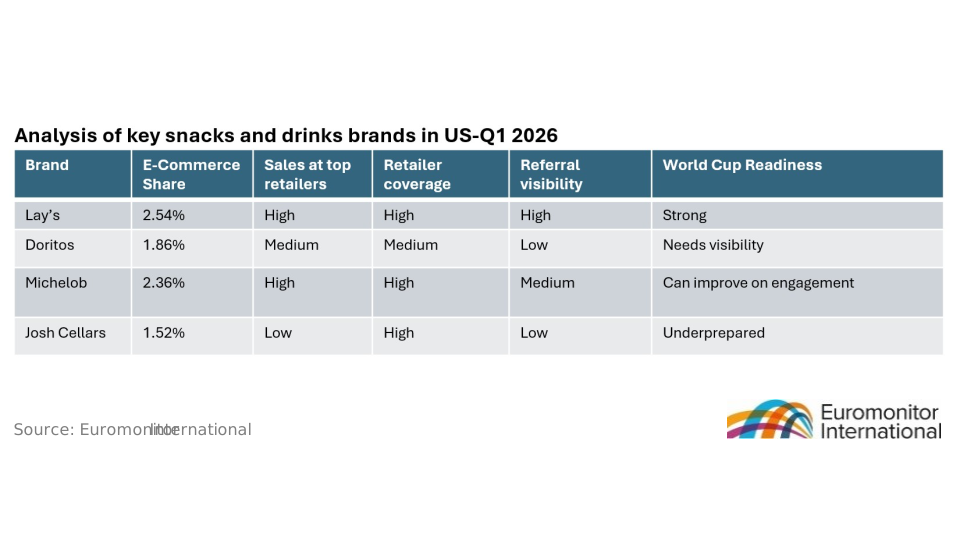
The picture is more nuanced for alcoholic drinks. Michelob, the strongest online performer in the US, is well aligned with the World Cup occasion, particularly around social viewing and match-day consumption. Instacart, Walmart and Total Wine are important retailers in the category.
However, different retailers will play different roles during the World Cup. Instacart may overindex for immediacy.
The occasion is key but digital maturity decides who converts
The World Cup creates demand across multiple commercial occasions that go far beyond official sponsorship opportunities.
For brands, the challenge is to define where they fit in the fan journey and which commercial moments they can credibly own, from pre-match discovery and live engagement to rapid fulfilment and post-match retargeting.
But the World Cup will favour brands that are digitally mature. Event-led demand may lift the category, but not every brand will benefit equally. Brands with weaker digital commerce foundations risk generating awareness that competitors convert.
For deeper insights, watch the on‑demand webinar: From search to conversation: How AI is rewiring the traditional shopper funnel.