
Falling inflation does not mean falling prices. In most markets, prices are still rising, just more slowly, while recent years' higher costs stay locked in. The outlook offers little relief: regional growth is expected to remain weak in 2026, with soft private consumption and slower job creation. In a region where much spending goes to essentials, the strain persists. The result is not less consumption, but more disciplined consumption.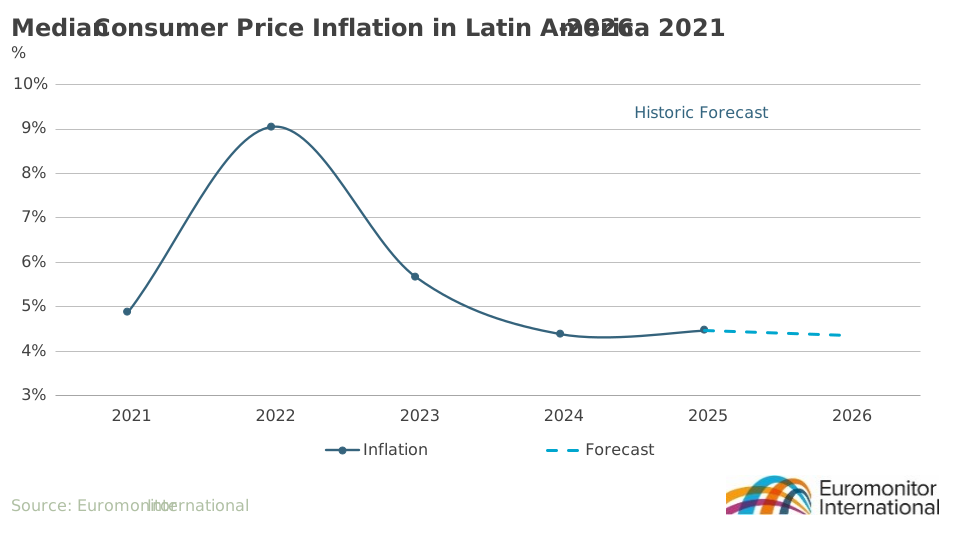
Latin Americans are not only cutting back; they are adapting and doing so deliberately. Shoppers plan their trips, compare prices and spread spending across a wider mix of stores, apps and discounters, choosing whatever stretches their money furthest. Most still buy groceries in-store even as mobile becomes the fastest-growing grocery channel – a sign of how fluidly they now move between formats to find value.
This is more than simply buying cheaper. The same shopper can choose own-label in one category, stay loyal to a trusted brand in another, skip weekday takeaways, yet still pay for a weekend treat. Consumers are not abandoning value; they are redefining it – and it varies by market. Argentina's near hyperinflation drives the most defensive behaviour, Brazil leads on the planned multi-store shopper, Colombia in hard discounters, and Mexico in convenience and proximity formats. A single regional pricing response will misfire.
Smaller packs and own-label brands win
One visible result is the redesign of pack sizes and prices. Smaller formats keep products affordable when cash is tight, while larger value packs suit households chasing a lower cost per unit. Shrinkflation – keeping the price while shrinking the pack – is now common enough that the US Bureau of Labor Statistics tracks it. For shoppers, it sharpens the sense that the same money buys less.
The pressure has not eased.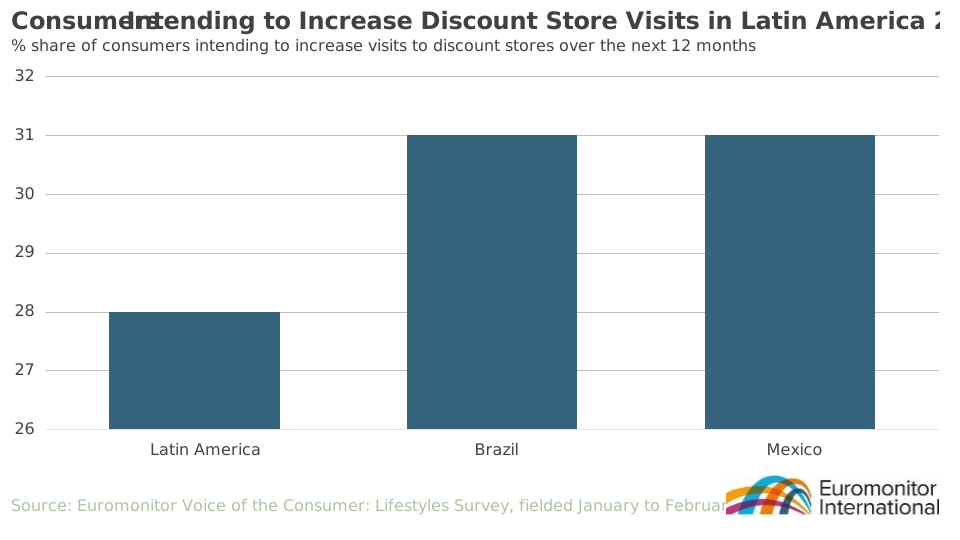
72% of consumers worldwide worry about the rising cost of everyday purchases, up from 71% in 2025
Source: Euromonitor’s Voice of the Consumer: Lifestyles Survey 2026
Private label – supermarkets’ own-brand products – is the clearest winner, typically 10-15% cheaper than leading brands with comparable quality, and expanding fastest in Brazil, the region’s largest economy yet the one with the lowest own-label share. According to Euromonitor’s Voice of the Consumer: Lifestyles Survey, fielded January to February 2025, around 28% of regional consumers also plan to visit discount stores more often, rising to 31% in Brazil and Mexico, where private label is strongest.
Premiumization does not die under pressure
Inflation does not kill premiumization – the shift towards higher-quality, higher-priced products. Under pressure, shoppers cut some categories while protecting or even raising spending in others: health, wellness, pet care, beauty and affordable treats remain resilient where the benefit is clear. Own-label itself is moving upmarket: in Chile, Cencosud launched its premium own-label line, Cuisine & Co, in 2019, and it now sits alongside national brands. The market is splitting into two: affordability is essential at one end; sharply targeted premium products keep winning at the other. For companies, that calls for segmentation, not a single price cut across the range.
From inflation tracking to value tracking
Tracking inflation is still essential, but on its own it is no longer enough: it shows where prices are heading, not how people respond. At Euromonitor, we align subcategory-level CPI data from national statistics agencies with our own taxonomy to estimate historic, current and forecast unit price growth. We pair this with Via, our product and pricing intelligence platform, which tracks daily prices across more than 1,500 online retailers in 40 countries – capturing the shrinkflation and promotional shifts that headline inflation can miss.
Latin American consumers have learned to navigate volatility – they are not spending less but spending smarter. The winners will be the companies that accept the consumer has changed and keep asking where shoppers still see value.
Read our report, The Rise of Private Label Packaged Food in Latin America, for a deeper look at how value-driven shoppers are reshaping the region.
