
In today’s crowded digital marketplace, shoppers seamlessly navigate multiple e-commerce sites, comparing prices, products, and brands. Tracking cross-shopping behaviour is becoming crucial. However, without standardised, cross-comparable clickstream data, making sense of the vast amounts of available data remains a challenge. By relating browsing patterns to sales and prices, brands and retailers can pinpoint where they win, where they lose, and how to refine their strategies to stay competitive.
Engagement and sales conversion differ drastically in facial care
Facial care is one of the leading categories in beauty and personal care. According to Euromonitor International’s E-Commerce system, which uses advanced analytics to track brand- and category-level data across 300 retailers in 15 leading e-commerce markets, online facial care sales in the US reached nearly USD10 billion in 2024 and grew almost 15% versus average growth of 10% for other skin care categories.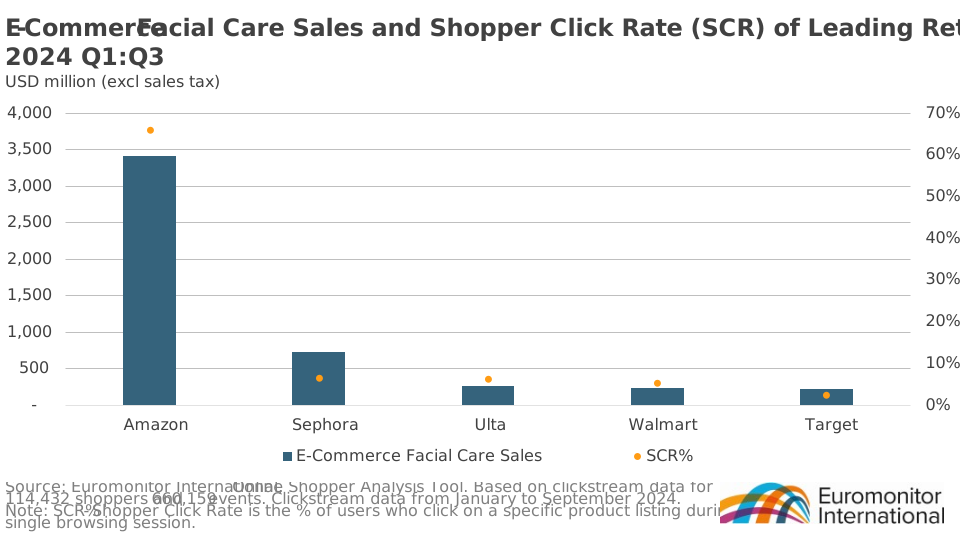
While Sephora and Ulta experience similar SCRs (7% and 6%, respectively), Sephora significantly outperforms Ulta in converting to online sales for the category
Source: Euromonitor International Online Shopper Analysis Tool
This success can be attributed in part to its curated product mix alongside its highly personalised online experience and Beauty Insider loyalty programme, which fosters engagement and converted purchases.
Walmart and Target round out the top five, but while their facial care sales are similar, Walmart’s SCR (5%) is higher than Target’s (3%). Walmart has also seen much stronger sales growth in the category, so here we can see the importance of mass retailers capturing additional shopper attention early in the online sales funnel. Walmart’s ability to attract facial care browsers has paid off, giving it an edge in conversion potential. Now, the retailer can focus on enhancing digital beauty strategies through better product discovery, exclusive offerings, and loyalty incentives. Meanwhile, Target faces the challenge of improving its SCR to stay competitive.
E-commerce retailer overlap highlights key gaps
Beyond sales conversion rates, understanding where else shoppers browse is key to spotting competitive threats and opportunities. Tracking SCR retailer overlap reveals cross-shopping behaviour and competitor engagement. This data helps identify which retailers draw the most shared traffic, uncovering opportunities for growth.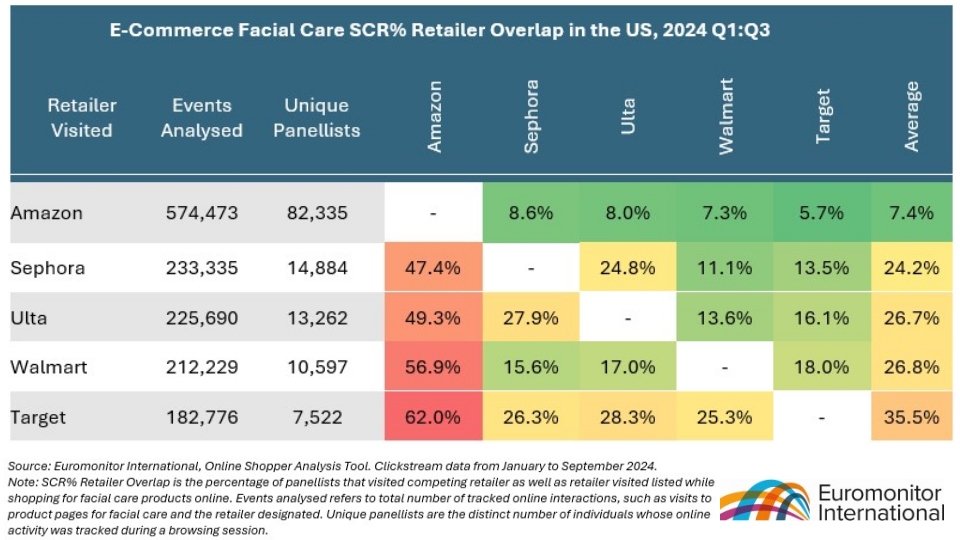
On average, only 7.4% of Amazon facial care shoppers visit other leading retailers during the tracked time period
Source: Euromonitor International, Online Shopper Analysis Tool
Meanwhile, competitors experience much higher cross-shopping rates, indicating that shoppers are far more likely to compare pricing and product offerings outside of Amazon than within it.
Shopper behaviour can shift quickly, though, making it essential to track SCR regularly. Walmart saw the second highest sales growth and has been gaining share from Sephora and Ulta. While Walmart’s average SCR overlap is similar to that of Sephora and Ulta, shopper migration patterns reveal different opportunities across retailers. Sephora shoppers are less likely to visit Walmart than vice versa—11.1% of facial care shoppers who visit Sephora also visit Walmart, whereas 15.6% of Walmart shoppers also browse Sephora. Both Sephora and Ulta need to more aggressively convert high-interest shoppers into buyers before Walmart further erodes their market share. Understanding shoppers’ “wandering eyes” allows retailers to make targeted and trackable adjustments to pricing, promotions, and assortment strategies.
Lower-priced brands see high engagement on Amazon
Finally, with conversion rates and retailer overlap data in hand, analysing brand performance can identify where to focus efforts. As Amazon continues to dominate in both sales and shopper click rates, gaining granular insights into its brand-level metrics yields actionable insights.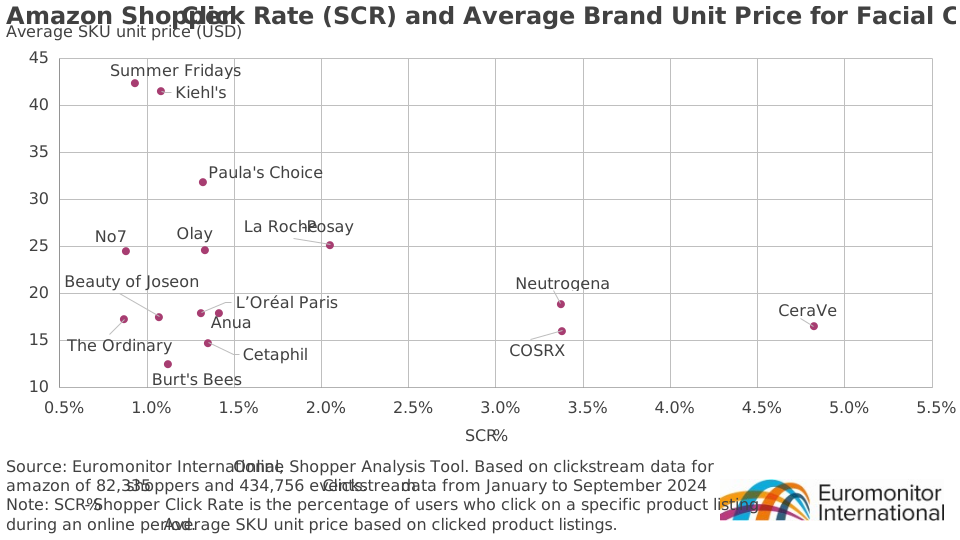
For more information on our e-commerce coverage, see details here. Read our report, The State of Marketplaces in FMCG E-Commerce, for analysis on the evolving nature of online marketplaces, and our briefing, Top Five Trends in Loyalty, for more analysis on the drivers set to shape customer loyalty in 2025 and how brands tackle customer retention.