


Dubai's tourism sector entered 2026 with strong momentum – record visitor arrivals, high hotel occupancy and positive long-term growth prospects. However, the US/Israel-Iran war tested two critical pillars of Dubai's boom – its safe haven reputation and its role as the East-West travel crossroads – as airspace closures disrupted Gulf transit corridors.
While the impact on arrivals was notable, the recovery revealed that tourism demand did not disappear but shifted. By mobilising hotels, attractions, retailers and government stakeholders around a common strategy, Dubai redirected demand towards residents and regional travellers while maintaining engagement with future international visitors. Six months on, the recovery reveals not just Dubai's resilience, but the adaptability of its model.
From strength to shock: The US/Israel-Iran war tests Dubai's model
Dubai's tourism industry entered 2026 from a position of strength. The city welcomed approximately 19.6 million visitors in 2025, supporting high hotel occupancy and strong room revenues. Long-term growth potential remained positive, with the Middle East and Africa region expected to generate around USD51 billion in travel spending growth over 2025-2030. Dubai's rise rested on two pillars: a hard-won reputation as a safe haven in a volatile region, and the global connectivity that made it the East-West crossroads.
Dubai welcomed 19.6 million visitors in 2025
Source: Euromonitor International, Passport Travel
However, the US/Israel-Iran war placed immediate pressure on travel demand, disrupting this optimistic outlook. Hotels that had forecast occupancy above 80% for March 2026 saw actual levels fall to around 20% by April, while some hotels dropped below 10% or closed temporarily. Airspace closures across the Gulf disrupted the transit corridors that connect Dubai to the world, reducing the connecting traffic that typically accounts for around half of its passengers. Much of this demand did not shift within the region – it left the Gulf temporarily, and Dubai's domestic and regional base helped bridge the gap.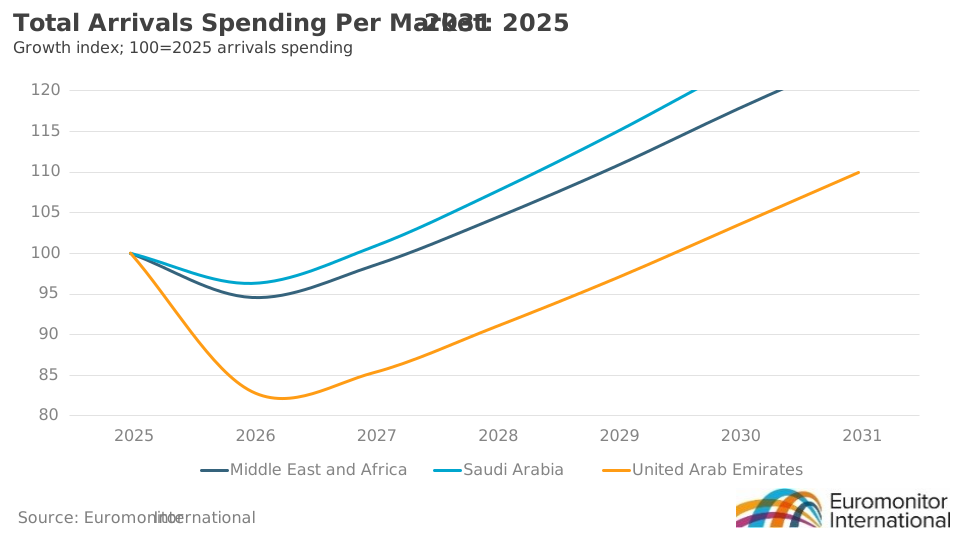
The pivot: Redirecting demand when the world stops coming
Dubai's early recovery strategy focused on activating the full tourism ecosystem rather than individual sectors in isolation. What began as a staycation push for UAE residents became a coordinated effort across hotels, attractions, retail and foodservice. The "Kids Go Free" summer campaign encouraged local families to explore Dubai through bundled hotel and attraction offers. By highlighting local experiences and value, it sustained demand and built resident loyalty.
Recovery also moved beyond promotions into destination advocacy. In July 2026, Dubai launched "A Dubai Invite", a city ambassador programme encouraging residents to invite friends and family to visit. Alongside an AED1 billion stimulus package, these measures not only held the line but revealed the depth of Dubai's domestic market – a demand base that proved more robust than expected and now complements international arrivals. Demand is gradually normalising, supported by domestic and regional travel, as well as improving traveller confidence.
The road ahead: What Dubai's recovery means for Gulf travel
Over the next six months, Dubai's tourism sector is likely to move from crisis response to demand conversion. Much of the demand lost during the disruption appears to have been postponed, with interest already strengthening for the year’s final quarter. As confidence returns and connectivity stabilises, Dubai is well positioned to recapture international visitors through its strong reputation and infrastructure.
The resident market has proven a genuine demand engine, complementing rather than merely substituting for international visitors. Together, recovering international arrivals and resilient domestic and regional travel should support market rebalancing and reinforce Dubai's position as the region's tourism leader.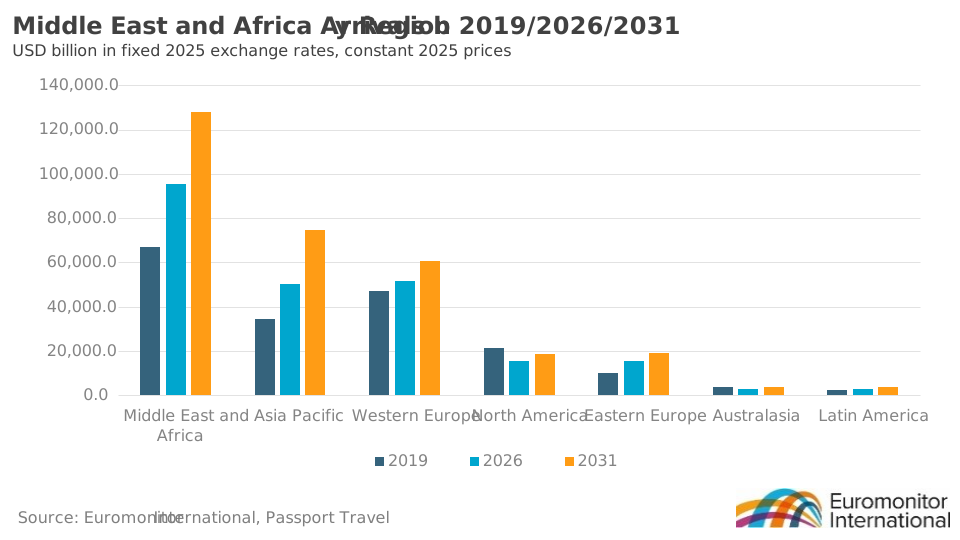
The war did not break Dubai's model but tested it. The response revealed a resilience that positions the city well for recovery. For operators, the lesson is to diversify before the next shock, not after. Those that broaden their customer base and collaborate across the ecosystem will capture returning demand.
Read our article, How Travel Learns from Crisis, for more analysis on travel resiliency amidst global volatility.