
With the FIFA World Cup now firmly on the scoreboard, organisers and host cities alike are reflecting on the tournament’s tourism impact. The results reveal more than just the power of a singular football tournament, providing important insight into the state of the US tourism market and the power of mega-events to drive meaningful tourism impact. Despite some localised wins, the tournament underperformed revenue and tourism impact expectations, highlighting the challenging environment faced by the US tourism industry and the overall limits of mega-events to overcome broader industry context.
Tournament travel produces mixed results
Record-breaking attendance was not enough for the tournament to rise above the broader difficulties facing the industry, including high prices, negative perception of the US and shifting immigration and visa policies. Inbound tourism to the US grew only 3% in June, aided by a favourable contrast with the previous June’s decline and a return to growth for Canadian visitors. Overseas arrivals fell 2% in June, though the improvement from May’s 7% decline suggests the tournament did provide a modest boost. The return to 7% decline in July, however, highlights the transitive nature of that growth. Some host cities announced substantial boosts to tourism numbers, such as Kansas City’s estimation of 650,000 visitors to their city of just 500,000, while others have described much more modest visitor growth.
Mirroring the industry as a whole, domestic tourism outpaced international for the tournament, limiting spending as high-spending international visitors stayed away. Bank of America estimates an overall spending boost of USD40 billion globally and USD20 billion in the US, falling short of pre-tournament predictions of USD80 billion globally. Inbound arrivals are forecast to show strong recovery, however, with a boost from the 2028 Olympics, while domestic trip growth will plateau.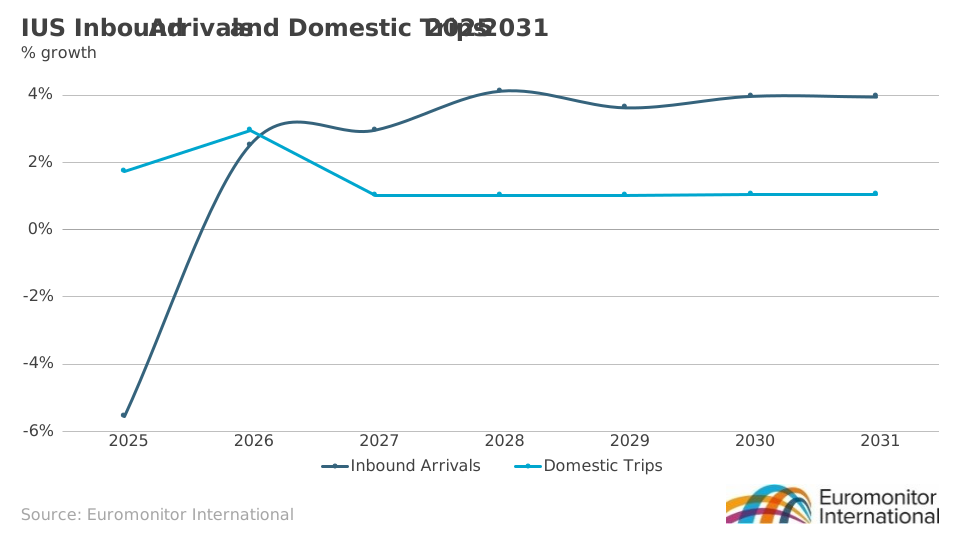
Tournament produces uneven industry gains
From a lodging standpoint, many hotel chains and short-term rental companies in host cities did see sales growth, but this was largely rate-driven and not occupancy-driven. Price surges were tolerable for some domestic attendees, facing fewer overall costs, but deterred enough internationals that many host cities reported decline in occupancy rates while RevPAR increased across the board. Adding to pricing difficulties, the staged advancement format of the tournament led to many last-minute bookings that made it hard for hotels to predict occupancy, adjust pricing and plan generally. Airlines reported limited impact from the tournament, benefiting from localised demand spikes to host cities but, overall, not seeing material impact from the tournament.
2026 full-year projections for passengers carried at airports in and near host cities grew at a similar rate to non-host city airports at 1.4% and 1.3%, respectively.
Source: Euromonitor International
What this tells us about the power of events to drive tourism
While many destinations view mega-events as an opportunity to drive tourism revenue, this tournament revealed a more mixed bag of lessons for the US looking ahead to the 2028 Olympics. Global events have the power to accelerate demand, but only in a specified, localised way. Affluent travellers will pay more to fly to and stay in a specific place, but the same high prices are likely to deter regular travellers, dampening the overall impact. Mega-events are also beholden to larger economic and geopolitical conditions. Inflation, visa waiting times and geopolitical tensions all weighed on US arrivals before, during and after the tournament. Harder to measure is the potential long-term impact an event like this has on reputation and return visitation. As World Cup visitors were probably already aware of the US as a potential destination, this impact is likely to be more specific to lesser-known host cities as destinations.
The mixed tourism industry impact from the World Cup in the US speaks to the substantial struggles faced by the industry, demonstrating that while international events can provide some localised boost, they still operate within the confines of the wider industry. While Los Angeles 2028 is expected to boost tourism, the results of the event and others in the future lie in the broader tourism context. An event in and of itself is not enough to drive sustained impact. Organisers and industry operators will need to invest in encouraging advanced booking, moderating price increases, and encouraging extended stays and further regional travel if they hope to fully reap the benefits of large international events.
Read our article, Top Five Trends Shaping Travel into 2026, or download our report, Travel in an Age of Poly-Crisis, for more analysis on trends shaping the travel industry.