


A very strong El Niño event, very likely to occur in late 2026 and/or early 2027, could affect agriculture, food prices, energy demand and supply chains across Latin America. Heavy rains can disrupt crops and logistics, reduced harvests can increase food prices, heat can lift cooling needs, and damage to transport routes or production lines can affect product availability. The last major El Niño event, in 2023-2024, brought record global heat, severe droughts, wildfires and extreme rainfall, generating economic and food security impacts.
This article outlines where a stronger El Niño could pressure consumer goods and how companies can prepare for changing weather patterns, commodity volatility and evolving consumer needs. According to the Euromonitor Voice of the Consumer: Lifestyles Survey, fielded January to February 2026, 66% of consumers in Latin America say they are concerned about climate change, making climate resilience relevant to operations and brand trust.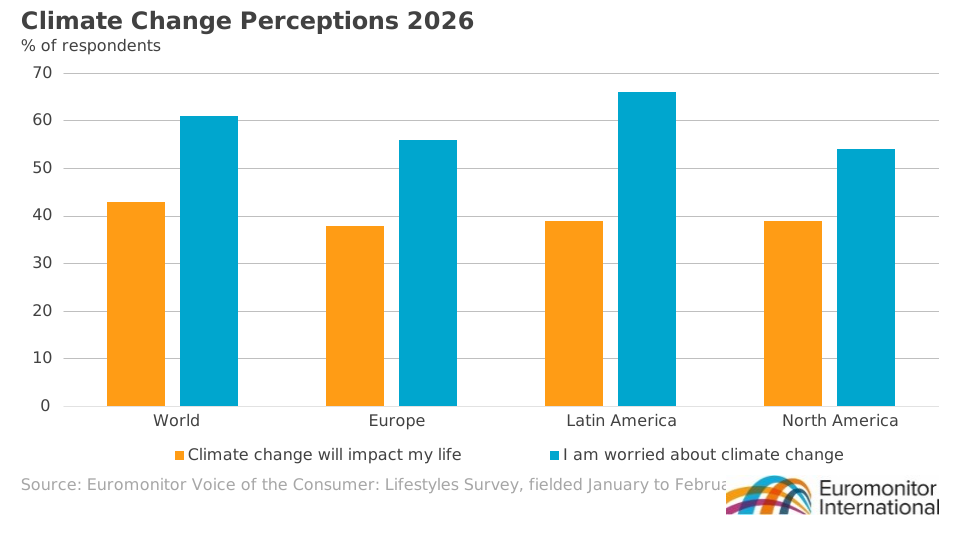
Consumer goods industries likely to be affected in 2026-2027
El Niño’s impact will vary by industry, with the greatest pressure on categories exposed to heat, rainfall, agricultural supply, logistics and changing consumer routines.
In beauty and personal care, products will need to perform under more extreme weather conditions. Stick deodorants may melt in intense heat, fragrances may fade faster as consumers sweat more, make-up may need stronger fixation, and skin care formats may need to avoid unpleasant wet sensations. Dry sensory experiences and heat-proof performance will be better placed to win consumer trust.
In consumer health, companies will need to identify new patterns of seasonality. Demand may shift in timing, last longer or shorten, making needs harder to anticipate. In 2026, Saharan winds lasted longer in Central America, widening demand for eye care and allergy products, while mosquito-borne diseases are migrating and affecting new populations in South America.
In non-alcoholic drinks, favourable weather conditions for insect reproduction could contribute to the spread of citrus greening disease, affecting the supply chain for juices and carbonates, particularly in major orange-producing countries such as the US and Brazil.
For food, El Niño generally presents risks, but also opportunities. Rainfall can restore soil moisture, but intense precipitation can flood crops, delay planting and harvesting, and erode agricultural land. Exposed categories include grains and rice, oils, sugar, cocoa, coffee, dairy and meat. Warmer Pacific sea surface temperatures can also affect marine life and fish availability in traditional fishing areas. Since many commodities are concentrated in few producing countries, localised climate events can quickly become global supply shocks and trigger sharper price volatility. Extreme rainfall can also damage roads, collection centres and transport networks, making fresh foods more expensive.
In consumer appliances, intense heatwaves can benefit air conditioners, but droughts and low water levels can disrupt supply. In areas such as the Manaus Free Trade Zone in the Amazon, transport boats may be unable to navigate safely, limiting air conditioner availability at a key moment for growth.
How companies can prepare for climate volatility
For companies, preparing for El Niño means planning for several scenarios at once. Consumers have learned to do more with less, and high volatility has pushed them to adapt faster than the market itself. Apparel must work across weather conditions: waterproof and warm, but also practical in hot weather. Trainers, UV clothing and insulated bags show how all-conditions-ready products can respond to less predictable climates.
In beauty and personal care, Arabic fragrances have emerged as an attractive long-lasting option, including under warm and humid conditions.
Unstable weather conditions make supply chain alternatives critical. Nearshoring has helped companies reduce exposure to international constraints, but El Niño’s regional impact may also push them to source from less affected global markets, especially to manage price pressure in a high-inflation region.
Food manufacturers are increasingly reformulating products as agricultural commodity prices rise and become more volatile. Strategies include reducing costly ingredients, substituting volatile commodities with similar alternatives, and investing in technologies that replicate flavour profiles while reducing commodity exposure.
In summary, El Niño could increase inflationary pressure and volatility across Latin America. Companies will need to prepare for changing rainfall patterns, adapt products to adverse weather, review insurance coverage and remain ready to benefit from favourable conditions, such as sufficient rainfall for maize or soybeans. Scenario planning can help companies protect supply, respond to shifting demand and build trust with consumers facing uncertain weather.
Download our report, Navigating Commodity Market Risks and Volatility, for more analysis on climate shocks, agricultural price volatility and commodity risk management.