
Nicotine and cannabis are experiencing significant transformation. Growth is currently led by smokeless products, as regulatory frameworks become increasingly stringent worldwide. With global GDP growth slowing to 2.9% and inflation at 4.6% in 2026, companies are accelerating efforts to diversify portfolios, enter new categories, and adapt to evolving consumer preferences. This update presents the most actionable trends, regulatory changes, and strategic responses shaping the outlook for these industries.
Modern oral products are on track to surpass traditional snus in market share in Sweden and Norway, with 55% and 56% of oral category volume, respectively.
Source: Euromonitor International
Smokeless products outpace combustibles
Global nicotine is undergoing substantial change, primarily due to the rise of reduced-risk products such as nicotine pouches and heated tobacco. In the US, sales of smokeless products have increased while cigarette and vapour sales have fallen. It is now common for consumers to regularly use two or more nicotine product formats, indicating a move away from traditional combustibles towards poly-usage.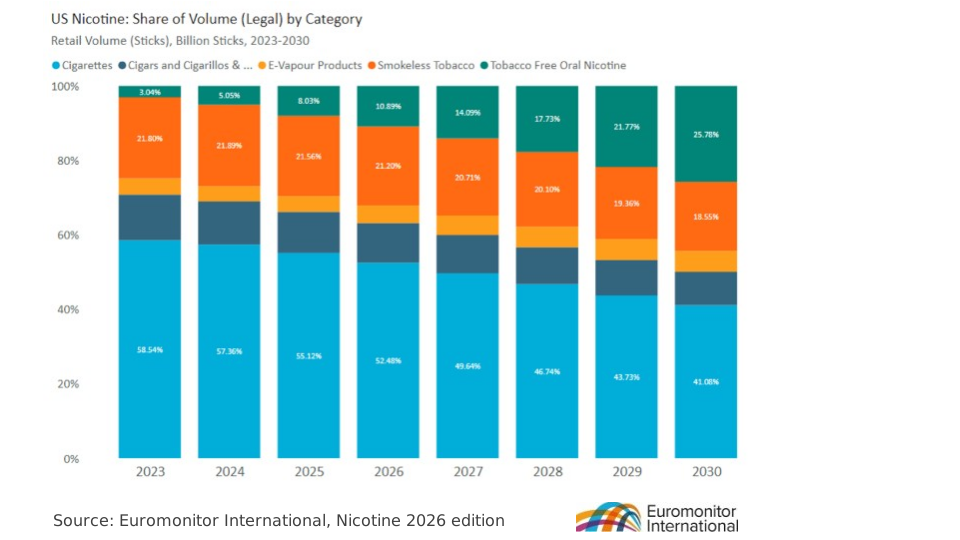
Regulatory tightening and tax pressures intensify
Regulatory environments are evolving as authorities seek to reconcile harm reduction objectives with youth protection measures. The US FDA has renewed MRTP approvals for IQOS and, for the first time, authorised reduced-risk claims for 20 Zyn pouch products. This decision allows Zyn to communicate lower risks relative to cigarettes but also faces criticism from public health organisations concerned about youth targeting.
Globally, governments are increasing taxes on tobacco and nicotine to curb consumption and boost revenues. Finland will raise nicotine pouch taxes by 37% in 2026. In Germany, successive tobacco tax rises will bring cigarette prices to EUR12 per pack by 2030. France has banned oral nicotine products, including pouches, creating significant policy disagreements within the EU. Countries such as Sweden, Italy, and Greece are contesting the ban, arguing it undermines harm reduction and the single market.
Other regulatory actions include the UK’s phased generational tobacco ban, Indonesia’s new e-cigarette regulations, and Spain’s restrictions limiting vape and pouch sales to licensed retailers. These measures are redefining retail channels, product availability and the dynamic between the compliant and non-compliant market.
Cannabis expands amid legal uncertainty
Legal cannabis maintains growth, supported by both adult-use and medical products. Globally, it will reach USD70 billion by 2030. CBD and non-intoxicating cannabinoids are expanding. In 2026, Trulieve became the first cannabis company to be uplisted on the NYSE, following the federal reclassification of medical cannabis to Schedule III.
Cross-border partnerships and acquisitions are increasing, especially in Europe. Organigram’s EUR107 million purchase of Germany’s Sanity Group, supported by BAT, and Curaleaf’s acquisition of Four 20 Pharma in Germany demonstrate the focus on achieving scale and optimising supply chains. In the UK, imports of medical cannabis more than doubled in 2025, with Canada supplying up to 80% of the market.
However, regulatory uncertainty persists. Mexico’s legal framework remains unresolved, and the UK faces challenges with CBD product authorisations. France is finalising new medical cannabis rules, while Canada’s hemp industry is advocating for broader legislative reform. These conditions create both opportunities and compliance risks for market participants.
Macroeconomic headwinds and future outlook
The Strait of Hormuz blockage has pushed Brent crude prices up 45%, raising transport, manufacturing, and food costs. Global GDP forecasts are down and inflation is up. The UK and Eurozone are hardest hit due to their reliance on imported energy, but US firms with diverse portfolios and strong domestic demand are coping better.
Tobacco-free oral nicotine is fastest growing, with a 20.5% volume CAGR projected for 2025-2030. Nevertheless, cigarettes will retain the largest share, despite volume decline. For industry players, it is essential to prioritise investment in reduced-risk and smokeless formats, maintain vigilance regarding evolving regulations, and strengthen resilience to macroeconomic shocks.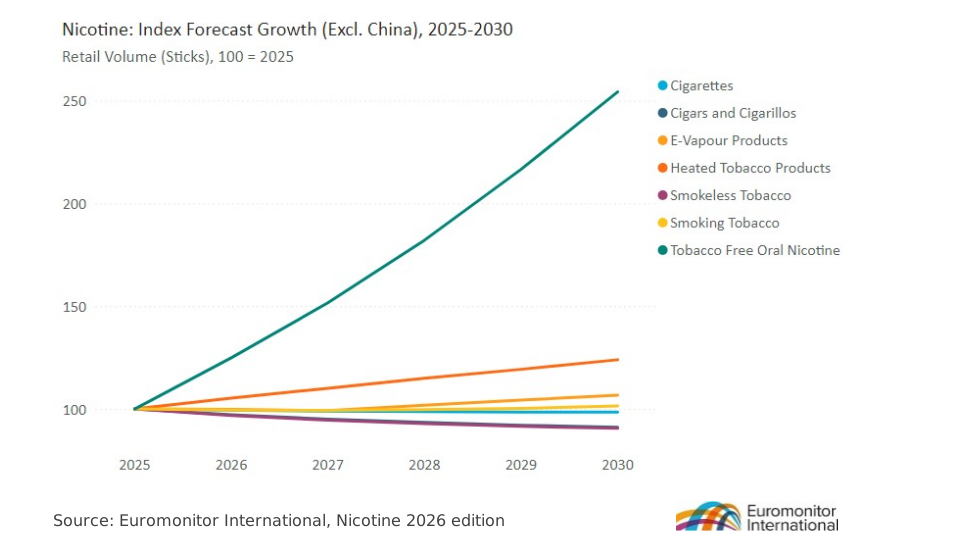
Further analysis on this topic is available in the full report, What is Happening in Nicotine and Cannabis H1 2026.
This article was produced with the assistance of AI. All information is original to Euromonitor and is drawn from the report, What is Happening in Nicotine and Cannabis H1 2026. The final article has been extensively reviewed by the in-house team to ensure the highest standards of accuracy and integrity.