
Rising regulation reshapes market structure
Regulation is no longer acting as a simple demand suppressor but as a force that shapes how consumers navigate legal and non-compliant channels. This creates structurally fragmented markets where performance often masks underlying volatility. The interaction between taxation, flavour/product restrictions, and enforcement asymmetry has made illicit trade a persistent structural component rather than a temporary distortion
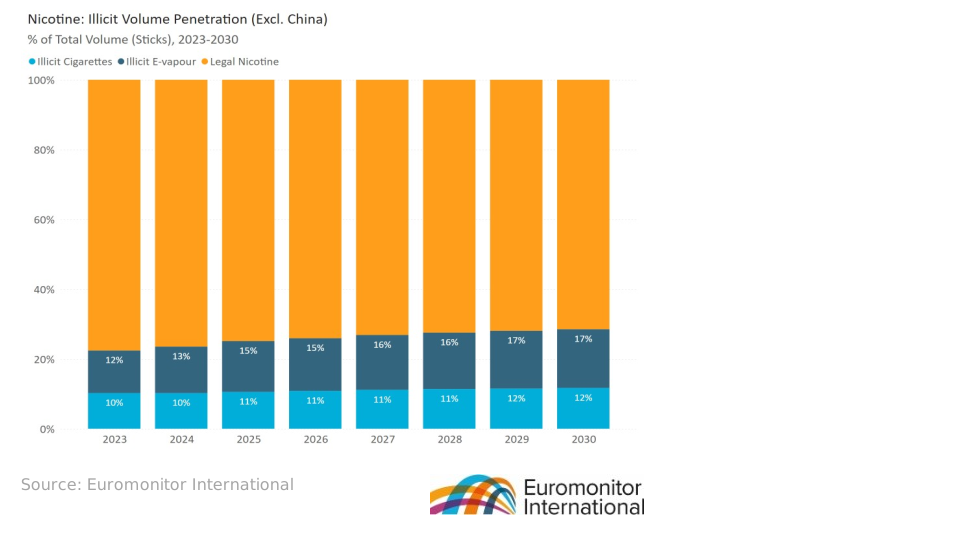
The result is that market growth or decline increasingly reflects the balance between formal and informal systems rather than underlying consumption trends. Companies must therefore assess not only regulatory direction but also the credibility of enforcement and channel leakage when prioritising markets.
Visibility collapse forces acceleration beyond smoking
Smoking is becoming less visible and less socially embedded. This reflects not just declining consumption, but a shift in how tobacco is experienced and perceived. As visibility declines, traditional tobacco products lose cultural relevance, accelerating the shift towards more discreet and adaptable alternative formats.
For industry players, rapid transformation is essential. Competitive advantage now depends on how quickly portfolios are repositioned towards formats that remain relevant and accessible in changing social environments.
Format navigation becomes the norm
Consumer adoption is no longer a linear pathway from cigarettes to alternatives, but an intricate web in which different products serve distinct functional and situational roles. This reflects both regulatory fragmentation and more nuanced decision-making, where cost, availability, and situational appropriateness drive consumer behaviour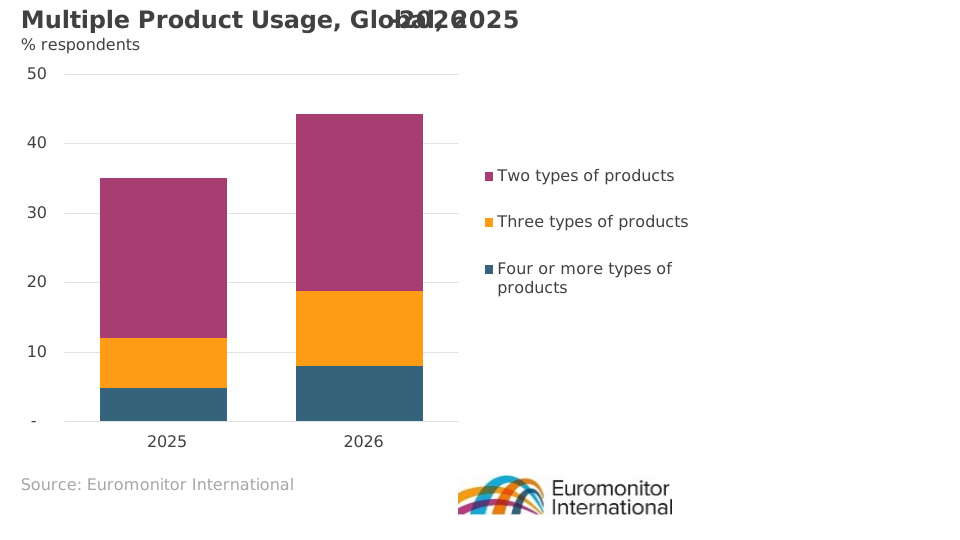
This fundamentally changes competitive dynamics. The battleground shifts from individual product categories to portfolio ecosystems, where the ability to retain consumers across multiple touchpoints becomes more important than winning in a single format. Portfolio gaps now translate directly into retention risk.
Affordability architecture expands
Affordability pressures are reshaping pricing strategies across all nicotine categories. Markets are moving beyond traditional premium-versus-value segmentation towards more complex price ladders. This shift is driven by inflation, taxation, and consumer downtrading. Non-compliant and illicit products are also capturing demand where legal options are unaffordable.
Revenue growth now depends on disciplined price architecture. Companies must balance margin protection with volume stability and use portfolio design to retain consumers across spending levels.
Beyond tobacco and into nicotine and stimulation
The industry boundary is expanding. While nicotine remains central, interest is growing in broader stimulant and functional product propositions. This shift reflects evolving consumer needs. Products focused on energy, focus, or wellness are increasingly appealing to core nicotine users seeking need-state satisfaction rather than specific ingredients. Over time, growth may come as much from meeting these adjacent needs as from traditional nicotine consumption.
This creates both opportunities and risks for companies. Expanding beyond nicotine opens new revenue streams but also increases competition from non-nicotine alternatives. Success will depend on how effectively brands reposition while maintaining relevance within regulatory frameworks.
What this means for strategy
The nicotine market is becoming more complex and fragmented, with success increasingly dependent on portfolio management rather than individual product performance. Growth will be driven not just by volume expansion, but by where and how demand is captured.
This places pressure on companies to:
- Accelerate the transition towards reduced-risk products
- Build integrated, multi-format portfolios
- Strengthen pricing and revenue management strategies
- Explore adjacent functional categories while maintaining regulatory alignment.
Companies that navigate the industry's evolution with speed and discipline will be best positioned to capture future growth in the dynamic nicotine landscape.
For more details on the latest performance of the nicotine industry, read our reports, the World Market for Nicotine and Top Five Trends in Nicotine.