Luxury and FashionOur global industry experts explore the key trends shaping consumer preferences that drive fashion and luxury, using timely insights to stay one step ahead of the latest innovations and business strategies.
As global luxury brands look beyond China for future growth, the Americas has become one of the industry's most strategically important regions. However, this is not simply a story of market expansion. Indeed, luxury in the Americas is entering a new phase, one defined less by scale and ownership and increasingly by selective relevance, authenticity, experience and emotional connection.
Luxury growth shifts from scale to selective value
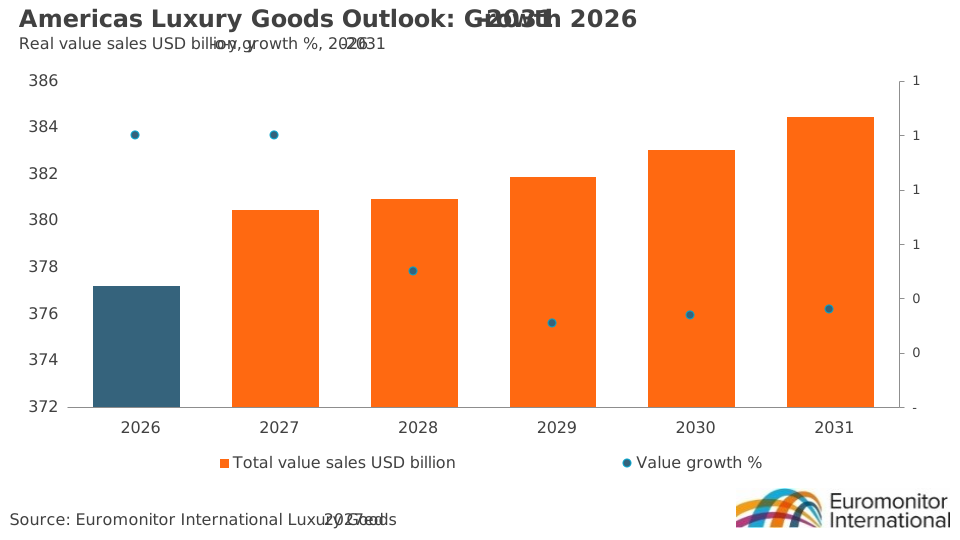
The region's total luxury market is projected to reach USD 377 billion in 2026, growing by 14% between 2021 and 2026. But beneath this resilience, the foundations of growth are changing. Consumers are becoming far more discerning about where and why they spend, increasingly questioning whether products truly justify their high-ticket price points. In this context growth can no longer rely solely on selling more products to more consumers.
Geopolitical uncertainty and concerns around the cost of living have undoubtedly encouraged a greater emphasis on quality over quantity, while climate concerns have elevated ethical considerations. On the same breath, as consumers become more value-conscious, craftsmanship, authenticity and product longevity are also gaining importance.
Increasingly, luxury is being evaluated not only by what it delivers in the material sense, but by the emotional value it creates. As a result, spending is shifting from acquiring more things to cultivating better experiences.
Source: Euromonitor International
Travel, wellness, hospitality, gastronomy, lifestyle and cultural experiences are competing directly with traditional luxury goods in terms of discretionary spending.
One region, very different luxury markets
The Americas cannot be viewed as a single luxury market. The contrast between the mature scale of the United States and the evolving opportunities in key markets like Mexico and Brazil is increasingly important for brands seeking growth.
The United States remains the region's dominant luxury market at approximately USD 309 billion. It is also the world's second-largest luxury market after China and the world's largest wealth market, giving it an outsized influence on the industry's future direction. However, growth is becoming increasingly decoupled from physical expansion.
Mexico presents a very different opportunity. Experiences account for 43% of total luxury sales, compared with just 9% in the United States, highlighting the country's distinctive luxury hospitality profile. Rising affluence, retail and brand expansion, luxury tourism, hospitality investment and growing interest in wellness are reinforcing this momentum.
On the other hand, Brazil occupies a middle ground. Consumers continue to show strong demand for traditional luxury categories such as luxury cars, jewellery and premium drinks, while experiential travel and luxury hospitality gain traction. The result is a market where ownership and experiences coexist, with consumers balancing the desire to own luxury products with a growing appetite for meaningful, experience-led consumption.
The rise of experiential luxury
Mexico exemplifies luxury's evolution beyond products, with 248 luxury hotel projects under development expanding opportunities across hospitality, wellness, travel, gastronomy and experiences. With Gen X representing around 64% of Mexican consumers earning over USD 250,000, legacy, wellbeing and meaningful experiences are particularly relevant.
As luxury becomes more experiential, retail is evolving into a lifestyle and cultural platform, integrating dining, art, wellness and community alongside shopping. From Mercedes-Benz Studio in Toronto to Aspen Snowmass's luxury lifestyle ecosystem, brands are creating deeper connections beyond standalone transactions.
The common thread is a shift from standalone transactions to deeper brand engagement. The opportunity for luxury brands lies in creating more meaningful connections with consumers by becoming part of their lifestyles, reflecting their values, identities and communities, rather than simply selling products.
The new luxury value equation
Digital transformation is of course also behind these accelerating changes in the Americas. While e-commerce remains important, luxury brands are increasingly competing for attention before purchase intent is fully formed. AI, social platforms and digital communities are reshaping how consumers discover brands, evaluate products and determine relevance.
As economic uncertainty persists, consumers are not abandoning premium spending. Instead, they are becoming more selective about what deserves a premium. Craftsmanship, authenticity, durability and longevity remain essential, but emotional value is becoming a more powerful part of the equation.
Ultimately, the future of luxury in the Americas will be shaped by four interconnected forces: selectivity, experience, technology and belonging. The brands that succeed will not simply create products consumers want to own. They will create experiences, communities and ecosystems that consumers want to belong to.
In that sense, the next chapter of luxury growth in the Americas is likely to be less about selling more to more people and more about becoming more meaningful to the right people.
Amid geopolitical uncertainty, climate pressures and a more cautious consumer environment, luxury brands are looking beyond China for growth, with the Americas…
Sportswear in Western Europe continues to outperform the wider Apparel and Footwear market, but the category needs to evolve to keep its value proposition as…