
Coffee has long been one of the world’s most established sources of everyday energy but is facing increasing competition. Modern consumers are seeking greater control over their energy, focus and wellbeing, while energy drinks and supplements often communicate their functional benefits more explicitly. This trend presents a clear opportunity for coffee brands to reclaim consumption occasions by repositioning caffeine, decaf, and functional claims into accessible, occasion-focused offerings that suit increasingly fragmented routines.
47% of global consumers who at least occasionally consume caffeine are trying to reduce or quit their intake. This does not mean consumers are abandoning energy. Instead, it points to a growing desire to control their caffeine consumption – when, why, and how much.
Source: Euromonitor Voice of the Consumer: Health and Nutrition Survey, fielded February 2026
How energy management is transforming coffee
Global coffee volume growth has remained modest in recent years. By comparison, energy drinks have grown strongly, while new caffeine formats such as pouches and gummies are expanding the competitive set through clearly positioned, personalised energy offerings.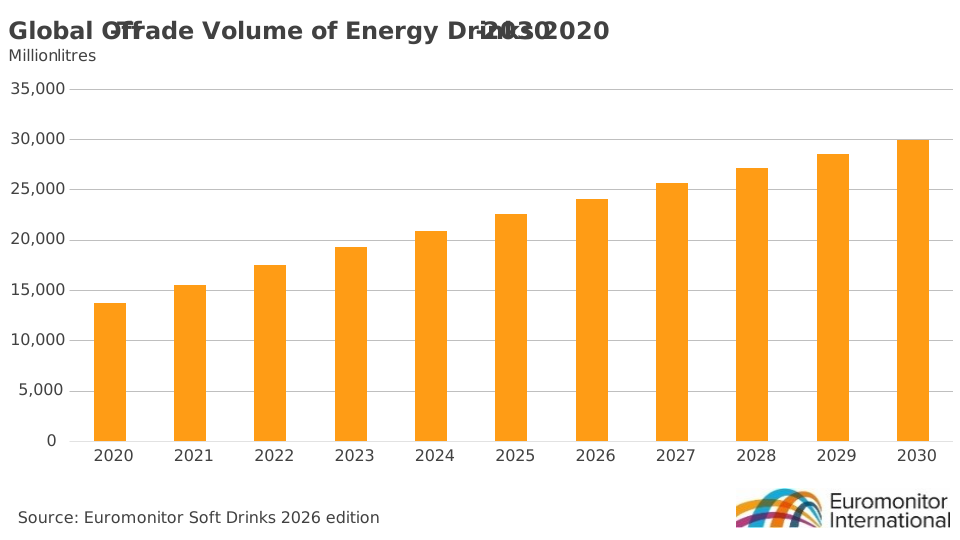
Coffee has many of the attributes that consumers are looking for. One of its biggest challenges is not the underlying product, but how its benefits are communicated. Despite caffeine being one of coffee’s defining characteristics, just 0.1% of coffee products were positioned with an “energy boosting” claim in 2025. Consumers require straightforward cues about when and why to select a particular coffee, whether for high energy, sustained focus, a balanced effect, or minimal or zero caffeine.
At the centre of this shift is the “energy manager”, a consumer who actively manages energy and caffeine consumption according to changing daily needs. As routines become less predictable, coffee brands must respond with products that match evolving consumer needs throughout the day.
Building ranges around need states, not just decaf
Energy management does not represent a single consumer archetype. While some individuals are motivated by the pursuit of greater stimulation, others are reducing caffeine for reasons such as sleep, stress, pregnancy, or broader health considerations. Many consumers also want different levels of caffeine at different times of day. Brands therefore need to move beyond the traditional binary of regular versus decaf, creating ranges centred on need states and occasions. Recent cases underscore this trend. Explorer Cold Brew (US) acquired decaf and half-caf specialist Savorista, while UK-based TrueStart Coffee secured funding to grow its decaf, half-caf and high-caf offer. These examples show how caffeine level itself is becoming part of the consumer proposition.
Enhancing visibility and actionability of energy management
To compete more effectively for energy-related consumption occasions, coffee brands need to make energy levels and functional benefits explicit across packs, pods, ready-to-drink products, and menus. Listing caffeine content in milligrams alone is not sufficient. Brands should instead articulate their range within a clear portfolio structure: high energy for mornings, steady focus for daytime work, balanced lift for the afternoon, and low or no caffeine options for evenings and wellness.
Coffee pods represent a key area for innovation. Unlike bean-to-cup machines, pods allow consumers to switch easily from high-caffeine coffee in the morning to half-caf in the afternoon and decaf in the evening. Chooze Coffee (Japan) already uses a visible energy scale, while Starbucks has introduced clearer energy communication across parts of its menu.
Health, trust, and the evolving coffee offer
Black coffee has several inherent advantages over many competing energy propositions, including its natural and virtually calorie-free profile, though these benefits are not always fully recognised by consumers. In the Euromonitor Voice of the Consumer: Health and Nutrition Survey, fielded February 2026, 35% of consumers said they were reducing caffeine to feel healthier, while 32% cited concerns about long-term health risks. Decaf and low-caf products are transitioning from being niche to essential, particularly as younger demographics express rising interest in reducing or ceasing caffeine consumption.
Future outlook: Competing in the energy market
Energy drinks demonstrate the scale of demand for clearly positioned energy solutions, with global volumes anticipated to approach 30 billion litres by 2030. Coffee brands should build clearly signposted caffeine portfolios that guide consumers from high-caf morning options to balanced afternoon formats and low- or no-caf evening choices. By making energy control as easy to understand as roast or flavour, brands can convert caffeine management from a niche claim into a practical daily system.
For additional insights, refer to the full report, Reclaiming the Energy Market: Coffee’s Role in Modern Consumer Lifestyles.
This article has been produced with AI support. All data are original to Euromonitor and derived from the report, Reclaiming the Energy Market: Coffee’s Role in Modern Consumer Lifestyles. The final piece has undergone comprehensive review by the team to ensure strict standards of quality and integrity.