
The toys and games industry is evolving as consumers increasingly seek engagement, self-expression and emotional connection. Growth is becoming concentrated in categories that drive repeat participation, collectability and recurring spending rather than broad-based volume expansion. From social commerce and phygital experiences to mindful play, brands are finding new ways to deepen relationships with consumers long after the initial purchase.
Social media drops: The new toy aisle
Social commerce is quickly becoming a major discovery and purchasing channel for younger consumers. Global livestreaming and social commerce sales are forecast to increase from less than USD200 billion in 2019 to around USD2.5 trillion by 2029. For toys and games, social commerce is particularly effective because products can be demonstrated within seconds through livestreams, short-form videos and creator content. Pop Mart capitalised on this trend by combining Crybaby’s emotional storytelling and distinctive design with limited-edition blind boxes, influencer content and user-generated unboxing videos.
Brands that continue treating social media primarily as a marketing channel risk losing relevance to competitors that integrate social commerce directly into product design, launches and community engagement.
Phygital collectibles: Extending engagement beyond the purchase
As consumers become increasingly comfortable spending on digital content, subscriptions and virtual rewards, opportunities are emerging to bridge physical ownership with digital experiences. The growing popularity of in-app purchases demonstrates that consumers increasingly value ongoing engagement rather than one-time transactions. The success of Monopoly GO! demonstrates the revenue potential of connected physical and digital experiences. Rather than competing with video games, successful toy brands are increasingly learning from gaming's ability to sustain communities and monetise long-term engagement.
Classics reimagined: Kidults fuelling growth
For many kidults, toys are no longer simply products for play. They represent nostalgia, self-expression, identity and collectability. Established brands are capitalising on this demand by refreshing classic intellectual properties through premium products, modern storytelling and stronger lifestyle positioning. The commercial opportunity is substantial.
Global sales of licensed traditional toys are forecast to reach USD37.8 billion by 2030
Source: Euromonitor International
Beyblade X shows how legacy IP can remain relevant through product innovation and community engagement. Takara Tomy saw its Beyblade market share increase from 3.6% in 2021 to 7.1% in 2025.
Brands cannot bank on nostalgia alone but must continually refresh their franchises through new content, premiumisation and community engagement to sustain repeat purchases and long-term relevance.
Local culture play: Relevance drives loyalty
As future growth increasingly shifts towards Asia Pacific, Latin America and Middle East and Africa, consumers are seeking products that reflect their local identities, traditions and values. Brands are increasingly incorporating regional stories, cultural references and local creators into product development. This approach helps build authenticity and stronger emotional connections with consumers. Companies that successfully balance global appeal with local relevance are likely to outperform those relying on standardised global offerings.
A Day of Little Muslims Quiet Books demonstrates how local culture can become a source of differentiation rather than a niche positioning. By addressing an underserved need through faith-based learning and play, the brand has built a stronger emotional connection with consumers while facing limited direct competition.
Mindful play: Play as a tool for wellbeing
Growing digital fatigue and rising stress levels are creating demand for toys and games that offer relaxation, emotional comfort and intentional play. Consumers are increasingly planning to reduce their time spent on devices, social media and streaming services, creating opportunities for products that help them disconnect and recharge. Mirumi is a clip-on companion robot that delivers simple, screen-free interactions, attracting over 2,000 backers despite its USD100+ price tag and highlighting demand for emotional comfort and sensory play.
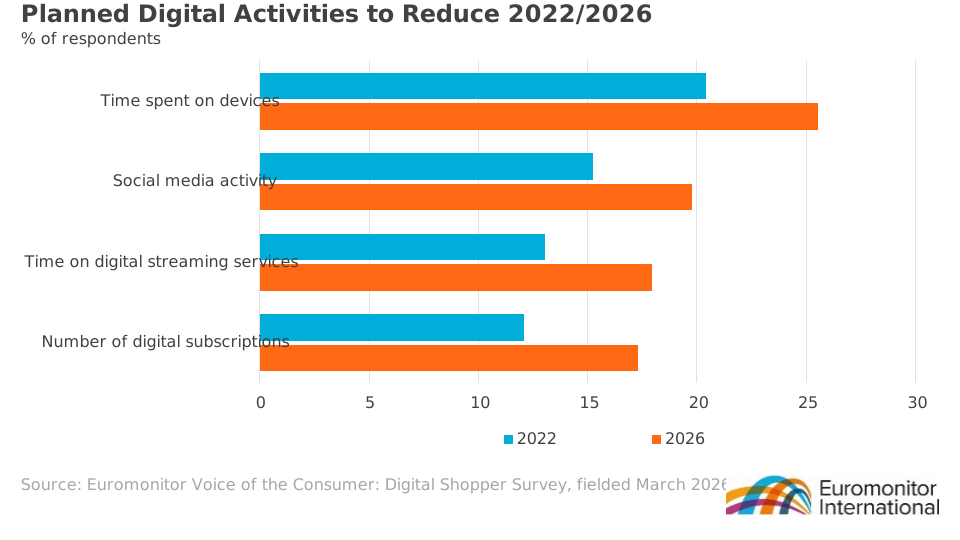
Rather than competing for attention through constant stimulation, mindful play focuses on comfort, creativity and wellbeing. As consumers seek more balanced leisure activities, brands that position play as a form of everyday stress relief may unlock new growth opportunities.
Building toys and games brands for long-term growth
The top five trends identified are all linked by a common theme: engagement is becoming more important than ownership. Consumers increasingly expect products to provide ongoing experiences, emotional value and social connection. Whether through social commerce, digital ecosystems, nostalgia, cultural relevance or wellbeing, the strongest opportunities will come from creating deeper consumer relationships rather than simply selling more products.
For more information on toys and games trends and their implications for businesses, please see Euromonitor International's reports, The World Market for Toys and Games and Top Five Trends in Toys and Games.