
This year, when Amazon moved its Prime Day period from July to June, competitors again followed, though sales declined for Amazon when comparing June 2026 to July 2025 among industry categories tracked by Euromonitor. Only beauty and personal care realised gains, growing 1.6% overall. Nevertheless, Prime Day still offered a lift for many brands, revealing a consumer cohort on the lookout for niche labels marketing clean ingredients, non-toxic formulations, and wellness.
Sun care leads for growth while skin care remains the biggest category in beauty
Beauty and personal care remained a frontrunner, driven by categories focused on innovation and clean formulation: sun care, baby and child-specific products, skin care, and deodorants.
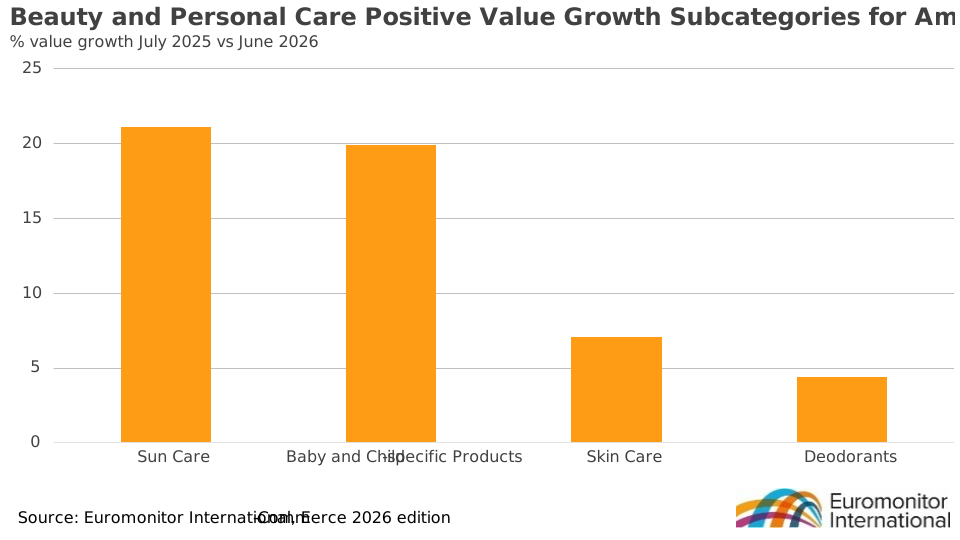
Sun care experienced the highest rate of growth at over 21%, reaching USD159 million for the month of June 2026. Brands with trending ingredients remained in the lead. Skin 1004, a botanically focused K-beauty brand, experienced triple-digit growth following the opening of its first flagship store in the US in May 2026. Australian brand Naked Sundays, whose product line integrates sunscreen into peptide-infused colour balms and foundations, also experienced triple-digit growth.
Leading growth in baby and child-specific products was Pipette, a wholly plant-derived personal care line whose active ingredient, squalane, is derived from Brazilian sugar cane. In deodorants, mass brands Secret and Gillette experienced value growth of 24% and almost 30%, respectively, reflecting US consumers’ tendency to use Prime Day to stock up on basics. However, gains also accrued to disruptors Dr Squatch and Carpe, the latter’s unconventional marketing strategy evident in the sales promotions it ran concurrently with Prime Day on its own website.
Brands in consumer health stand out despite sluggish category growth
Vitamins and dietary supplements declined by over 4% in value terms, yet the category claimed seven of the top 10 brands with absolute value gains outside beauty and personal care. Thorne, which established early credibility selling exclusively through medical practitioners before entering D2C and mass channels, grew by over 36% in value sales terms. Pure Encapsulations, a premium supplement product within Nestlé’s portfolio, grew in value sales by over 14%. Consumer interest in trending ingredients like protein and creatine was evident in the top 10 ranking of supplement brand, Premier Protein, and sports nutrition brands, Momentous and Transparent Labs.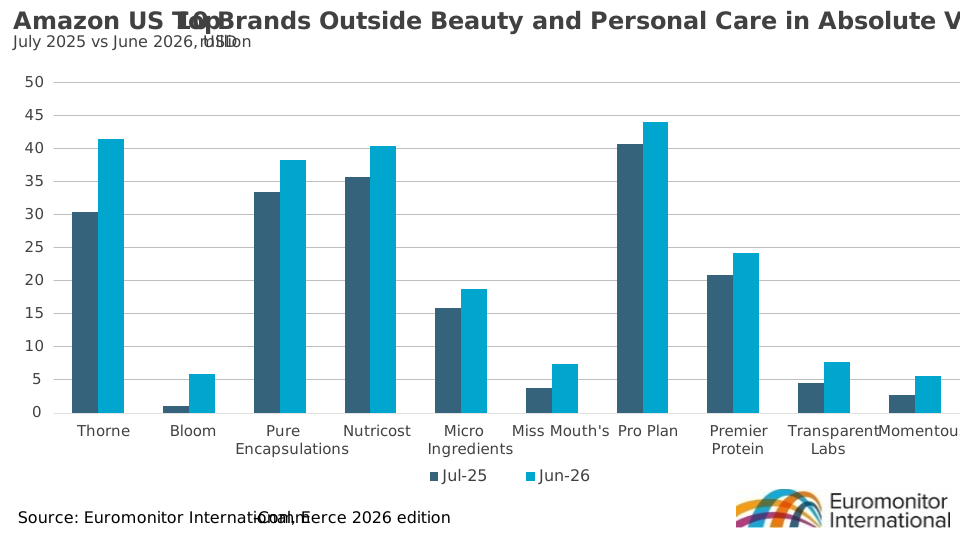
Miss Mouth’s Messy Eater, a clothing stain remover brand that built its following on Amazon as a non-toxic, child-safe treatment, realised value gains of over 91%, reflecting the trend towards clean ingredients and transparency underway in home care. Prime Day offers by Purina’s Pro Plan pet food brand, a premium pet food with science-backed claims, contributed to a USD3.2 million gain in June 2026 despite an 8.9% value decline in pet care overall, suggesting that Amazon remained a key channel for consumers looking for discounts.
E-commerce is more discount-driven than ever
Amazon’s tepid Prime Days performance this year points to an e-commerce landscape increasingly defined by relentless price competition and overlapping discount periods. Brands gained in June 2026, though at the risk of setting expectations among consumers that there will be deals. Within an environment that makes price comparison easy for consumers, companies participating in these deep discount campaigns must be clear on their objective, whether it is high volume, customer acquisition, and/or new product trial. The pressure to reduce price should not come at the expense of cannibalisation or unexpected margin loss.
Read our briefing, The State of Marketplaces in FMCG E-commerce in 2026, for an up-to-date analysis of marketplace platforms and their role in e-commerce strategy.