
With more cautious consumers, changing households and a growing search for value, tissue in Latin America must find new growth sources. Retail and away-from-home (AFH) tissue are evolving amid category shifts, market pressure and new expectations around value, performance and efficiency.
Essential categories still need new growth engines
Mass consumption in Latin America continues to develop under sustained pressure. Accumulated inflation, uncertainty and greater spending sensitivity make consumers prioritise carefully, compare more often and justify each purchase.
Retail tissue remains resilient because it meets a basic household need. Consumers may change brand, format or purchase frequency, but removing it from the household budget is difficult. This does not guarantee dynamic growth, however.
In 2025, retail tissue growth in real terms was positive but close to stagnation, suggesting that future expansion is unlikely to come from regular replenishment or population growth alone.
Source: Euromonitor International
New opportunities emerge from additional usage occasions, less developed categories and clearer value propositions.
More diverse households require sharper propositions
Sociodemographic shifts are changing tissue demand. Latin America combines smaller households, more households without children, growth in single-person living, population ageing, high urbanisation and a Generation Z consumer base with lower brand loyalty and stronger digital influence.
Household hygiene no longer responds to a single consumer profile: some households focus on managing spending, others on convenience, performance or new usage experiences. For the industry, this creates space for sharper segmentation, tailored pack formats and different value equations to coexist.
Retail tissue combines volume, value and relevance
Retail tissue remains dominated (80%) by toilet paper. This provides stability but limits diversification. In volume terms, the category has recovered steadily, yet current value growth has been driven mainly by inflation while real value remains under pressure: the engine is volume rather than genuine value expansion.
The opportunity varies by market. Where per capita consumption is higher, such as Chile, room for additional volume is limited, shifting the focus to value, perceived quality and new propositions. In lower-consumption markets such as Brazil, there is potential to capture volume through investment, innovation and category development.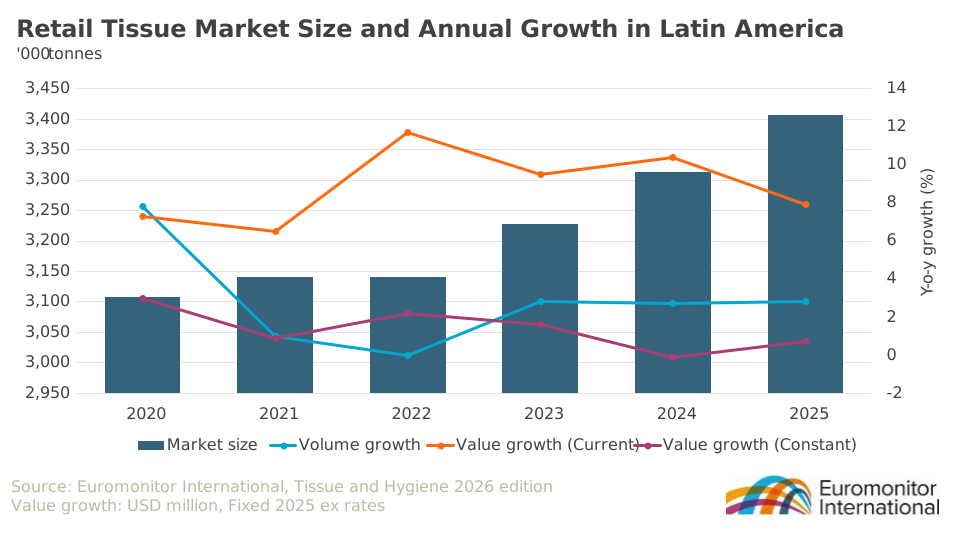
Private label raises the value challenge
Pressure on household spending has supported private label expansion, but this is no longer only a low-price phenomenon. In several markets, private label is moving towards higher-quality propositions, including 3-ply toilet paper with greater softness, strength and absorbency. Retailers are building tiered architectures, from entry-price products to premium options, covering different willingness-to-pay levels and competing in segments historically associated with leading brands. Affordability is becoming a broader value equation: not only low price, but entry-price access, stronger yield, reliable performance, the right format and visible attributes that help justify the purchase.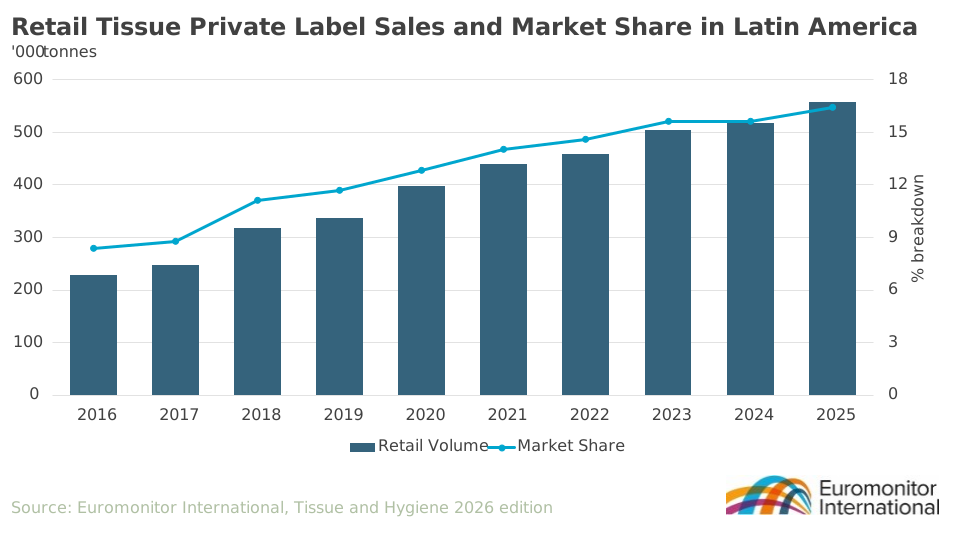
Growth can also come from beyond toilet paper
Paper towels, napkins and facial tissues still offer development opportunities in Latin America, especially when they expand usage occasions. International examples show how: Neve (Suzano, Brazil) extends the category with portable hygiene solutions for out-of-home moments; Kleenex (Kimberly-Clark, US) connects facial tissues with everyday situations beyond colds and allergies; and Brawny (Georgia-Pacific, US) adds value to paper towels through stronger performance and formats that let consumers control how much they use. Growth can therefore come from three complementary sources: more categories, more occasions and functional benefits that are easy to understand.
AFH tissue sells efficiency, not only product
In AFH tissue, the value equation differs. The category mix is more balanced, with paper towels, toilet paper and napkins all playing a relevant role, and the channel benefits from growing out-of-home consumption across hotels, restaurants, transport, events and public spaces.
Here the opportunity is not only selling paper, but optimising the full system. Controlled dispensing, high-capacity solutions and monitoring reduce waste, anticipate refills, prevent stock-outs and improve cleaning staff productivity. This makes premiumisation more tangible than in retail, measured through lower cost per use, reduced maintenance and a better user experience.
A broader value equation for tissue growth
The future of tissue in Latin America depends on the industry's ability to respond to more diverse, selective and value-conscious consumers. Retail tissue is moving from essentiality towards perceived value, with room to develop categories, occasions and segmented price architectures. AFH offers a different path, built on measurable operational efficiency. In both, growth increasingly depends on connecting performance, experience and solutions with changing consumer needs.
Read more about the Latin American retail tissue landscape in our report, Top Five Trends in Retail Tissue and Hygiene