
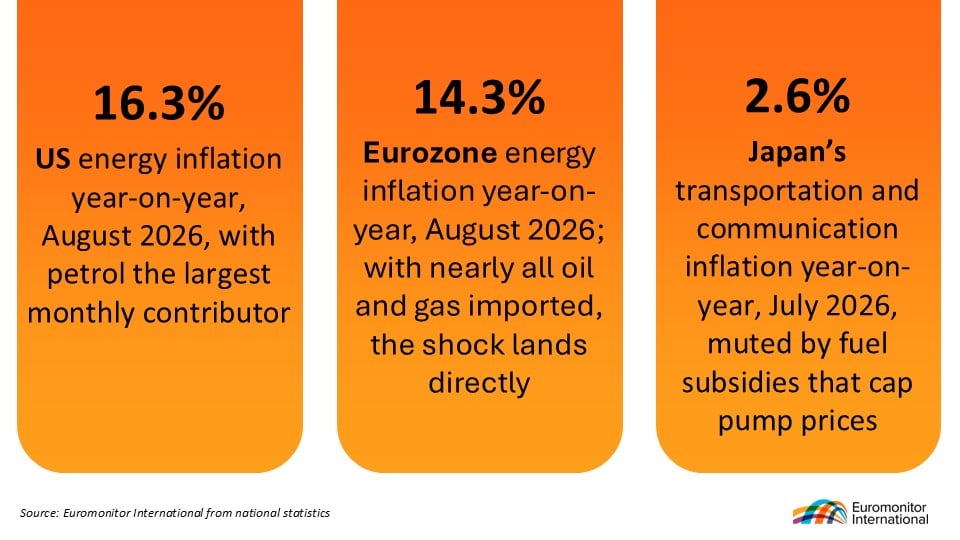
Further interruption of Gulf energy routes has raised oil and transport costs, with uneven effects across major economies. The closure of Saudi Arabia’s East-West oil pipeline, an alternative route to Hormuz, alongside disruption in the strait and threats to Red Sea shipping, has lifted Brent above USD100, freight costs and US diesel prices, intensifying inflation pressures across major markets.
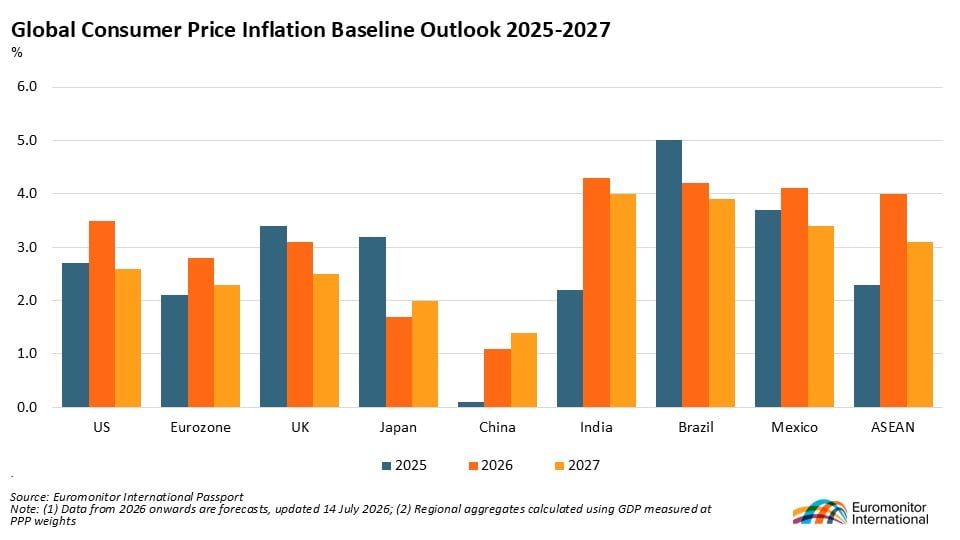
For consumer-facing businesses, higher transport, packaging, production and financing costs are squeezing margins across food, beverages, beauty, household goods and retail, forcing choices on pricing, pack sizes and promotions. Where costs pass quickly to households, discretionary demand will weaken.
In Japan, Mexico and Brazil, subsidies or regulated prices may delay the consumer impact but strain public finances. Market performance will depend on how quickly higher costs reach households and how far governments cushion the shock.
Further analysis is available in the full report, Global Economic Forecasts: Q3 2026.