Health and BeautyWe examine the trends underlying the growth of the global marketplace in health, beauty and hygiene. Our analysts will point the way forward by highlighting critical innovations and behaviours that are driving industry evolution.
Few categories reveal as much about Latin American consumers as those that accompany some of life’s most intimate stages: baby diapers, menstrual care and adult incontinence. Their development across the region is being reshaped by demographic shifts, evolving lifestyles, new consumer priorities and cultural barriers that still limit access. In a challenging environment for the industry, these categories invite us to look beyond the product and open a much-needed conversation about wellbeing, access and dignity.
Value is changing in intimate categories
Inflation, price sensitivity and uncertainty push Latin American consumers to compare more, prioritise, and demand greater value from every purchase. However, in personal hygiene, value cannot be understood only through price.
Baby diapers, menstrual care and adult incontinence respond to everyday, but also deeply personal, needs relating to comfort, security, confidence and quality of life. Brand competitors must offer propositions built around performance, education, discretion and wellbeing, not just affordability.
Demographic shifts transform personal hygiene
Demographic changes in Latin America, albeit at different speeds across markets, point to new priorities for the industry:
Population ageing: The 65+ population is expected to grow by 61% by 2040.
Fewer households with children: 60% of households have no children, a share projected to rise to 70% by 2040.
Single-person households: Currently 20% of households, this household type is projected to expand by 43% by 2040.
Generation Z: The largest generational group, representing 24% of the population, combines lower brand loyalty with high exposure to digital recommendations and greater openness to new propositions when they perceive authenticity and value.
Fewer births changes the opportunity in baby care
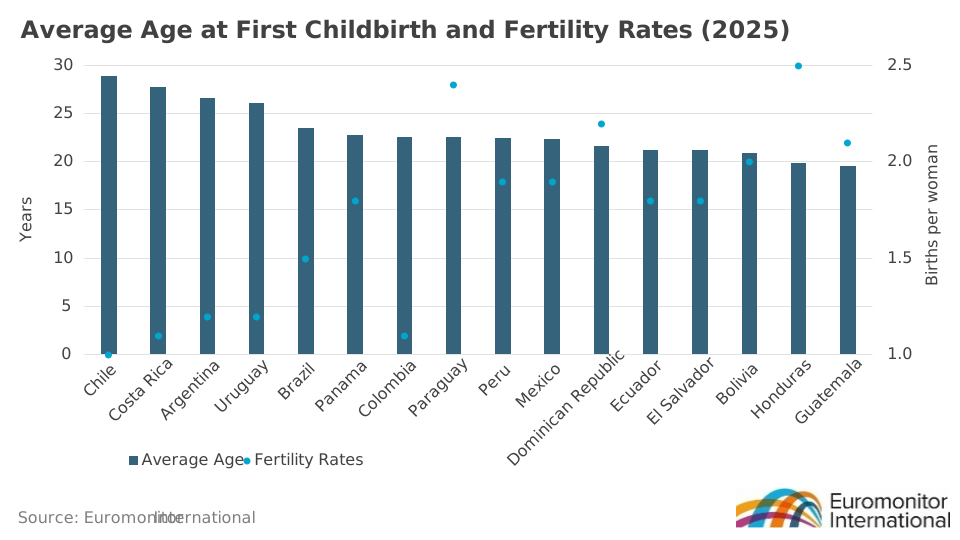
Declining birth rates are transforming the dynamics of diapers in Latin America. In markets with lower fertility and later motherhood, such as Chile, Argentina, Uruguay and Costa Rica, the opportunity is shifting from volume growth towards higher value per child.
This requires more precise segmentation. A first-time mother aged 29 may have different priorities, access to information and expectations than one aged 20. Age, income, education, shopping channels and brand relationships influence how the product is evaluated.
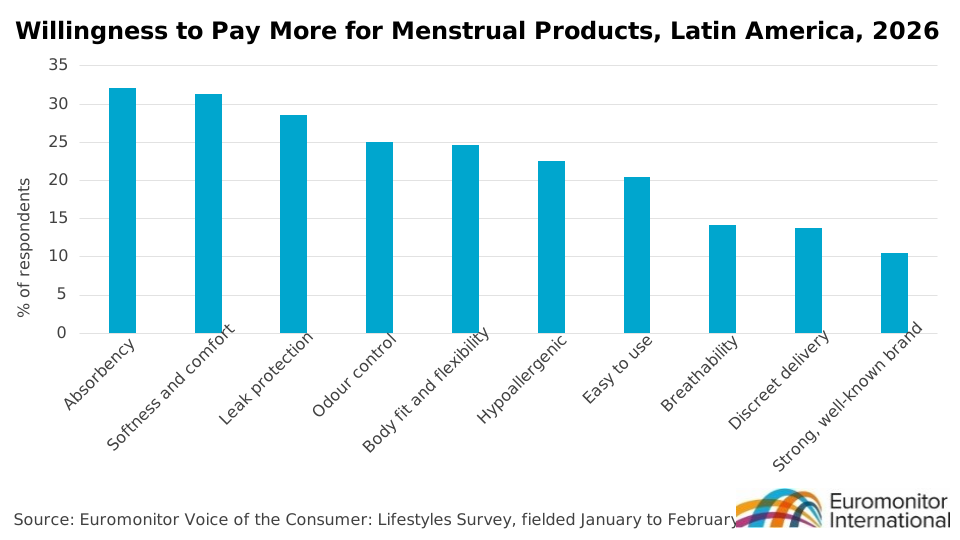
Functional attributes are key. Softness, comfort, absorbency and leak protection lead consumers’ willingness to pay more, for less irritation, fewer changes, fewer leaks and greater peace of mind for parents. Innovation in baby care creates value when it turns performance into everyday reassurance.
Menstrual care moves towards holistic wellbeing
Menstrual care in Latin America remains concentrated in towels but is evolving towards a broader view of wellbeing. Besides basic protection, consumers expect absorbency, softness, comfort, odour control, body fit and security. Premiumisation, therefore, comes from functional benefits that reduce anxiety and provide greater control during a period. A towel with higher absorbency or longer-lasting protection can be particularly relevant for consumers facing long commutes, extended work or study days, or limited access to adequate bathrooms.
Menstrual management is also part of the public agenda. Lack of access to adequate products can affect school attendance, education opportunities, emotional wellbeing and exposure to situations of vulnerability. This reinforces the category’s social dimension, besides its commercial one.
Adult incontinence requires education and normalisation
Adult incontinence is among the categories with the strongest structural potential in the region, driven by population ageing. However, demographic growth does not automatically translate into higher spending. In several markets, low per capita consumption suggests barriers related to access, education, distribution and cultural acceptance.
One clear signal is the use of non-specialised products, such as menstrual pads or home-made solutions, to manage incontinence. This reveals an awareness gap around the benefits of dedicated products: better absorbency, odour control, fit, discretion and skin protection.
In this category, dignity is built through concrete benefits. Feeling dry, comfortable and protected allows people to maintain autonomy, mobility and confidence. The opportunity for brands is to communicate with empathy, normalise the conversation and reposition the category around active living, rather than limitation.
Designing for people, not only categories
The future of personal hygiene in Latin America will depend on brands’ ability to understand the region’s demographic and cultural diversity. Baby care must respond to fewer births with stronger perceived value. Menstrual care must connect functionality with holistic wellbeing. Adult incontinence must reduce stigma and close awareness gaps.
The opportunity lies in moving beyond categories and designing solutions for people across different life stages, contexts and needs.
Asia's myopia control market is five years ahead of the West. With 538 million myopic children untreated globally and a closing window driven by licensed…
Pure beauty players pulled further ahead of conglomerates in 2026 through dermocosmetics, fragrance licensing and sun care innovation, while exposure to…
This report highlights key innovation trends in Beauty and Personal Care, analysing new product launch activity on e-commerce along with insights into key…