
For a category that many had written off as a fad, foldable phones are enjoying an unexpected renaissance. Samsung, Xiaomi and Apple have all converged on a new design philosophy in 2026, and the result is the first wave of foldables that genuinely feel like products rather than prototypes.
Cool but weird
Samsung fired the starting gun in 2019 with the original Galaxy Z Fold, the first mainstream brand to bring a folding screen to market. Huawei's Mate X arrived the same year, and over the following years Motorola, Google, Oppo and Xiaomi all shipped their own take on the idea. However, foldables never quite broke into the mainstream and the key issue, other than being expensive, was the form factor itself.
Most foldables unfolded into screens that felt neither like a smartphone nor a tablet. Videos often wasted valuable screen space, while apps and websites did not always make good use of the larger display. The larger screen looked impressive in demonstrations, but the everyday benefit was often less obvious.
An unlikely hero from China
Huawei took a different approach with the Mate X2 in 2021. The company argued that a wider unfolded display delivered a more natural tablet experience, making foldables better suited for browsing, reading, gaming and entertainment. The idea attracted attention, but the rest of the industry largely stayed the course.
Fast forward to 2026 and the picture looks very different. Samsung's Galaxy Z Fold8, Xiaomi's 18 Fold and Apple's newly launched iPhone Duo all feature unfolded displays that move closer towards a tablet-like experience. Despite different software ecosystems and hardware designs, the world's largest smartphone manufacturers now appear to be converging on a remarkably similar vision of what a foldable should be.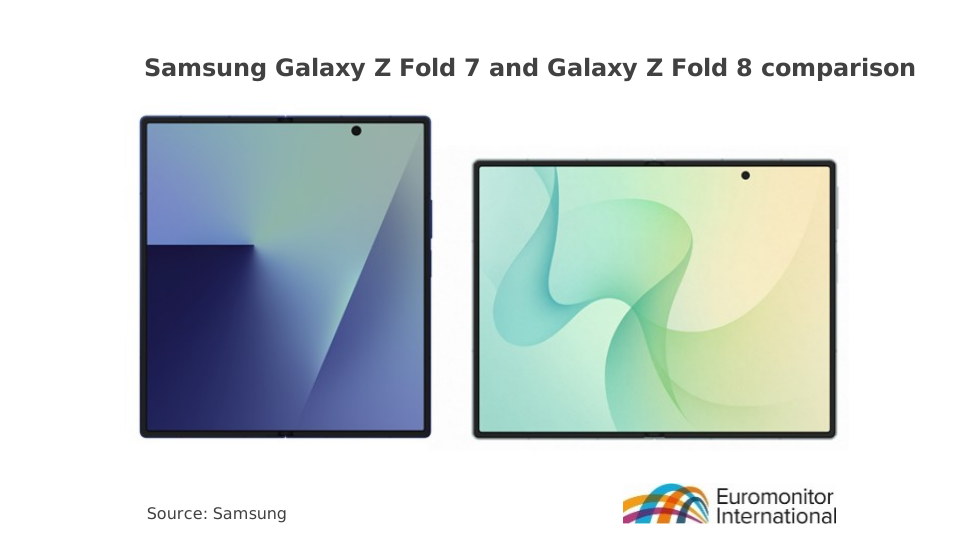
Not a silver bullet
Foldables alone will not reverse the slowdown in smartphones.
Global smartphone retail volume sales are projected to decline 7% in 2026, even as value sales grow 2%.
Source: Euromonitor International
Replacement cycles continue to lengthen, while global smartphone demand remains under pressure. Manufacturers are increasingly relying on premium devices to drive value growth, and much of the industry's recent growth has come from higher selling prices rather than rising unit demand.
Apple may be the exception as the launch of the iPhone Duo introduces an entirely new product category to Apple's portfolio. The new product provides Apple fans with a stronger proposition to upgrade their existing iPhones. In an era of selective premiumisation, consumers are less willing to pay more for incremental improvements. The iPhone Duo offers a more visible change in both form and functionality, creating a fresh upgrade opportunity for Apple users who have postponed replacing their older devices.
The bigger story
The biggest story of 2026 is not that Apple launched a foldable, it is that Apple, Samsung and Xiaomi have arrived at remarkably similar answers to the same question. After years of experimenting with screen sizes, aspect ratios and folding mechanisms, the industry's largest smartphone manufacturers now appear to be converging on a common vision of what a foldable should be.
That convergence reflects a key trend in consumer electronics. As replacement cycles lengthen and household budgets remain under pressure, consumers are becoming increasingly selective about where they are willing to spend. Premium pricing alone is no longer enough. Products must deliver a meaningful improvement in everyday use before consumers are willing to buy – selective premiumisation.
Read World Market for Consumer Electronics and Top Five Trends in Consumer Electronics for more information.