Appliances and ElectronicsOur insights capture shifts in consumer lifestyles and themes impacting the global consumer appliances, electronics, and toys and games markets. Themes include new business models, sustainability, innovation and the future home.
The annual trade fair IFA 2026 showed consumer appliances moving beyond connectivity towards AI-orchestrated ecosystems. The strongest launches combined intuitive automation with energy management, interoperable platforms, space-efficient design and new forms of robotics, while AI also began reshaping how consumers discover and buy products.
AI and shopping journey
AI was the dominant thread across kitchen, laundry, cleaning and climate control. The shift was not simply towards more “smart” functions, but towards appliances that interpret context and take action: selecting wash programmes, adapting cooking settings, managing food or responding to requests. Embedded robotics are also further becoming part of the home. Bosch and Ecovacs presented their cooperation with a built-in vacuum-and-mopping system that integrates its service station behind the kitchen front and connects directly to water, drainage and electricity.
One of the biggest AI-related topics was around the shopping journey, as AI is increasingly transforming the way consumers discover and select products. Rather than searching through countless products and filters, consumers can simply describe their needs and receive tailored recommendations, helping them discover features and premium options they may not have otherwise considered. IFA included presentations from TikTok Shop or eBay LIVE, and most big industry names tackled this topic in their showcases. For example, AEG presented its online Agentic Storefront, developed with AI e-commerce platform Neocom, that compares pricing, verifying real-time stock and recommends products based on budgets and needs.
Space remains the key topic especially for kitchen appliances
The theme of spatial efficiency was dominant especially in major appliances, reflecting demographic shifts such as urbanisation and the rise of single-person households and broader themes such as viewing the kitchen as an entertainment space.
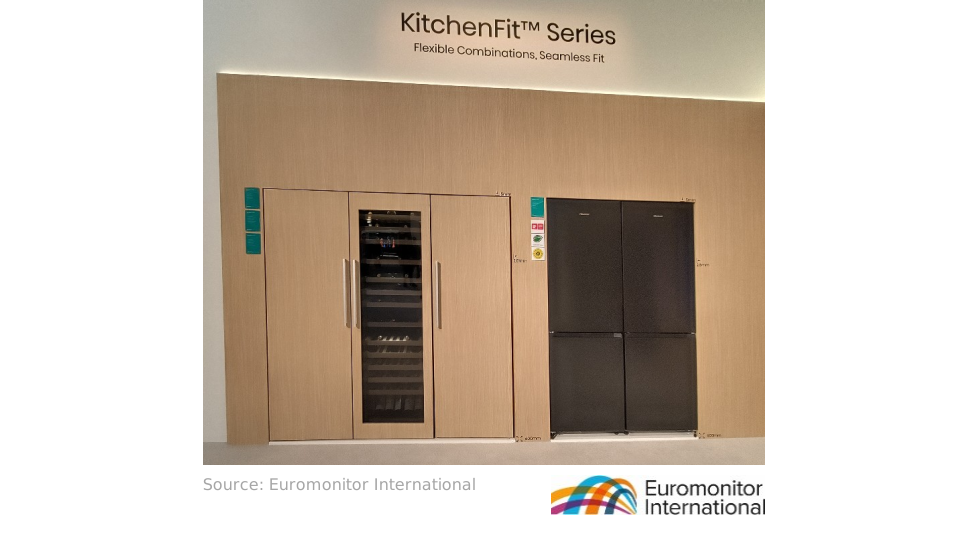
LG presented its Fit & Max Solutions that are designed specifically to optimise tight European living spaces. The product line combines premium, built-in aesthetics with expanded interior capacities across refrigerators, dishwashers and laundry systems. Highlighted was a Zero Clearance design refrigerator that flush fits against the surrounding cabinetry. Similarly, Hisense presented its KitchenFit Series, Midea SpaceMaster and BSH Hausgeräte brands marketed on “maximum performance with minimal space”.
While dominating in kitchen appliances, we saw this more widely in other product designs as well. For example, Morphy Richards introduced the S1 Pro Ductless Portable Air Conditioner, which uses a hose-free design to eliminate traditional installation requirements, offering a more flexible and space-saving cooling solution for modern living rooms.
With widening portfolios, category boundaries continue to blur
Dreame, mainly known in Europe for its robotic vacuums, used IFA to extend its European positioning into air treatment, cooking, personal care and other categories.
Dreame showcased more than 100 products across 16 categories at IFA 2026.
Source: Euromonitor International
In its core vacuum category, it showcased the Cyber X system that uses a tracked, six-legged structure and 3D time-of-flight sensing to move a robot vacuum between floors. In robotic vacuums, the iRobot brand witnessed a comeback at IFA, now under new ownership of Chinese manufacturing company Picea Robotics. It revealed the Roomba duo, dual-robot prototype, which pairs main robot vacuums and steam-mop with an ultra-compact companion robot. The pair use a shared home map and an autonomous mobile dock, working together as one intelligent system.
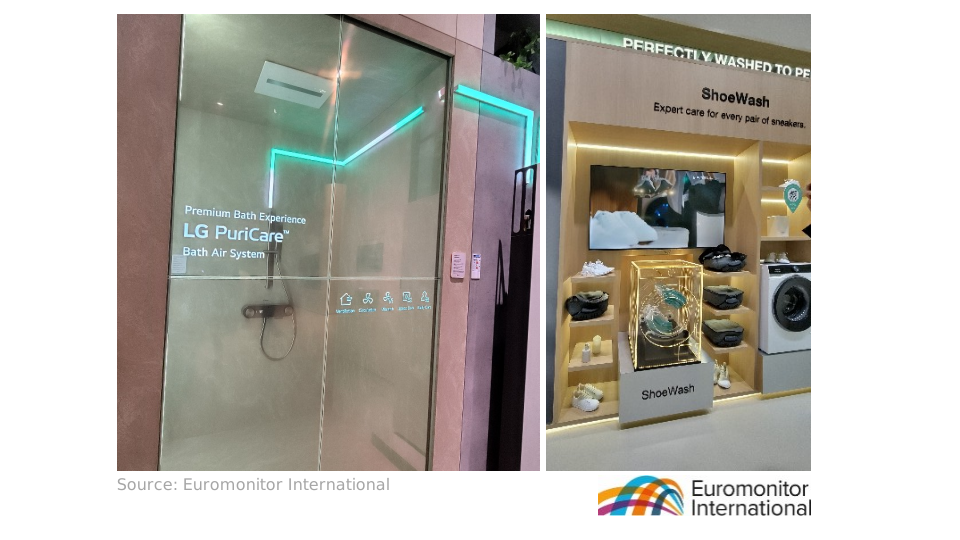
We saw that appliance players are widening their portfolios and showcasing crossover products. For example, LG’s PuriCare Bath Air System combines heating, drying and ventilation, using sensors to switch modes according to bathroom conditions. Elsewhere, personal care devices, AI cooking products and appliance features such as ShoeWash from Hisense showed brands seeking growth by solving adjacent household needs.
What’s next?
IFA 2026 made clear that the industry's future will be defined by AI-enabled ecosystems, execution speed and consumer relevance. Features that reduce food waste, improve hygiene, lower energy consumption, or simplify daily routines will carry more weight than technology for technology's sake.
However, a notable innovation gap became visible this year as Chinese challengers like Dreame, Xiaomi and Haier showcased broad, unified ecosystems and new hardware architectures, while many European incumbents focused on incremental improvements to their established premium brands. Chinese challengers have set a new benchmark by combining integrated ecosystems, rapid execution and hardware innovation, raising pressure on established brands to accelerate their innovation cycles. Those that can combine trusted brand equity with faster execution will be best positioned to defend and grow market share.
Consumers are hanging on to their devices longer and holding back on big-ticket buys, so sales fall in 2026. But they will still fork out when the upgrade is…
Video games dominate the global toys and games landscape, far outpacing traditional toys and games by more than two-fold. Forecast growth to 2030 is mostly…