
Global beauty and personal care sales are expected to reach USD669.8 billion in 2026, growing by 6.1% in current terms. This uptick reflects a more discerning consumer mindset that has reduced volume consumption in some categories, but maintained or increased purchases aligned with health, clean beauty, and community.
Euromonitor explores the top five trends impacting beauty and personal care in 2026 and 2027.
Longevity: The pursuit of proactive wellness
Longevity is a science-driven, lifestyle-integrated approach to extending not just lifespan but “healthspan” – living healthier for longer. Beauty consumers now equate healthy living with looking good, driving demand for products that support cellular resilience and long-term vitality across every life stage. Hair and scalp care is the most underpenetrated longevity opportunity, while nutricosmetics and ingestibles expand beyond topicals.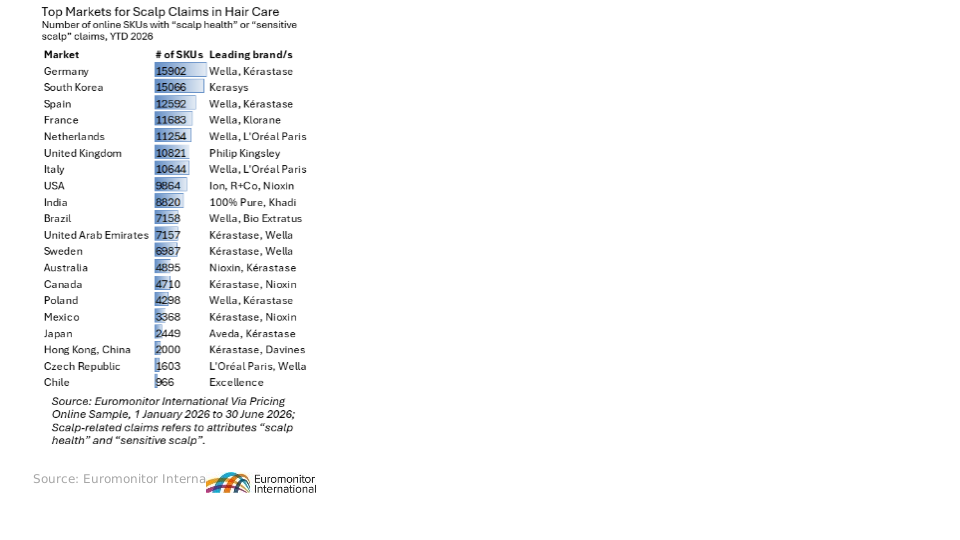
2026-2027 will see a shift from anti-ageing correction to preventive care, enabling brands to proposition a longevity benefit to every age segment across topicals, devices, and ingestibles.
Clean Reimagined: Ingredient integrity
Clean Reimagined reflects a shift from “free from” marketing to a holistic, ingredient-centric approach backed by proof. Consumers are no longer satisfied with products that simply avoid controversial ingredients; they seek independent verification through certifying bodies and testing.
Deodorants lead personal care in “clean” attributes. In 2026, a third of all deodorants contain “clean” claims – equal to the share held by functional claims. Regulatory changes, such as Indonesia’s requirement that all consumer goods be halal-certified by 17 October 2026, will support demand for substantiated results, redefining “clean” as proactive protection, not just ingredient avoidance.
Emotional Micro-indulgence: Fun through lifestyle-driven beauty
Rising stress, price sensitivity, and social media virality are fuelling demand for small, aesthetically-driven purchases that deliver outsized emotional returns. Social media has amplified this shift, creating demand for value-added products that perform as well on camera as on skin, while inviting community and increasing social credibility online.
The collaboration in Peru between Cyzone and Dunkin’ Donuts highlights the micro-indulgence trend. Launched in October 2025, it offered a free Cyzone lipstick or lip gloss with a purchase at select Dunkin’ Donuts, proving the brand’s non-smudge efficacy. For Valentine’s Day 2026, the brands repeated the collaboration, gifting over 8,000 Cyzone Studio Look lipsticks, and ran a similar campaign in April 2026 with Pinkberry. Activations that prioritise community, sharing, creativity and joy show that consumer desire for delightful, accessible ways to engage with beauty has not waned.
Scroll to Shop: Social commerce and AI-driven beauty discovery
Social platforms and generative AI are replacing brand-led search with algorithmic and conversational discovery.
In China, Douyin overtook Tmall to lead beauty e-commerce with a 42% share, as of Q2 2026, while beauty and personal care already accounts for nearly 50% of global product searches originating from AI platforms in 2026.
Source: Euromonitor International
The traditional purchase funnel – from awareness through consideration to trial – is collapsing into a single, algorithm-driven moment. AI-powered tools, such as Estée Lauder’s Jo Malone London Scent Scanner, which translates visual taste into fragrance on Pinterest, and Chalhoub Group’s Layla AI, the Middle East’s first large-scale generative AI beauty coach, will shift advantage from the shelf to the algorithm in 2026 and into 2027.
Asian Wave: Beauty’s new centre of gravity
Rising Asian disposable incomes and cultural exports have elevated K-beauty, J-beauty, and C-beauty into an ecosystem that outgrew non-Asian brands in 2025. Ingredient pioneering, including PDRN and fermented botanicals, combined with clinical credibility at accessible pricing, is challenging premium, luxury, and Western brands.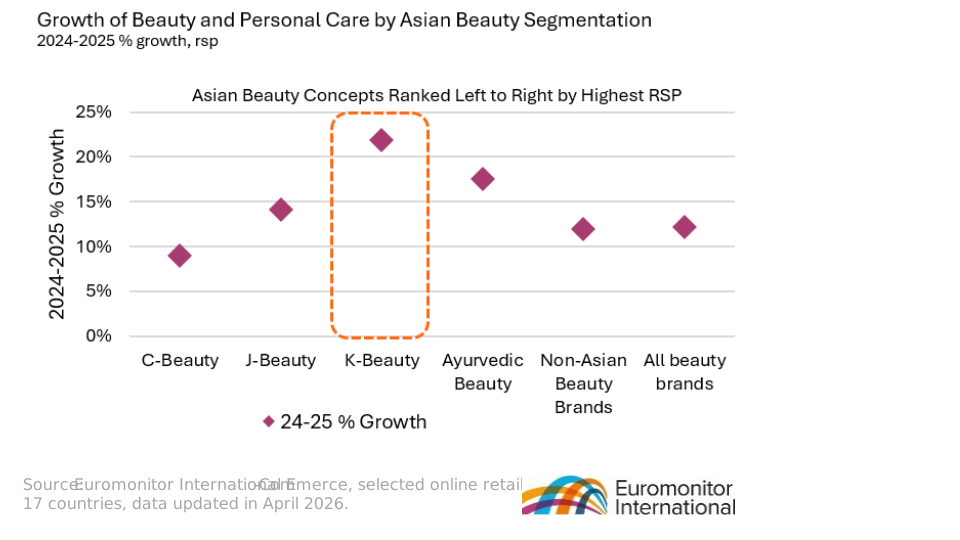
In 2027, Asian beauty brands will continue to challenge premium beauty and luxury, particularly in skin care, with their alignment with health helping them expand beyond skin care.
Predictions for 2026 and 2027
Beauty will increasingly compete on health outcomes, credibility, and algorithmic visibility – not shelf presence alone. Brands that anchor propositions in holistic healthspan journeys, lead with verified efficacy, sell a feeling beyond product function, and compete for the algorithm will be best positioned for growth into 2027.
Learn more about these trends in our report, Top Five Trends in Beauty and Personal Care, for case studies and predictions for the forecast period.