
Global pet care approaches USD225 billion in retail value in 2026, expanding 5% year-on-year in current terms. Value gains continue to outpace volume growth as affordability pressures constrain spending. Future growth will increasingly come from cat food, emerging markets and affordable premium propositions. Against this backdrop, five trends are redefining the industry's growth opportunities and competitive landscape.
Affordable premium redefines the value ladder
Premium segments remain the fastest growing, though expansion is narrowing. Across the world, persistent cost pressures are expected to impact movement across social classes. As consumers face ongoing financial pressures, many are seeking products that deliver premium benefits without premium price tags.
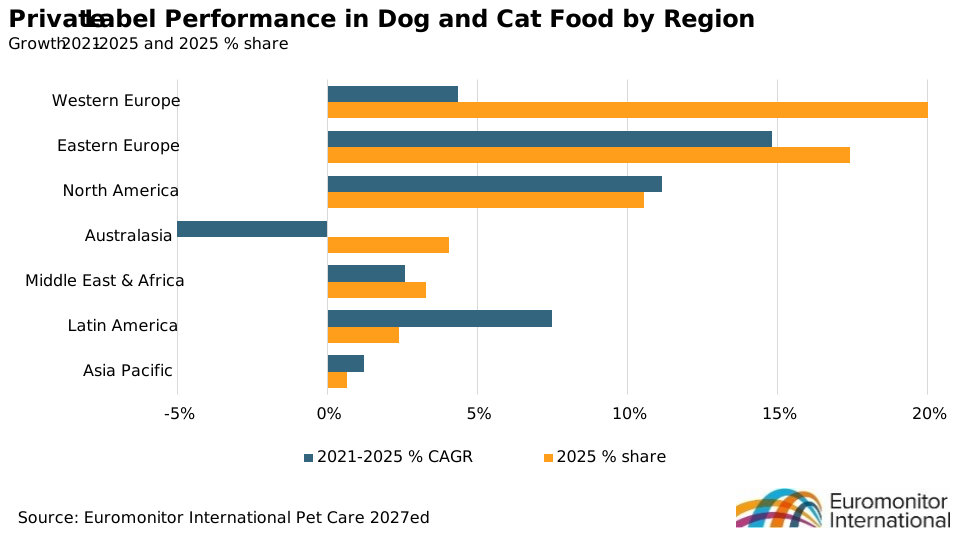
As growth slows in traditional premium segments, future value creation will increasingly come from affordable premium propositions that enable consumers to trade up without making a full premium commitment.
Local players and emerging markets redraw the growth map
Emerging markets offer volume and value growth potential, attracting both established global brands and a fast-rising wave of local and regional players. Operating closer to consumers and delivering value-driven premium solutions, local challengers are intensifying competition.
In China, domestic brand Fregate recorded 70% sales growth in 2025 by offering premium attributes at price points lower than international competitors. In Thailand, Pramy has rapidly emerged as one of the country's leading wet cat food brands by positioning close to the premium tier while remaining accessible to a broader consumer base.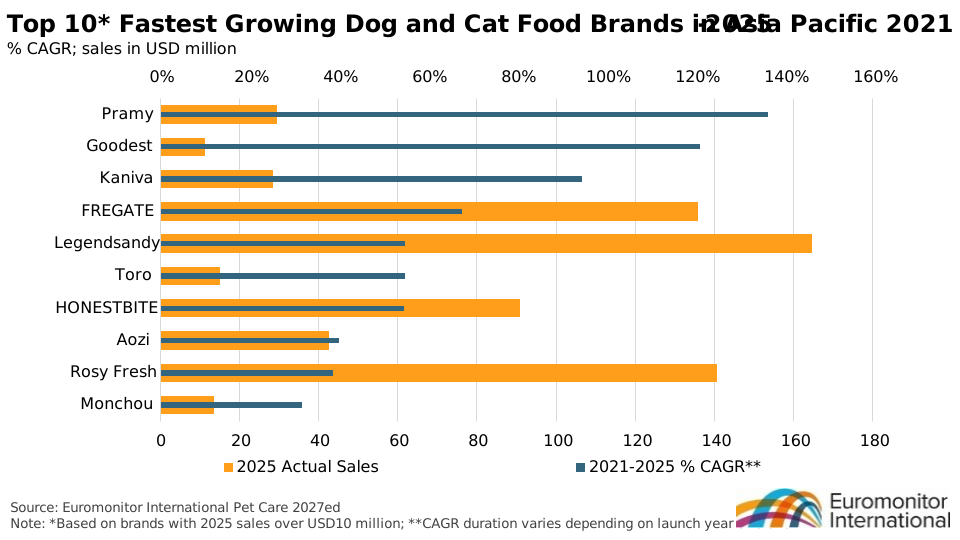
Emerging markets are redrawing the global growth map. Middle East and Africa, Latin America and Asia Pacific lead future growth, with Thailand, Vietnam, the Philippines and India projected as the fastest-growing pet economies in constant retail value terms over the forecast period 2026-2031.
Health shifts from a “claims economy” to an “evidence economy”
The pursuit of longevity and healthy ageing is transforming how pet owners approach health and wellness. Increasingly, consumers are looking beyond claims and seeking products supported by credible evidence and measurable outcomes. Functional benefits, once a point of differentiation, are becoming standard expectations. As these benefits become commoditised, competitive advantage is shifting from promising results to proving them.
Brands are responding by investing in greater transparency and scientific substantiation. In Australia, fresh dog food brand Lyka publishes research-based evidence supporting the benefits of its ingredients, helping strengthen credibility and consumer trust. For brands competing in the premium, health-focused non-therapeutic segment, clinical substantiation is becoming a critical differentiator.
Channels evolve into engagement ecosystems
Pet care retail channels are evolving from transactional outlets into engagement-driven ecosystems. E-commerce, which accounts for 35% of global pet care retail value sales in 2026, has scaled as a core growth channel, with penetration deepening across mature and emerging markets. At the same time, the distribution ecosystem has expanded through new-age channels of social commerce and quick commerce.
Today, each channel generates a different type of demand. Marketplaces provide reach; social commerce drives discovery; quick commerce delivers just-in-time fulfilment for utilitarian needs; and D2C strengthens loyalty. Brands must view each digital commerce platform as a distinct demand generation engine. Treating them all as one “e-commerce” channel risks overlooking the unique roles they play in driving growth across the funnel.
Pet food growth is entering a new phase. Dog food will continue to generate the largest sales opportunities, but cat food is expected to capture a disproportionate share of future growth. Success will depend less on serving today's premium consumer and more on attracting tomorrow's. Companies that create affordable premium propositions, strengthen omnichannel engagement, and translate pet health trends into tangible, evidence-based benefits will be best positioned to outperform.
Explore more insights in the latest full reports: World Market for Pet Care and Top Five Trends in Pet Care.