
Pet parents care more about the planet than other consumers do, and that concern pays off. But it is not one concern. For example, sustainable pet parents fall into five types, each acting on the environment differently and needing a different reason to buy. For brands, this niche rewards precise segmentation over a single green message.
When growth stalls, segmentation becomes the growth lever
When a market stops expanding, growth no longer comes from the category itself. It comes from serving the right buyers better than competitors do, which means knowing how those buyers differ. Segmentation is the tool that turns one undifferentiated market into groups a brand can prioritise, position against and win.
Pet care illustrates the point. The category has remained resilient where other discretionary spending has softened, because owners cut back on themselves before their pets. But resilience is not growth, and the owners sustaining it are not one audience. Sorting them into distinct types is what turns a defensive category into an offensive one.
Pet parents are the greener consumers
Pet parents are more environmentally minded than the wider population.
63% of pet owners say they try to have a positive impact on the environment, against 54% of non-owners, and 62% worry about climate change, against 55%.
Source: Euromonitor’s Voice of the Consumer: Lifestyles Survey, fielded January to February 2026 (n=40,225)
That gap matters commercially, because concern that consistent turns into spending. It also makes pet care a rare thing: a resilient category whose buyers actively want sustainable options.
But “green pet parents” is not a single audience. A shared concern for the planet hides sharply different behaviour, so one sustainability message will reach some owners and miss others. Segmentation is what turns the niche into groups a brand can actually target. Euromonitor’s Voice of the Consumer: Sustainability Survey, fielded January to February 2026, sorts these owners into five types by the green actions they prioritise.
Five types of sustainable pet parents
The five types are Naturalists, Zero Wasters, Green Spenders, Low-Impact Livers and Nature Restorers, and each has a signature. Naturalists lean into diet, one in three actively limiting meat, the highest of the five. Zero Wasters attack waste, with two in three actively reducing food waste and/or looking for recyclable packaging. Low-Impact Livers chase efficiency, with 72% reducing their energy use, and have the strongest appetite for carbon offsetting. Nature Restorers are the household recyclers and repairers, topping the group on recycling at 61%. No single type dominates, and one owner can belong to more than one type.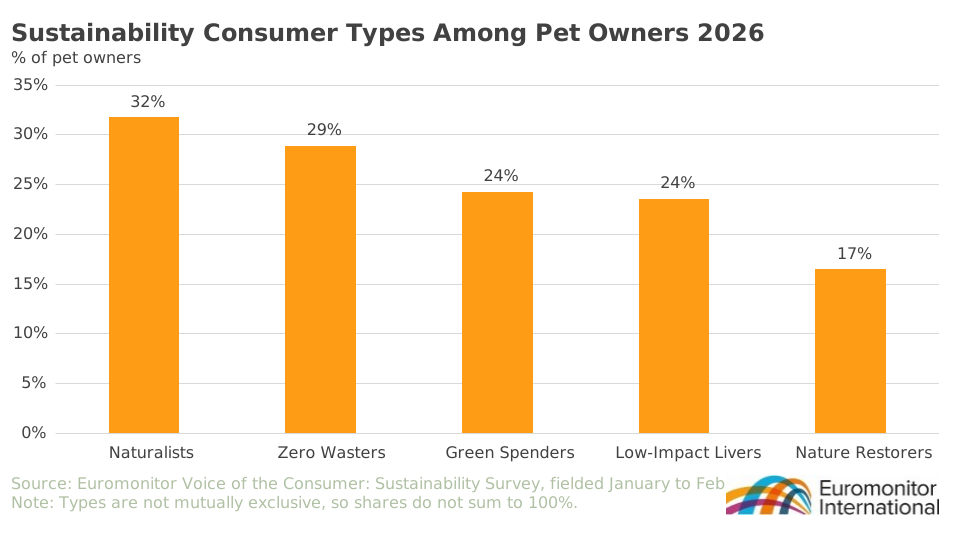
Green Spenders will pay; the rest want extensive proof
The commercial split sits between owners who will pay for values and owners who act on them at home. Green Spenders are the segment that opens its wallet more easily: 47% buy from purpose-driven brands, against 25-29% of the other types. Yet, even they rank quality and value for money highly.
For the rest, sustainability shows up as behaviour, not premium spend. Zero Wasters reward genuine packaging change, Low-Impact Livers respond to efficiency and running-cost savings, and Nature Restorers value recyclability and repairability. The lesson for a brand is that the same product needs different proof for different owners: a purpose story for Green Spenders, a packaging claim for Zero Wasters, a lower-energy promise for Low-Impact Livers.
Why this matters for brands
Pet parents give brands a willing sustainable audience, but not a uniform one. Treating them as one green segment wastes the willingness; matching claim to type converts it. In a niche where buyers already care more than average, the growth comes from knowing which owner wants a purpose story, which wants a cheaper energy bill, and which wants packaging they can recycle.
Read our article, How Consumer Segmentation Can Help Brands Navigate the Changing Consumer Landscape, for details of the four core consumer segmentations and seven global consumer profiles.