
The nationwide US airport ground stop on 13 November 2026 lasted only a few hours, but it created a concentrated stress test for the car rental industry. As airlines cancelled or delayed thousands of flights, stranded passengers rapidly switched from air to road travel. Rental counters at several major airports moved from normal operations to scarcity within hours, demonstrating both the industry's value as an emergency mobility network and the limits of a fleet designed for predictable demand. Local evidence emerged quickly: vehicles became unavailable at several major airports, while shortages persisted into the weekend as stranded travellers turned to one-way rentals.
Lean fleets leave little room for surge demand
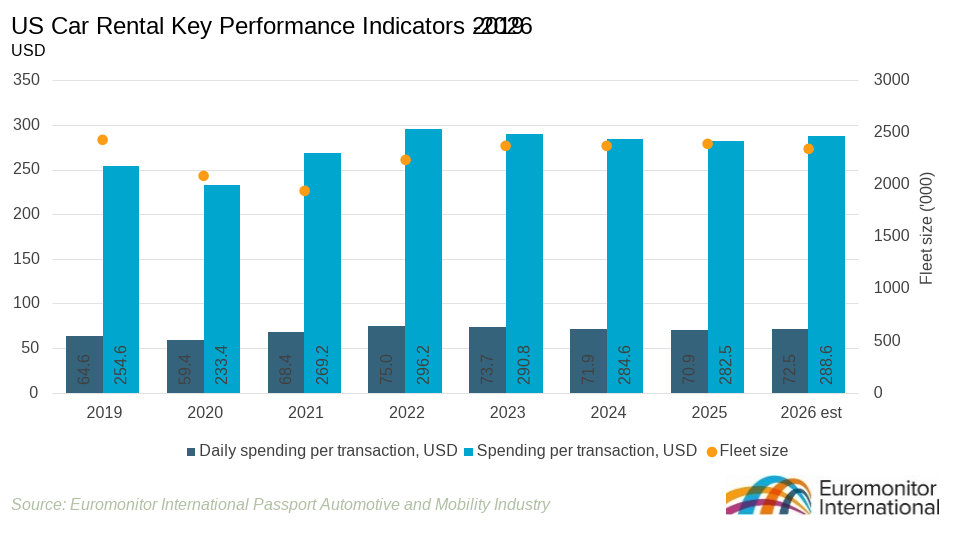
The industry's underlying economics explain why supply tightened so quickly. US car rental operators continue to optimise their fleets, with vehicle numbers expected to decline by 2% in 2026 even as industry utilisation remains at 62%. Several brands operate more tightly, with estimated utilisation exceeding 70% at Sixt, Dollar, ACE, Advantage, Enterprise and Alamo. With an estimated 1.5 million travellers affected, operators could not respond simply by adding thousands of vehicles at airport locations.
The disruption simultaneously increased demand and interrupted vehicle returns. Walk-up bookings rose as passengers sought alternative transport, while cancelled flights prevented some customers from returning cars as scheduled. Vehicles physically present at a location could already be reserved, leaving operators unable to serve stranded travellers without disadvantaging existing customers. The event exposed a structural trade-off: lean fleets improve utilisation and returns in normal periods but leave little surge capacity when aviation systems fail.
Scarcity pricing and one-way rentals shift the cost to repositioning
Scarcity quickly passed through to price. Some stranded travellers reported quotes rising from an expected USD100-200 to nearly USD700. These exceptional spot prices contrast with the estimated 2026 market averages of USD289 per transaction and USD72 per rental day. The gap illustrates how dynamic pricing rations the final available vehicles as utilisation approaches its ceiling.
Repositioning those vehicles requires labour, transport expenditure and lost rental days. It can also extend disruption after flights resume, especially when cars must be returned ahead of a busy travel period. The event therefore did not represent an uncomplicated windfall. Operators could charge more for a fixed pool of vehicles, but they could not materially expand car-days sold, while service failures and highly visible price spikes introduced reputational risk.
Fleet flexibility, not fleet size, will define resilience
The disruption shows that resilience depends less on maintaining a larger fleet than on moving existing capacity quickly to where demand emerges.
Source: Euromonitor International
With the US fleet expected to contract in 2026 and several operators running utilisation above 70%, permanently holding spare vehicles at airports would be costly and inefficient.
Operators should instead develop disruption playbooks linking flight cancellation data with live reservations, scheduled returns and local fleet availability. This would allow vehicles to be redirected between airport and neighbourhood branches before shortages become critical. One-way rentals should be managed dynamically through temporary destination restrictions, return incentives and pricing that reflects repositioning costs. Pre-defined pricing guardrails would also limit reputational damage from extreme scarcity rates.
Operators should support these measures with pre-arranged vehicle-repositioning capacity between major airports and nearby branches. The most resilient company will not necessarily have the largest fleet, but the one that detects disruption earliest and redeploys vehicles fastest.
Download our new briefing, The World Market for Car Rental for current state of the industry, expected market developments and strategic recommendations. For in-depth trend descriptions and case studies read, Top Five Trends in Car Rental.