Food and NutritionConsumers are engaging with food and nutrition like never before. Our in-depth analysis examines the most important implications across the industry, providing market intelligence, original thinking and key insights.
High protein is the widest-diffusing functional claim of the last decade in food and drink, and the cautionary tale attached to it is now visible in the numbers. Full diffusion delivered tonnage but eroded margin. Fibre is the next claim on that road, and its slower, more conditional climb is not a weakness – handled well, it is what will protect its pricing power.
Protein’s full diffusion erodes premium
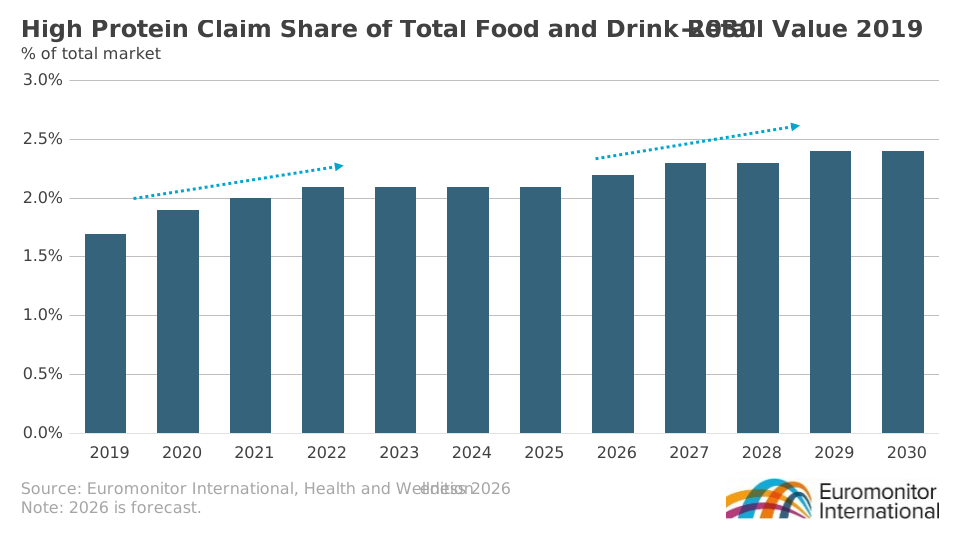
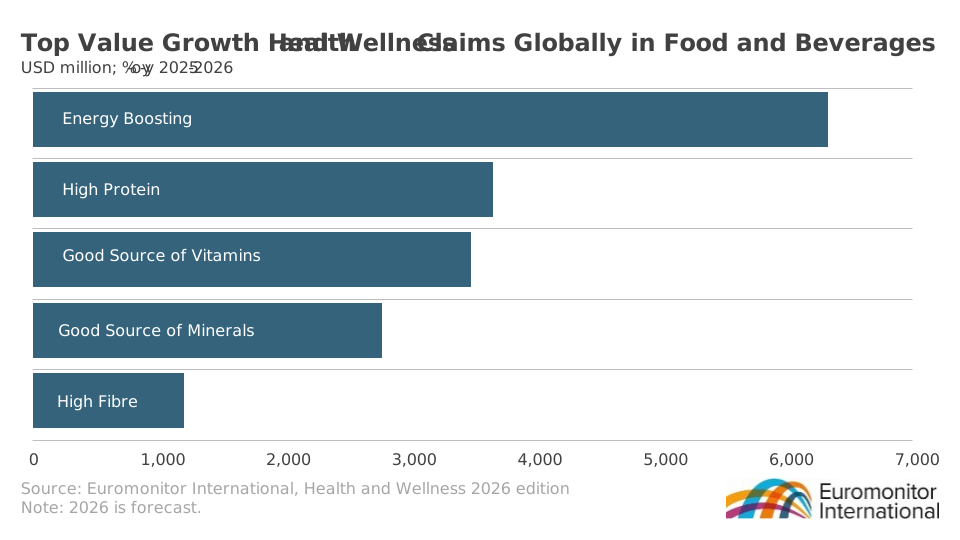
High protein is still forecast to be the largest-growth functional claim in incremental value terms to 2030, but its share of total food and drink retail value was flat over 2022-2025. The claim is now present in 77% of categories, and its ability to carry a price on its own has weakened accordingly.
Across 14 major food categories, the average price premium attached to a high protein claim fell by 22 percentage points between 2020 and 2025. It also fell in 11 of the 14.
Has the high protein claim peaked? As a claim that sells by itself, yes. But it has a second runway: as part of reframed, multi-nutrient propositions, and through precision and quality language such as hydrolysed isolates, "complete plant protein", and "high quality protein". Its associated benefits among consumers are still expanding, from muscle and satiety into metabolic and blood-sugar health, bone and joint, and beauty-from-within. Diffusion cost protein its direct premium, but it created a far larger pool of more demanding buyers for graded protein.
Fibre earns volume before premium
Fibres (poly- and oligosaccharides) are already the biggest ingredient volume sales growth story over 2025-2026 in packaged food and beverages, ahead of proteins. Yet the high fibre claim still trails vitamins, minerals and protein in value growth. The reason is structural: fibre mostly arrives through reformulation, such as through fibre-rich flours, pulses, inulin or FOS from chicory root; quietly, inside recipes people already buy.
Dairy and meals lead the next phase, with USD1 billion of incremental high fibre sales forecast in dairy and alternatives alone by 2030. Behind that sits gut health as a central wellness pillar, as well as three expanding associations: GLP-1 nutritional support, where reduced appetite makes every mouthful work harder; the gut-immune axis; and healthy ageing.
How fibre can hold its price
Escape the reformulation trap. Fibre does not automatically inherit the gut health premium, because it competes inside an ecosystem of claims: prebiotic, probiotic, live cultures, microbiome, digestive health. The margin sits in the specific product proposition, not the broad, grammage-based fibre claim.
Attract male consumers. Just as protein's second wave was driven by uptake among women in a fitness context, fibre needs male relevance by reframing fibre as fuel, endurance, sustained energy, and recovery. Fibre also needs formats men already buy: savoury snacks, cereal and bakery, sports and RTD drinks, and ready meals.
Build scaffolds, not slogans. Single claims no longer carry a premium. The launches that do are dual and triple nutrient scaffolds tied to an outcome; for instance, protein plus fibre for GLP-1 weight control in the case of 2026 ready meal launches like Co-op’s Good Fuel in the UK, or fibre paired with vitamin C and zinc for gut and immune support as done with Simply Pop with Fruit Juice. The next step up is fuller scaffolds, such as protein, fibre, vitamins, minerals and bioactives in the example of Nestlé Vital launched in Brazil, aiming for a broader wellness outcome but segmented by life stage and gender.
Proof decides the price
Claims travel one way: from a precision layer, where the benefit is invisible and needs an occasion and substantiation, into a foundation layer, where it is simply expected. Protein has graduated; fibre is mid-journey. Brain health – including the mood territory – is a prime example of a claim which remains firmly precision-bound; which is exactly why the margin sits there.
For fibre, the lesson is to plan for both: volume in the foundation layer, margin in precision, carried by proof and by combinations rather than single nutrients.
The snacks industry faces a challenging global environment in 2026 and beyond. Success will require smart pricing decisions, enhanced functional benefits,…
Our Voice of the Consumer data helps you identify evolving trends and understand the impacts on consumer eating choices. Gain valuable insights about consumer…
Asian cuisine outpaced the wider restaurant industry over 2020-2025, with nearly two in five non-ambient ready meals now Asian dishes. This report unpacks the…