
Since COVID-19, technology innovations and the adoption of cross-cutting consumer behaviour across countries have sharpened, through the impact of influencers on TikTok etc. Accessibility to trends worldwide consistently generates outsized impact within entire categories and industries. In the US, other personal care appliances has grown consistently since the beginning of the pandemic (from growth of 24% in rsp terms in 2020 to around 3% in 2025). K-beauty devices substantially underlie these growth rates, with LED masks gaining popularity among US consumers. But what does that mean for K-beauty devices overall?
The current state of K-beauty devices in the US
As competitors embrace the curve of global trends by entering new markets, they must consider regional nuances. Unlike in South Korea, where beauty devices are more embedded within skin care routines, US consumers are more likely to perceive K-beauty devices as an accessible anti-ageing and self-care investment. Few consumers yet view these devices as sufficiently differentiated or worth the spend, particularly when compared with multi-use alternatives.
As the US beauty device market enters a growth phase, demand is fragmented across competing brands, leaving room for strong category leaders to emerge as consumer needs become more defined. This creates a clearer opening for multifunctional, Korean-inspired devices, as Euromonitor’s Voice of the Consumer: Beauty Survey, fielded July 2025 (n=9,983) shows that consumers are especially motivated by products that address specific skin concerns and help prevent signs of ageing: the fourth and fifth top motivators. By combining technologies such as LED, radiofrequency, microcurrent, or temperature functions, these devices can translate those motivations into a value proposition centred on treating multiple needs through a single product.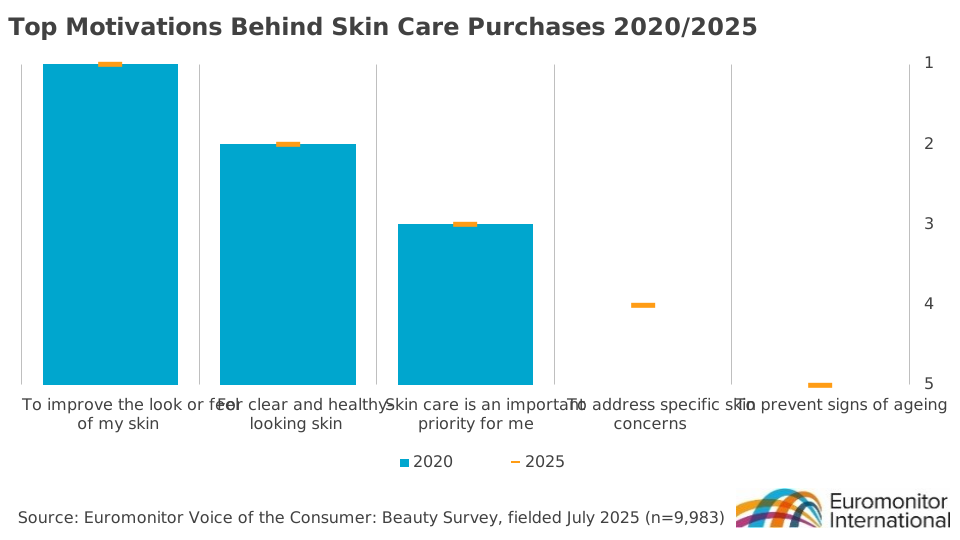
K-beauty devices mainly compete on the perceived value of the device itself, with consumers more likely to compare benefits, price points and visible results before committing to a purchase. However, as the market matures and shoppers begin to distinguish between leading players, luxury positioning, and lower-cost alternatives, brands should place greater emphasis on building a broader skin care ecosystem around the device.
How we expect the K-beauty tech market to develop
In the US, the K-shaped economy has risen again due to consumer spending behaviour. The beauty landscape is a means to an end; purchases are less for the sake of having novel technology, but more driven by a desired affect or outcome. Tech purchases outside of a core tech enthusiast-orientated consumer are value-driven, particularly in adjacent categories that often rely on a perception of affordable luxury. Not just price but also ultimate functionality and (perceived) authority in K-beauty will drive purchases of new and novel devices over the technology itself, in most cases.
To that end, retailers like Sephora and Ulta sell standalone devices as a rule, not the exception. While South Korea emphasises multi-step routines and full ecosystems of beauty devices, the US market is more focused on min-maxing routines: convenience is key. For some, like medicube or Geske, with expertise on tech, beauty, and even personalisation through their app tie-ins, it follows that there is plenty of opportunity for marketing adjacencies to lead a consumer to bite, particularly leveraging trust and authority appeals through a dual lens of influencer marketing and a wave of continued global appeal for East Asian products.
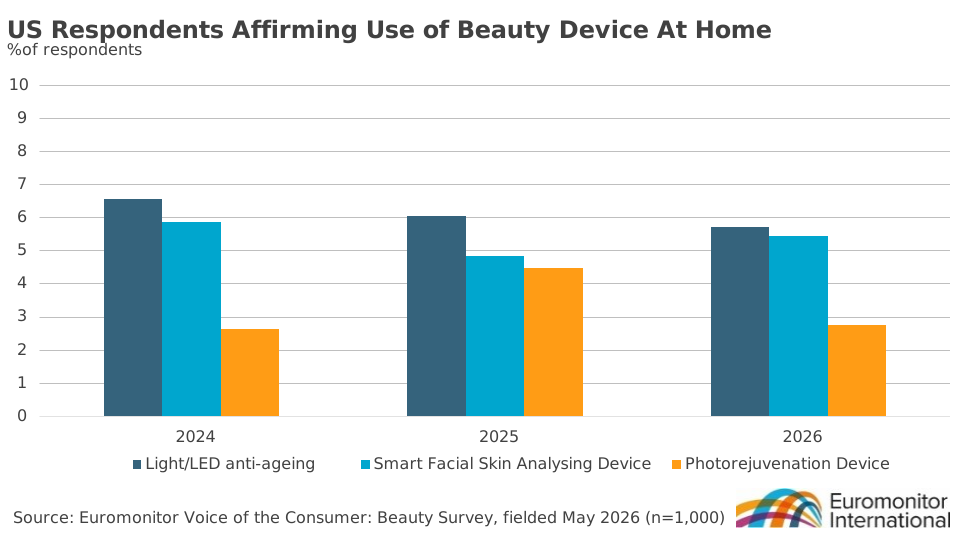
Expect a K-beauty adoption curve to seep further into the consciousness of the mainstream US beauty landscape.
A selection of K-beauty brands (not restricted to only tech) via the top five retailers post greater than 80% growth in annual sales in consecutive years 2024 and 2025.
Source: Euromonitor International’s E-commerce system
There is a sure market for “better” for you products that provide familiarity in use-case, while also being novel enough that curiosity takes over and fuels initial demand. The question is how to turn that initial hook into a repeat user.
Learn more about getting first-time users hooked on wellness in Euromonitor’s briefing on the Business of Wellness and Longevity: Key Expansion and Growth Levers.