
Last month, Henrique Braun, the CEO of The Coca-Cola Company, completed a visit to the company’s businesses in South Africa and Nigeria. Braun publicly touted the success of Mashesha packaging units in South Africa (a word meaning “quick” in Nguni), highly affordable 250ml single-serve PET bottles with a suggested retail selling price of just ZAR6 (around USD0.36). The innovation was launched by the company’s local team South Africa this summer for many of Coca-Cola’s sparkling brands.
Globally, soft drinks sales are on course to reach one trillion litres by 2030. Yet very little of that growth will come from supermarket aisles in Europe or North America. It will instead come from kiranas, warungs, tiendas and kiosks across Africa, Asia and Latin America - markets where preserving affordability and entry-level brand accessibility are key. New AI-powered shelf audits can show what it takes to win in this fragmented, under-measured channel.
The road to a trillion litres runs through emerging markets
Most of those new litres created through 2030 will come from outside the industry's traditional profit centres. Volume in the Middle East and Africa is forecast to grow at a 6% CAGR over 2025-2030. North America's equivalent is just 1%.
India, Nigeria and China will account for around 40% of global soft drinks volume creation through 2030.
Source: Euromonitor International
These markets combine lower price points, lower household incomes and highly fragmented retail.
Small local grocers are growing, not fading
Modern retail and e-commerce attract the headlines, but small local grocers remain the engine of soft drinks volume. The channel has grown every year since the pandemic dip of 2020.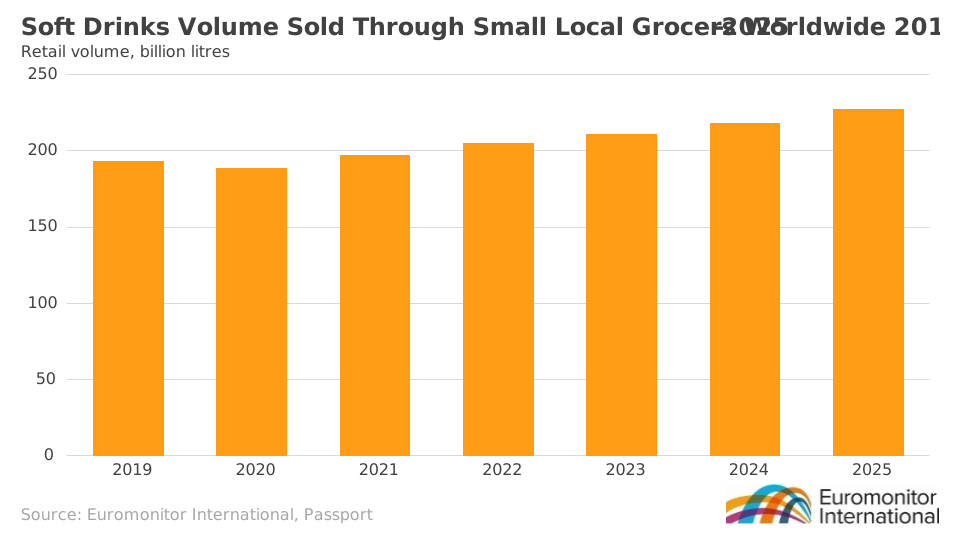
The pattern is sharpest in the markets that matter most for future growth. In India, small local grocer volume nearly doubled over 2020-2025. Small local grocers accounted for 91% of off-trade soft drinks volume in Nigeria in 2025. In India, the figure was 77%. However, the channel is not standing still. In India, quick commerce platforms such as Blinkit and Zepto are taking urban impulse occasions from kiranas.
AI shelf audits shine a light on an under-measured channel
Traditional trade has long been a blind spot for multinational grocery brands. Outlets number in the hundreds of thousands, but transactions are small and reliable shelf data is scarce. In early 2026, Euromonitor International collected over 1,000 shelf images from 150 stores in Nigeria and Colombia. A proprietary image-recognition application turned the photographs into a brand-level database of presence, pack sizes, pricing and facings.
In Nigeria, analysts visited independent small grocers across Lagos, Ibadan and Abuja. Coca-Cola dominated brand presence on the shelf, and The Coca-Cola Company held most of the leading positions. Pepsi was notably underrepresented relative to its national brand share.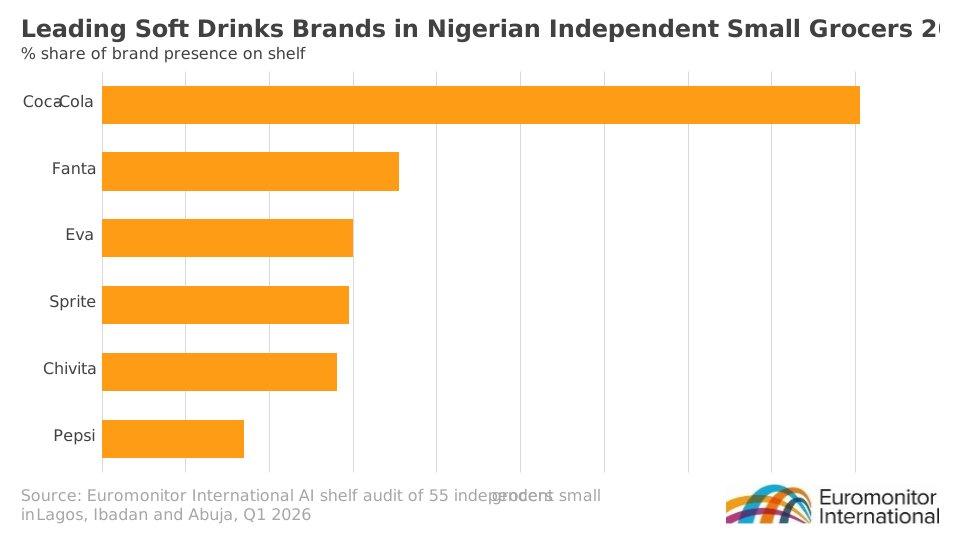
Colombia tells a different story. In independent grocers across Bogotá, Medellín and Chía, local champion Postobón edged ahead of Coca-Cola on share of facings. Its advantage comes from portfolio breadth across categories and consumption occasions.
Pack architecture is just as clear. Low-outlay, single-serve packs dominated the shelves we audited, with 500ml the standard size in Nigeria. Visible price tags were rare. Shelf presence, brand recognition and cooler placement are doing the selling, not labelled prices.
Three moves to win the trillion litre channel
First, build the traditional trade portfolio around small pack size bands, such as Mashesha units. Single-serve, low-outlay packs dominate independent grocer shelves, while larger formats suit modern trade and e-commerce. PepsiCo's Sting shows the payoff: an INR20 PET bottle helped it take 76% of India's energy drinks volume in 2025.
Second, digitise the last mile before quick commerce closes the gap. App-based ordering, mobile payments and AI-powered route planning can reduce stockouts, secure cooler placement and earn long-term loyalty from independent retail operators. Seven-Up Bottling Company's WhatsApp-enabled ordering system in Nigeria is an early example.
Third, compete for local relevance as well as price. Local hero brands such as Postobón in Colombia and American Cola in Nigeria win on taste, familiarity and value. For global players, that points to targeted acquisitions, refranchising to stronger bottlers or hero-brand partnerships.
Learn more in our report, The Trillion Litre Channel: Winning Soft Drinks in Traditional Trade, now live on Passport. It explores AI shelf-audit findings from Nigeria and Colombia, with recommendations for brands and bottlers.
