
Two in three consumers globally are using ChatGPT to search for products, according to Euromonitor International's Voice of the Consumer: Digital Shopper Survey, fielded March 2026.
Unlike traditional search, where shoppers navigate pages of results, AI assistants narrow the consideration set to a smaller selection of products. Understanding how a brand enters and exits a recommendation is therefore becoming a crucial new dimension of digital visibility.
To explore this, Euromonitor tested 1,000 shopper-style scalp care prompts across ChatGPT and Gemini in the UK and US, varying persona, tone, and writing style. Every response was coded for the brands mentioned, the language used to describe them, and the sources cited.
The analysis points to a recommendation process shaped by several layers.
There is no single AI recommendation shelf
AI platforms do not present shoppers with uniform recommendation sets. ChatGPT and Gemini surface brands differently.
Nizoral appeared in 58% of Gemini responses compared to 24% on ChatGPT – a 34-percentage-point difference. Briogeo showed the next big disparity, appearing in 40% of Gemini responses versus 9% on ChatGPT.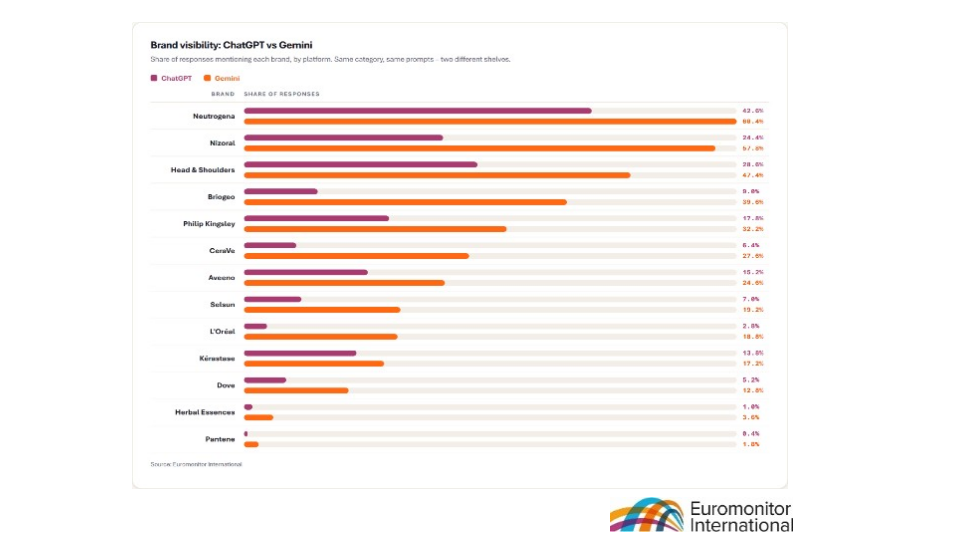
This divergence makes it difficult for brands to interpret a single measure of overall AI visibility. A product might be highly visible to a shopper using one AI assistant but appear much less frequently to another asking essentially the same question.
AI platforms draw on different information ecosystems and draw information differently
Part of the divergence is explained by the information environments the platforms draw upon.
ChatGPT sourced 32% of its citations from editorial and beauty media and 17% from clinical and medical sources. Gemini, however, relied significantly more on retailer product pages, with 58% of its citations coming from sites like Target, Boots and Superdrug.
Notably, brand-owned websites constituted 3% or less of citations on either platform. This is a critical finding – as various third-party environments contribute information that helps AI interpret and recommend products, a brand’s AI discoverability is increasingly shaped by its broader digital information ecosystem.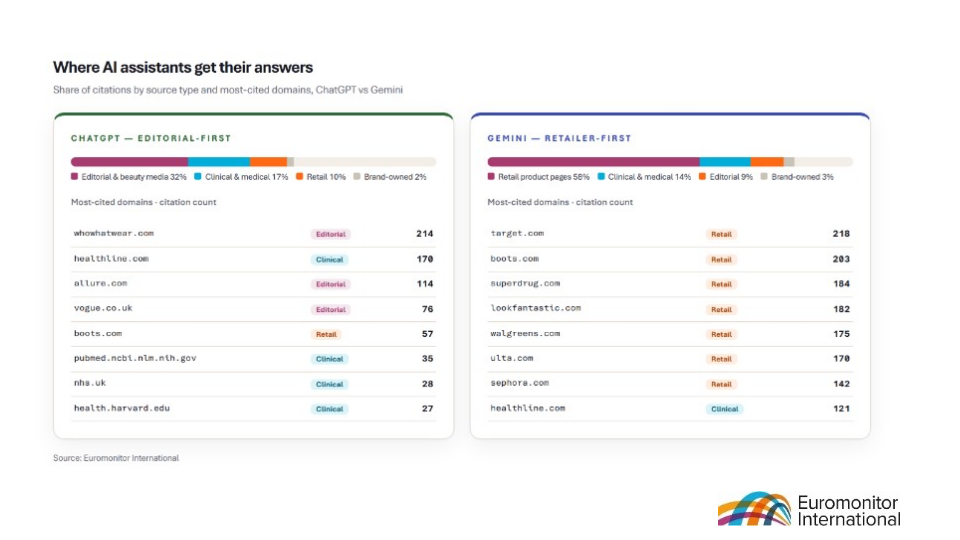
Beyond sourcing, these differences extend to the level of product detail in recommendations. Gemini consistently provided more specific information: it named an active ingredient and its concentration in 83% of responses compared to ChatGPT's 61% and explained how the active worked in 53% versus 40%.
The most significant discrepancies appeared closer to the point of purchase. Gemini included specific pricing in 96% of responses (versus 61% for ChatGPT) and incorporated consumer-review language in 45% of responses, compared to only 8% for ChatGPT.
AI decides what the brand is for
This concept is particularly crucial because AI shoppers often start their journey with a problem, not a specific brand. The study reveals that "best for" questions accounted for 43% of AI prompts, while "dandruff" appeared in 27%. Medicated and clinical prompts made up 16%.
In these scenarios, an AI assistant must do more than simply retrieve a recognised brand; it needs to connect the shopper's need with an appropriate product and offer a compelling rationale for its recommendation.
The language associated with brands provides insight into how these connections are formed. For example, "ketoconazole" was mentioned 667 times in relation to Nizoral recommendations. Head & Shoulders, however, presented a different profile, more often described using consumer-benefit language like "soothing" with "zinc pyrithione" appearing 93 times.
Brands are thus actively developing an AI recommendation profile: a consistent collection of needs, ingredients, claims, benefits and use cases with which they are associated.
These distinctions highlight a key aspect of AI visibility: it's not just whether an assistant recognises a brand, but what the assistant understands the brand's purpose to be.
The shopper's question shapes the recommendation set
Brand associations are significant because conversational discovery is inherently need-driven.
Neutrogena appeared in 52% of responses, Nizoral in 41% and Head & Shoulders in 38%. However, these overall figures obscure substantial variations in recommendation circumstances.
For example, Head & Shoulders featured in 66% of responses to general dandruff prompts but only 24% of responses related to psoriasis and eczema. For these more clinically defined needs, Neutrogena was present in 69% of responses.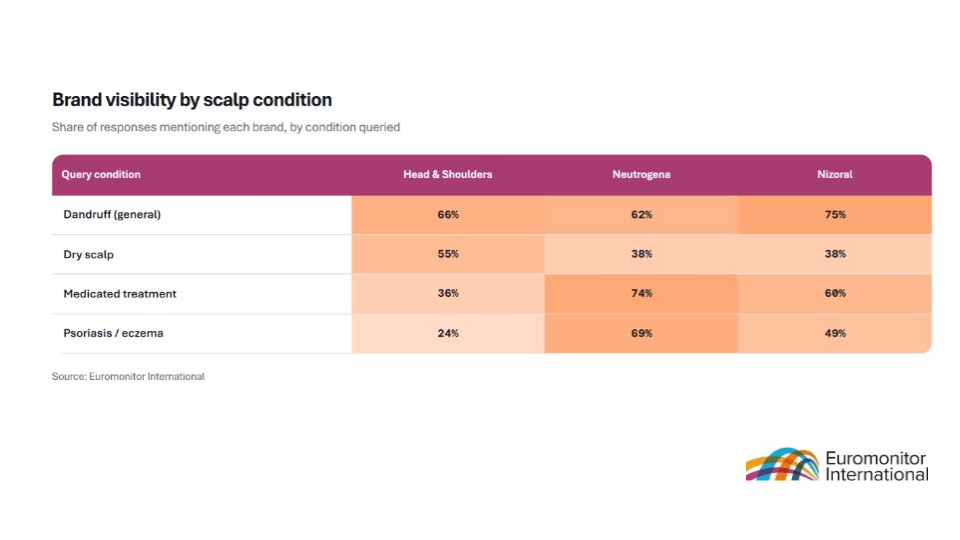
Consequently, the competitive landscape shifts depending on the shopper's query. A consumer broadly searching for "dandruff" might encounter one set of brands. If that same conversation shifts towards "medicated treatment" or a specific ingredient, a different set of recommendations will emerge.
For brands, relying solely on category-level visibility can conceal key gaps. A brand might appear frequently overall but vanish when the conversation pivots to a particular problem, ingredient, or product requirement.
Geography influences the recommendation environment
Platform and shopper needs are translated within their geographical context, further influencing recommendations.
For example, Philip Kingsley appeared in 48% of UK responses but in only 2% in the US, while CeraVe showed an almost opposite trend, appearing in 33% of US responses compared to 1% in the UK.
Local information ecosystems, including retailer presence, product assortment, and available product information, shape these recommendations. Therefore, a single worldwide measure of AI visibility is not a reliable metric for global brands.
From visibility to recommendability
AI-driven recommendations are far more intricate than mere brand presence. This complexity introduces a new set of questions for brands:
- Are our products being recommended by AI?
- How does AI perceive the purpose and efficacy of our brand?
- Which consumer needs trigger or miss recommendations for our brand?
- What specific information does AI leverage when recommending products for the consumer needs we target?
- Where do our recommendations falter across different platforms or markets?
Addressing these questions moves AI visibility beyond simple mention tracking towards understanding the mechanics driving actionability.
For more insights read our full report, The AI Visibility Gap: How Generative AI is Redefining Brand Discovery.
See how AI describes your brand
Euromonitor's AI brand diagnostic shows how assistants describe and rank a brand by platform, market and shopper need, and what that visibility is worth in referrals and online sales. To discuss a diagnostic solution for your category, book a strategy call.