

Health claims are everywhere in soft drink innovation, but do they always create value? To explore this, Euromonitor International analysed the annual survival probability of thousands of US soft drink stock-keeping units (SKUs) between 2023 and early 2026. Annual survival probability measures the likelihood that a product remains on the market for at least one more year, providing an indicator of sustained commercial value. While many factors influence product success, our model identifies which health claims are independently associated with product longevity.
The data reveals a clear theme: health claims do not perform equally across categories. By looking at immune health and sugar reduction as examples, we can see exactly why category context shapes the relationship between health claims and product longevity.
Impact of immune health claims on product survival varies significantly by category
Immune system health has been one of the most prominent wellness claims in beverage innovation over the last few years. While it is tempting to assume an immunity claim benefits any wellness-orientated product, our survival analysis suggests its commercial value depends heavily on the category.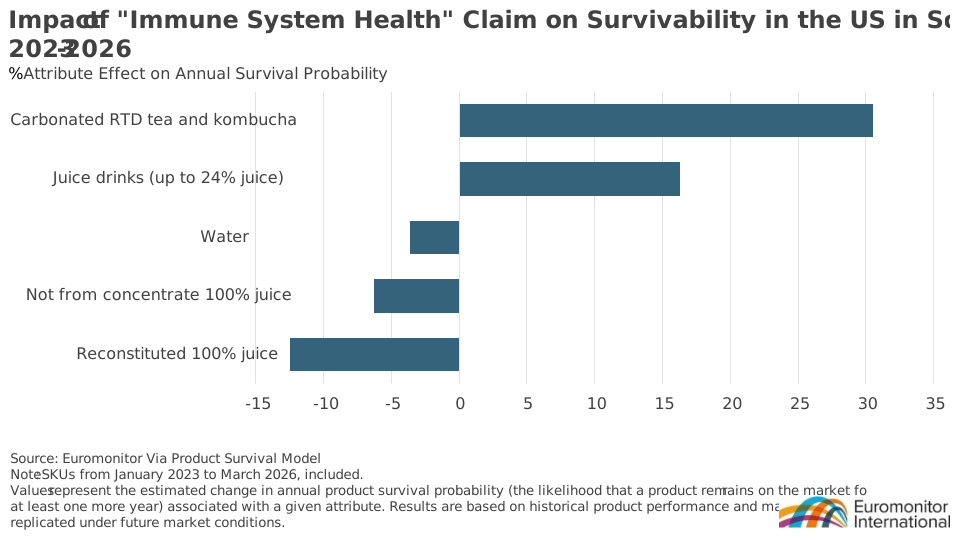
In carbonated RTD tea and kombucha, immune health claims may reinforce an already health-orientated proposition, potentially contributing to stronger product longevity. By contrast, consumers may already associate 100% juice with vitamins, fruit content and natural wellness benefits, limiting the incremental value of an additional immune health claim, while hydration and purity may remain stronger purchase drivers in water. Together, these findings suggest that health claims create the greatest commercial value when they reinforce a category's existing role and consumer expectations.
Category context determines how low sugar and no sugar claims influence product survival
Although "low sugar" and "no sugar" appear similar, their relationship with product survival differs across categories in our model. As seen in the table below, low sugar was associated with stronger product longevity in categories such as carbonated RTD tea and kombucha, RTD coffee, and sports drinks, while no sugar showed positive relationships in cola carbonates and still RTD tea. Conversely, both claims were associated with weaker product longevity in several juice and water categories. Rather than treating sugar reduction as a single strategy, innovation teams should consider which claim best fits a category's existing consumer expectations and positioning.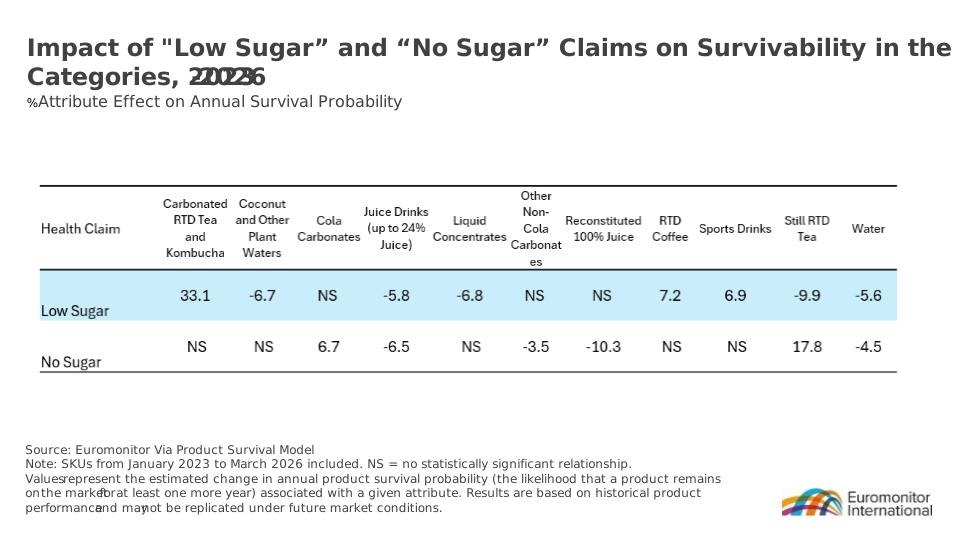
Equally noteworthy are the categories marked "NS", indicating no statistically significant relationship between the claim and product survival. Rather than representing a data gap, these findings suggest some claims may have limited influence relative to other drivers of product success, helping innovation teams identify where additional claims may add little commercial value.
As SKU optimisation becomes increasingly important and competition intensifies, understanding which claims are associated with stronger product longevity can help brands prioritise positioning and communication decisions. More importantly, this analysis demonstrates how survival modelling can support more informed innovation decisions by uncovering category-specific differences that may not be apparent from broader claim trends alone. The strongest claims may be those that reinforce a category's core purpose rather than simply follow broader wellness trends. Rather than maximising the number of health claims, brands should focus on identifying where individual claims strengthen a category's value proposition and long-term commercial relevance.
Read our latest Competitor Strategies in Innovation briefing for more analysis on what drives product staying power, and visit our Via page for additional insights on product assortment, health claims, pricing and broader SKU dynamics.