- Economic pressures have forced consumers to repair outdated products and save through buying secondhand goods
- 24% of global consumers choose to shop for secondhand products to help the environment and lead a more sustainable life
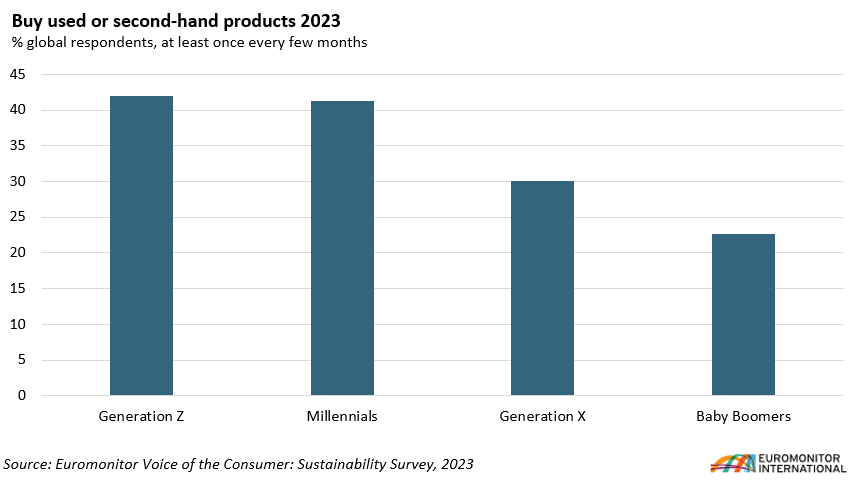
- More than 40% of Gen Z and Millennials purchase secondhand items every few months
- Consumers living in Latin America, Europe and Asia Pacific are the most likely to repair and recycle products
LONDON, UK – The rising cost of living and consumers’ commitment to a more sustainable lifestyle has meant there is now no shame in buying secondhand items or repairing broken goods to extend their life, according to a Euromonitor expert.
As revealed in Euromonitor International Voice of the Consumer: Sustainability Survey 2023, 24% of global consumers buy secondhand products to lead a more sustainable life, while 41% choose to repair broken items instead of buying new ones.
Jorge Zuniga, Senior Sustainability Insights Consultant at Euromonitor International, said: “The rising cost of living is pushing consumer behaviours towards sustainable practices as alternative cost-effective solutions. Actions such as turning off heating, reducing food waste, opting for more fuel-efficient mobility options, reducing appliance use, preparing meals at home, repairing items and buying secondhand products are not only helping them to reduce costs and avoid unnecessary purchases but also allowing them to stay true to their values and adopt sustainable lifestyles.”
Secondhand shopping is mainly driven by younger generations
Zuniga said embracing recycling is particularly important for Gen Z and Millennials. More than 40% of younger consumers opt for secondhand shopping every few months, while more than 50% of 15-44 years old consumers plan to purchase a secondhand item in the near future.
“Younger generations choose to repair items and shop secondhand mainly due to costs. As Gen Z are now the most financially pressured, secondhand is a great way to get stylish and buy even premium garments at reasonable prices.”
Repairing products is more important to the older generations, many more of whom have become environmentally active. Some 40% of 45-60+ consumers in 2023 (28% in 2021) intend to buy secondhand or previously owned products.
Latin America, Europe and Asia Pacific dominate the recycling market
Euromonitor International has identified 12 sustainable consumer types based on their values and attitudes. ‘Meat Avoiders’ and ‘Zero Wasters’ are the leading types of sustainable consumers each accounting for 36% of the sustainable market. These consumers are worried about climate change and recycle or repair broken items, rather than replacing them, and buy secondhand or previously owned products.
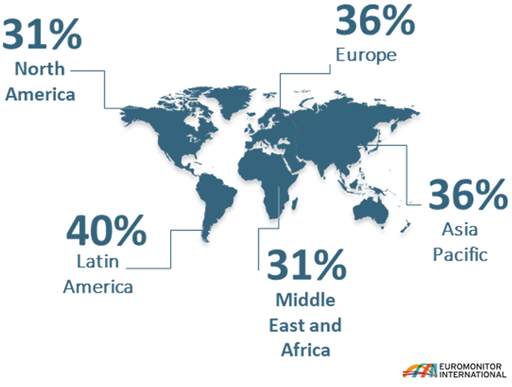
Recycling and repairing habits are the most prevalent in Latin America, Europe and Asia Pacific. Some 31% of consumers in North America, 36% in Europe and Asia Pacific and 40% in Latin America choose a zero-waste lifestyle. The Philippines is the country with the highest percentage (56%) of ‘Zero Wasters’ in 2023, as 76% of population are concerned or extremely concerned about climate change.
Percentage of ‘Zero Wasters’ by Region
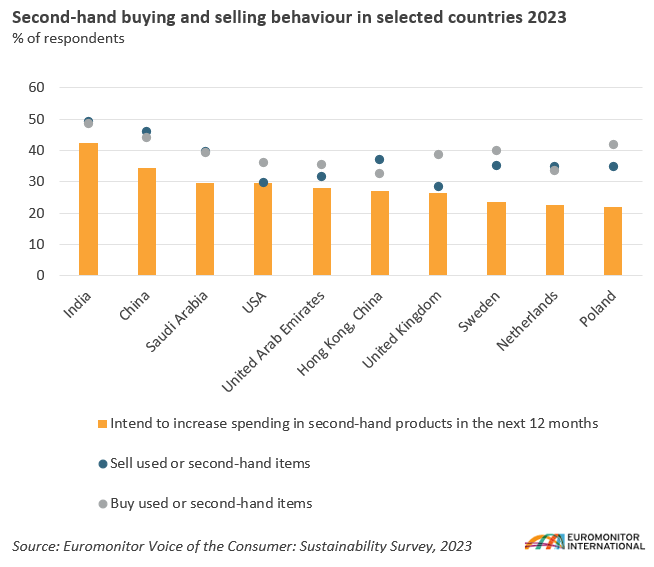
While the secondhand market is more developed and widely available in Europe and North America, the real pulse of consumer engagement beats in Asia Pacific and the Middle East and Africa. India, China, and Saudi Arabia lead the charge, not only embracing secondhand goods but also signaling strong intentions to increase spending in this market.
42% of consumers in India, 34% in China and 30% in Saudi Arabia intend to increase spending on secondhand products in the next 12 months. Almost 50% of consumers in India buy and sell used items, while in the United Kingdom consumers prefer to buy secondhand products (38%) rather than sell them (28%).