
For decades, loyalty has been designed around the human decision-maker. Customers choose the brand, engage with the programme, earn rewards and decide when those rewards are worth using. Agentic commerce is changing that model. As AI agents increasingly search, compare, recommend and transact on behalf of consumers, the decision-making layer is shifting from the customer interface into the algorithm. Loyalty is therefore evolving from rewarding customer choice to securing relevance at the point of AI-led decision-making, creating a new competitive dynamic between established programmes and AI-native players.
AI makes loyalty more dynamic and commercially measurable
Loyalty programmes are becoming a connective layer between AI-led discovery and purchase, enabling brands to recognise and reward customers across an increasingly fragmented journey. At the same time, AI is helping brands break down data silos and build a more holistic view of customer activity, improving their ability to assess the commercial return on loyalty investment, anticipate reward liabilities and optimise costs. The value exchange is also becoming more tangible, as rewards are increasingly tailored to individual behaviour and consumers become more aware of how their data shapes the value they receive.
The result is a shift from static programme structures to propositions that adapt continuously to context and customer needs. Hyper-personalisation, real-time signals, embedded rewards and ecosystem partnerships allow brands to determine what value to offer, when to offer it and how to deliver it. The focus moves from managing a predefined set of benefits to continuously optimising customer relationships and commercial outcomes.
AI adoption and trust on the rise
AI will also make loyalty propositions easier to scrutinise. Consumers are already using AI to review products, find relevant deals, navigate programme rules and compare benefits.
51% of connected consumers use ChatGPT
Source: Euromonitor Voice of the Consumer: Digital Shopper Survey, fielded January to March 2026
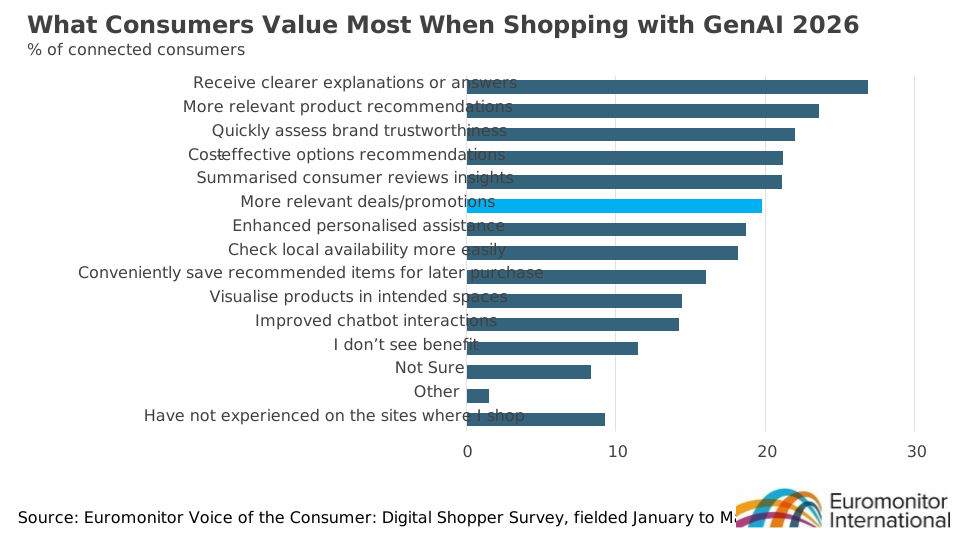
This also raises the importance of underlying loyalty architecture. To influence an AI-mediated transaction, member identity, eligibility and benefits need to be machine-readable, accessible in real time and connected to the wider commerce ecosystem. Loyalty can no longer operate as a closed engagement layer with interoperability, APIs, authentication and secure access becoming strategic capabilities.
The loyalty stack becomes a competitive differentiator
Early moves across industries suggest this shift is already taking shape. Retail is emerging as the clearest trailblazer, embedding AI across the shopping and checkout journey while increasingly linking these capabilities to loyalty. Euromonitor projects that AI will influence USD780 billion in global retail e-commerce sales by 2029, underscoring the scale of the transformation.
Other sectors follow suit. In July 2026, Banco Santander (Brasil) reported that early users of its AI-enhanced rewards proposition were engaging more actively, with the strongest impact reflected in increased card spending. In Australia, Adore Beauty reported in August 2026 that active loyalty membership had reached 538,000, up 22% year on year, following the launch of its “Ask Aura” chatbot, which combines proprietary and external data to enhance product recommendations. In July 2026, IHG began testing conversational AI across its website and IHG One Rewards app, enabling guests to receive recommendations through natural-language requests. Chipotle, meanwhile, is rethinking loyalty around prediction and personalisation, targeting the 80% of in-restaurant transactions that typically go unrecognised and piloting frictionless “auto-earn” payments.
The common thread is not AI for its own sake, but the integration of loyalty intelligence into the customer journey, turning previously disconnected interactions into opportunities to recognise customers, personalise engagement and drive value.
Loyalty must win the customer and the AI agent
As AI increasingly mediates discovery, comparison and purchase, brands will compete not only for customer preference, but for relevance within the decisions made by the agents acting on their behalf. This raises the bar for loyalty. The proposition must create compelling value for the customer while also being visible, accessible and valuable to the AI shaping the purchase decision. The strategic question is whether loyalty can remain a source of preference when more of the choice is delegated to an algorithm.
Explore our loyalty offering and insights for further analysis of the forces shaping loyalty today.