
Travel brands have long relied on loyalty programmes to strengthen customer relationships, encourage direct bookings and differentiate themselves from online travel agencies (OTAs). This article explores how AI-assisted journeys are changing travel consideration, why reward engagement matters once shoppers arrive at a brand website and how Euromonitor's Loyalty Index can help companies benchmark their strategic emphasis on loyalty relative to competitors.
Multi-brand shoppers are significantly more likely to arrive via AI
There is little doubt that GenAI is reshaping how shoppers discover and evaluate brands, although its impact varies across industries and shopper groups. To understand how these behaviours are evolving in travel, Euromonitor analysed US travel browsing activity between December 2025 and May 2026 using both direct AI referrals and AI-assisted browsing sessions. One finding stood out: shoppers researching multiple travel brands were significantly more likely to arrive at travel websites following AI usage than shoppers focused primarily on a single provider. While this does not suggest AI causes shoppers to compare more brands, it highlights AI's greater presence among travellers still evaluating alternatives.
For travel brands, these comparison shoppers are often the most valuable audience to influence. They have not yet committed to a preferred brand, booking channel or loyalty proposition. The challenge is not simply attracting these shoppers to a website, but ensuring that loyalty benefits are compelling enough to enter consideration once they arrive.
Points search activity reveals wide gaps in shopper reward engagement
Brands must also encourage visitors to engage with the loyalty proposition itself. Euromonitor's US Points Search Tracker provides one indication of this behaviour by measuring the share of searchers who actively explore points-based booking options when given the choice between paying with cash or rewards.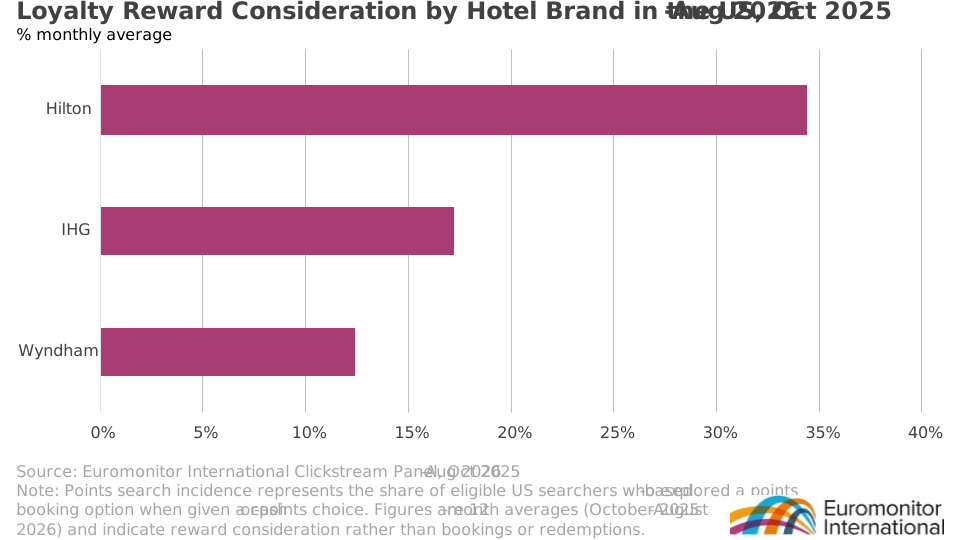
Taking Hilton for example, 34.4% of eligible visitors explored a points-based booking option on average over the previous 12 months, compared with 17.2% for IHG and 12.4% for Wyndham. While these figures reflect search intent rather than bookings or programme participation, they illustrate that reward consideration can vary significantly across brands and over time. AI-assisted discovery may help bring comparison shoppers to a brand's website, but loyalty programmes must still demonstrate value once shoppers arrive. Travel brands must therefore ensure their on-site experience encourages visitors to consider rewards alongside cash rates.
Loyalty Index reveals significant gaps between hotel brands
If reward consideration shows how shoppers engage with loyalty benefits on a website, the next question is how strongly brands prioritise loyalty at a corporate level. Euromonitor's Loyalty Index answers this by tracking how prominently companies position loyalty within their overarching strategy across annual reports, investor presentations and earnings materials.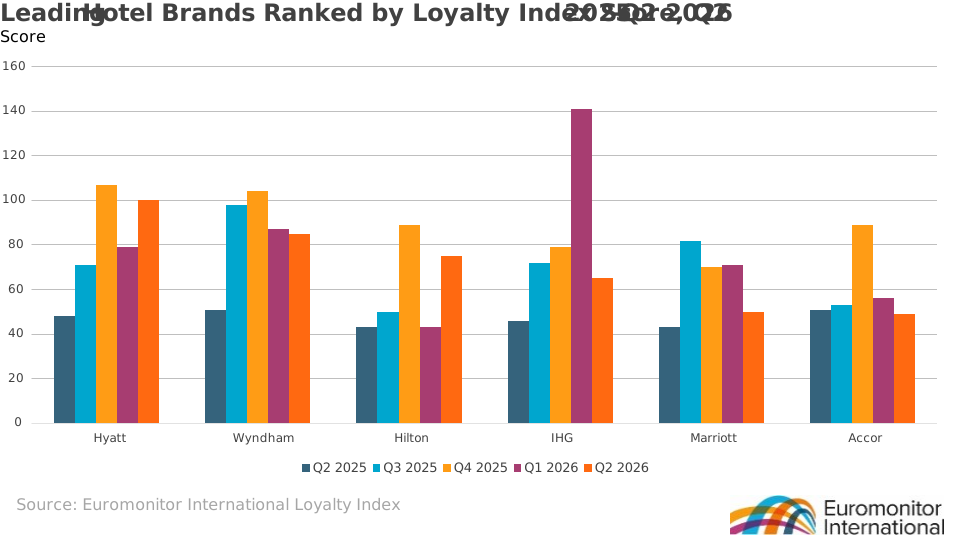
In Q2 2026, Hyatt and Wyndham recorded the highest Loyalty Index scores among major hotel groups. The index also reveals significant gaps between competitors, with Marriott and Accor placing less emphasis on loyalty within corporate communications despite competing in many of the same markets.
Comparing corporate prioritisation with shopper search behaviour also highlights where strategic emphasis and on-site engagement may diverge. For example, while Wyndham ranked alongside Hyatt at the top of the Loyalty Index in Q2 2026, it recorded the lowest points-search share among the three hotel brands included in the tracker. This illustrates that strong corporate emphasis on loyalty does not automatically translate into higher levels of shopper reward consideration.
The index also helps track how loyalty strategies evolve over time. For example, IHG's score increased significantly during Q1 2026 after the company placed greater emphasis on IHG One Rewards across investor and earnings communications, positioning the programme as a key driver of direct bookings and commercial growth. Importantly, the Loyalty Index does not measure bookings, reward redemptions or points-search activity. Instead, it helps brands benchmark how prominently they communicate loyalty relative to competitors and identify potential gaps in their positioning.
Ultimately, AI is not simply another referral channel; it increasingly forms part of the research and comparison that happens before shoppers reach a travel website. As AI-influenced comparison shoppers become more important, brands should focus on making loyalty benefits easy to find, understand and compare, helping reward value enter consideration before shoppers choose where and how to book.
To learn more about creating effective loyalty programmes, explore our comprehensive Loyalty content hub on our website. And download our report on how GenAI is reshaping brand discovery and influencing consumer consideration.