

Brands retain scale through their loyalty programmes, but aggregators are gaining greater ownership of recurring customer engagement. This structural imbalance is shifting competitive advantage towards platforms that influence purchase decisions and control access to demand.
The scale of this competitive shift is significant: the US, India, the UK, China and Germany collectively account for more than 560 million monthly active users (MAUs) across restaurant apps in Q2 2026, spanning two competing loyalty models. Brands command the largest individual loyalty programmes, while platforms capture recurring engagement across multiple merchants.
Loyalty's old model is dead
Loyalty programmes were built around a simple premise: reward customers after they choose a brand. That premise is being fundamentally challenged. AI assistants and delivery platforms increasingly influence which restaurant brands enter the consideration set, often before loyalty incentives come into play. Without a clear point of differentiation, restaurants risk becoming interchangeable suppliers, competing on price, visibility and convenience while platforms capture the repeat engagement, customer data and long-term value.
AI is quietly deciding where you eat
A critical gap is emerging in conventional loyalty measurement. Platform aggregators generate higher AI discovery volumes than individual QSR brands. Furthermore, 30% of shoppers using GenAI report that AI has introduced them to a brand they had not previously considered according to Euromonitor’s Voice of the Consumer: Digital Shopper Survey 2026. AI is increasingly shaping brand consideration before the transaction, yet this influence remains largely unmeasured by loyalty metrics focused on post-purchase engagement.
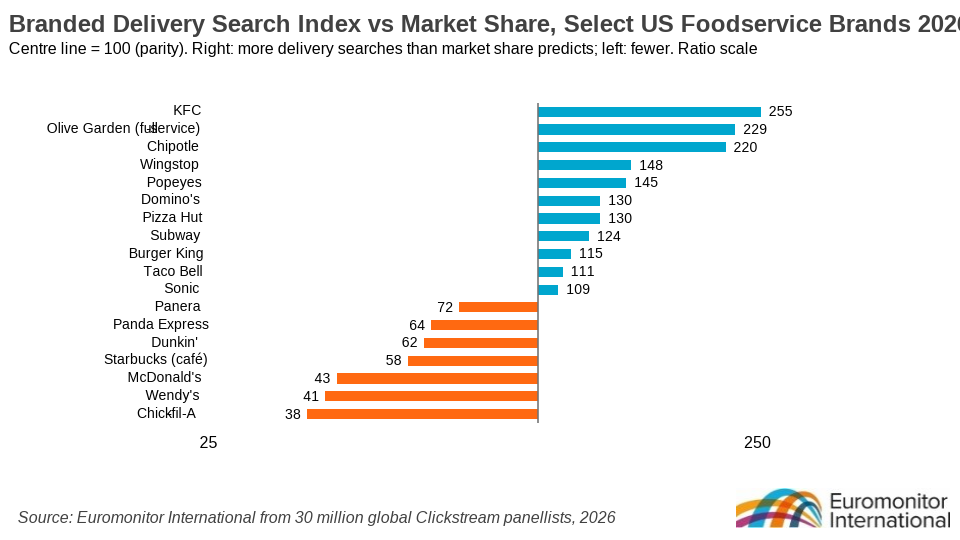
Branded delivery searches reveal a disconnect between consumer demand and market share: some US foodservice brands attract disproportionate search interest but fail to capture equivalent market share, while others under-index at the discovery stage. The gap points to an opportunity to convert existing consumer interest into transactions.
Scale is not the same as retention
McDonald's is amongst the industry's largest loyalty programmes, with 220 million 90-day active users between January and March 2026. At this scale, reach is no longer the primary challenge, the strategic priority shifts to converting that scale into sustained customer retention.
Uber Eats and DoorDash demonstrate a different model. Their active user bases are smaller, but their respective retention rates of 21% and 16%, respectively, point to a stronger emphasis on sustaining repeat engagement. Their competitive advantage lies not in matching the reach of individual brands, but in building recurring customer relationships across multiple merchants.
Subscriptions are the new lock-in
Euromonitor’s Voice of the Consumer: Loyalty Survey 2026 found that 48% globally belong to a paid loyalty programme. Delivery platforms are evolving beyond demand aggregation to become loyalty destinations in their own right, using subscription models to secure recurring engagement and position themselves as the default choice for everyday occasions.
The platform rather than the individual restaurant brand is increasingly becoming the primary point of loyalty, shaping repeat choice and capturing the value of the ongoing customer relationship.
The brands fighting back
Starbucks' 2026 Rewards redesign places greater emphasis on recognition and personalised value to strengthen visit frequency. With 35.8 million active members in Q3 2026, the programme provides significant scale for its ongoing trials of AI-enabled personalisation.
Yum! Brands is taking a more infrastructure-led approach, treating its technology stack and unified engagement data as strategic assets while retaining greater control over customer relationships, with Taco Bell emerging as a leading example. Chipotle, meanwhile, has embedded loyalty within its growth strategy, using its digital proposition to deepen engagement and support sales.
What to do about it?
Build loyalty around what makes the brand worth choosing. Bring purchase, reward and engagement data together to recognise customer preferences and respond with relevant value at the right moment. Reward more than spend: referrals, reviews and advocacy are also signals of customer commitment. Make earning and redemption seamless across touchpoints and use personalisation and selective partnerships to give customers stronger reasons to return.
Extend the relationship beyond the direct transaction. Strengthen first-party channels, but ensure loyalty remains relevant when customers order through third-party platforms.
Exclusive benefits, differentiated experiences and connected customer insight can help sustain brand preference even when the transaction takes place elsewhere.
Source: Euromonitor International
Strategic imperative
Platforms are using loyalty to shape demand, secure repeat engagement and deepen customer relationships. Restaurant brands risk being reduced to fulfilment partners if their programmes remain focused on rewarding transactions after the choice has been made. The priority is to extend loyalty upstream influencing consideration and preference before checkout while retaining a meaningful relationship with customers across both direct and third-party channels.
For further insights, explore our latest report First-Party vs Third-Party Loyalty: The Battle for the Foodservice Customer.